
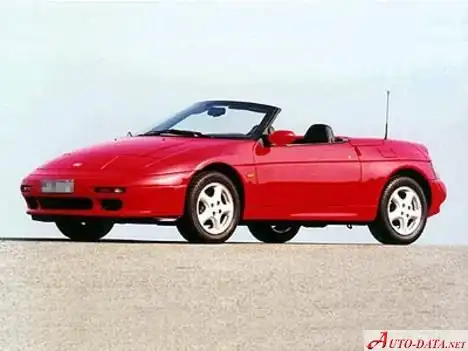
The Kia Roadster 1.8, produced between 1996 and 1999, represents a unique and often overlooked chapter in the South Korean automaker’s history. This rear-wheel-drive roadster, based heavily on the Mazda MX-5 (Miata) first generation, was Kia’s attempt to enter the sporty convertible market. While the Roadster was sold primarily in South Korea, limited exports occurred, making it a relatively rare vehicle outside its home country. The 1.8-liter, 136 horsepower variant occupied the top end of the Roadster lineup, offering a more potent driving experience than the earlier 1.6-liter models. It was a key part of Kia’s efforts to improve its brand image and demonstrate engineering capability beyond its established reputation for budget-friendly vehicles.
Technical Specifications
| Brand | Kia |
| Model | Roadster |
| Generation | Roadster (First Generation) |
| Type (Engine) | 1.8 (136 Hp) |
| Start of Production | 1996 |
| End of Production | 1999 |
| Powertrain Architecture | Internal Combustion Engine |
| Body Type | Roadster |
| Fuel Type | Petrol (Gasoline) |
| Engine Power | 136 Hp |
| Engine Aspiration | Naturally Aspirated |
Powertrain & Engine Architecture
The heart of the Kia Roadster 1.8 is a 1.8-liter, inline-four cylinder engine. This engine, internally designated as the G4GE, is a naturally aspirated unit featuring multi-point fuel injection. While sharing fundamental design elements with Mazda’s B6 engine (found in early MX-5s), the G4GE incorporates Kia’s own engineering refinements. The engine utilizes a single overhead camshaft (SOHC) valvetrain with two valves per cylinder. Peak power of 136 horsepower (approximately 101 kW) is achieved at 6,000 rpm, while peak torque of 125 lb-ft (170 Nm) arrives at 4,500 rpm. The engine’s design prioritizes smooth power delivery and reasonable fuel efficiency over outright performance. The 1.8L engine was paired exclusively with a four-speed automatic transmission. This transmission, while providing ease of use, was a point of criticism from driving enthusiasts who preferred the five-speed manual available with the 1.6-liter engine. The automatic transmission features standard torque converter technology and is geared towards comfortable cruising rather than aggressive acceleration.
Driving Characteristics
The Kia Roadster 1.8 with the automatic transmission delivers a comfortable and predictable driving experience. Acceleration is adequate, with a 0-60 mph time estimated around 9-10 seconds. However, the automatic transmission’s relatively long gear ratios and limited number of speeds diminish the engine’s potential. Compared to the five-speed manual version, the automatic feels noticeably less responsive. The automatic transmission does offer a “hold” function, allowing the driver to prevent upshifts during spirited driving, but it doesn’t fully compensate for the lack of manual control. The rear-wheel-drive layout provides balanced handling, and the Roadster’s relatively light weight (around 2,200 lbs) contributes to a nimble feel. Steering is precise, though lacking in significant feedback. Overall, the 1.8L automatic is best suited for relaxed top-down motoring rather than aggressive corner carving.
Equipment & Trim Levels
The 1.8-liter Roadster represented the highest trim level available. Standard equipment included power windows, power steering, a leather-wrapped steering wheel, and a basic audio system. Air conditioning was typically standard, though some early models may have offered it as an option. Interior upholstery consisted of cloth seats, though leather options were available as a factory upgrade. The dashboard layout is functional and straightforward, mirroring the MX-5’s design. Optional extras included alloy wheels, a more advanced audio system with a CD player, and a limited-slip differential (rare). The exterior styling is virtually identical to the first-generation Mazda MX-5, with minor differences in badging and some trim details. The Roadster 1.8 typically featured a body-colored hardtop as an optional extra, providing all-weather usability.
Chassis & Braking
The Kia Roadster’s chassis is largely derived from the Mazda MX-5. It utilizes a fully independent suspension system with double wishbones at the front and a multi-link setup at the rear. The suspension is tuned for a balance between comfort and handling. The 1.8-liter models typically featured slightly stiffer springs and dampers compared to the 1.6-liter versions to better manage the increased power. Braking duties are handled by disc brakes at the front and drum brakes at the rear. While adequate for normal driving, the rear drum brakes were a point of criticism, particularly for those seeking more consistent stopping performance. Anti-lock brakes (ABS) were not standard equipment and were often offered as an optional extra. The steering system is a rack-and-pinion setup, providing precise and responsive steering feel.
Market Reception & Comparison
The Kia Roadster 1.8 received mixed reviews. Critics generally praised its styling, handling, and overall build quality, acknowledging the strong influence of the Mazda MX-5. However, the automatic transmission was frequently criticized for its lack of responsiveness and limited gear selection. Fuel economy was respectable, averaging around 25-30 mpg in combined driving. Compared to the 1.6-liter Roadster, the 1.8 offered a noticeable performance improvement, but at a slightly higher price point. The 1.6-liter models were often favored by buyers seeking a more affordable and engaging driving experience, particularly those who preferred the five-speed manual transmission. The 1.8L automatic appealed to buyers prioritizing comfort and ease of use over outright performance. In the South Korean market, the Roadster competed with other small, sporty convertibles, but it largely occupied a niche position due to its unique origins and limited production numbers.
Legacy
The Kia Roadster, while a short-lived model, holds a unique place in automotive history. It represents Kia’s first foray into the rear-wheel-drive sports car segment and demonstrated the company’s ability to produce a well-engineered and visually appealing vehicle. The 1.8-liter engine, while not a powerhouse, proved to be relatively reliable. The automatic transmission, however, is often cited as a potential weak point, with some units experiencing issues over time. Today, the Kia Roadster is a relatively rare and collectible vehicle, particularly the 1.8-liter models. Well-maintained examples command a premium in the used car market. The Roadster’s enduring appeal lies in its classic roadster styling, its engaging driving dynamics, and its status as a unique and often-forgotten piece of Kia’s automotive heritage. Parts availability can be challenging, as many components are specific to the Roadster or shared with the Mazda MX-5, requiring diligent sourcing.
