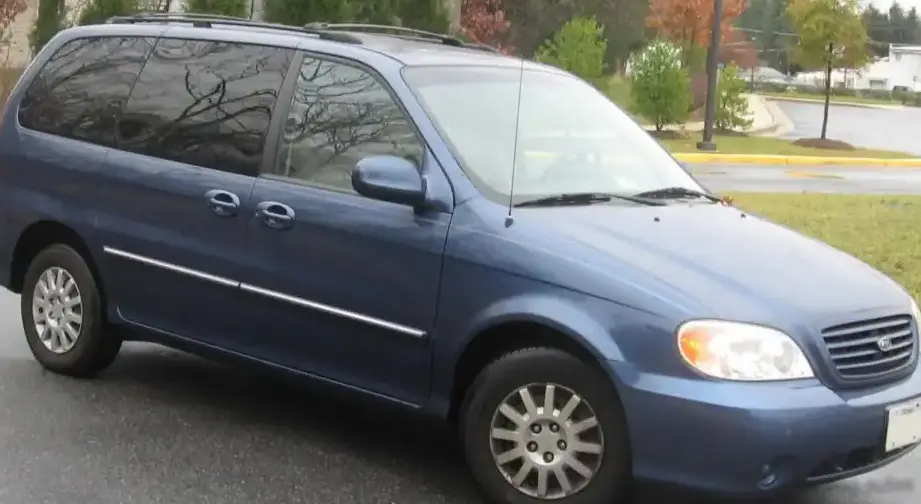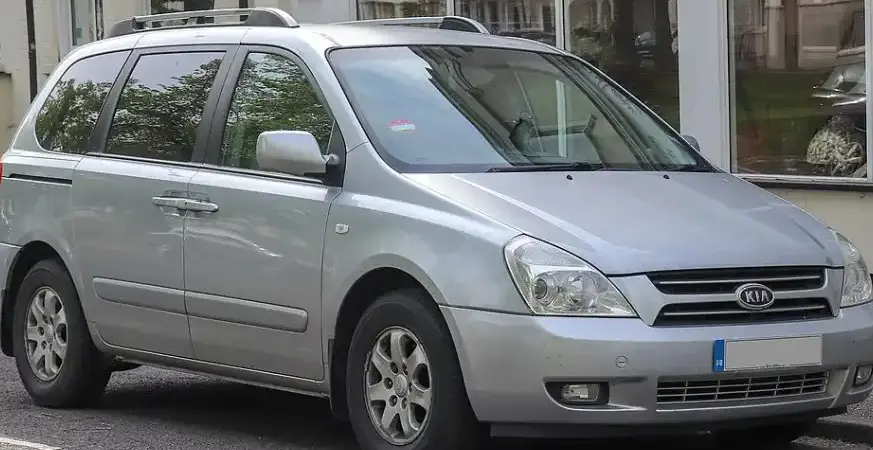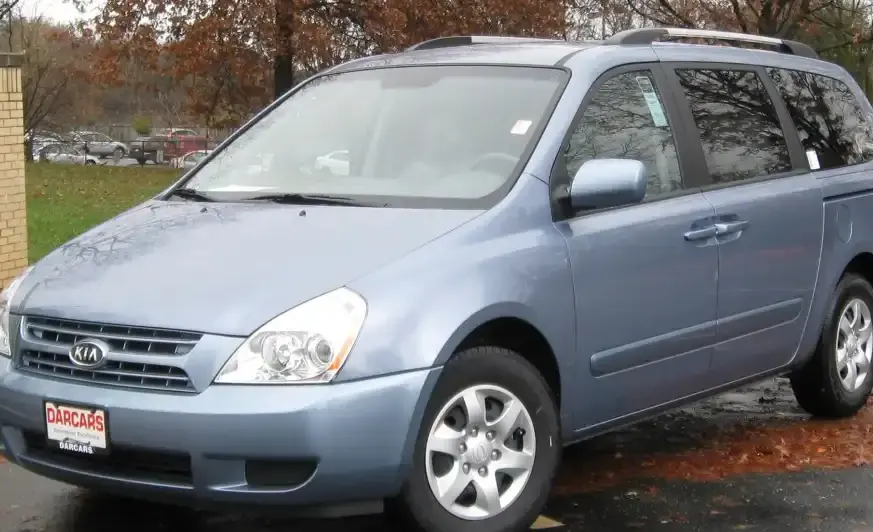
The Kia Sedona II Long Wheelbase (LWB) 3.8 V6 Automatic, produced from 2006 to 2014, represented a significant step forward for Kia in the competitive minivan segment. Positioned as a mid-to-upper trim level within the second-generation Sedona (codenamed MQ), this variant offered a compelling blend of space, power, and features aimed at families seeking a comfortable and practical vehicle. The LWB designation indicated an extended wheelbase compared to the standard Sedona, providing increased third-row legroom and cargo capacity. This model was primarily marketed in North America, where the minivan segment held considerable strength, and aimed to challenge established players like the Honda Odyssey and Toyota Sienna.
Technical Specifications
| Brand | Kia |
| Model | Sedona |
| Generation | Sedona II LWB |
| Type (Engine) | 3.8 V6 (248 Hp) Automatic |
| Start of production | 2006 |
| End of production | 2014 |
| Powertrain Architecture | Internal Combustion engine |
| Body type | Minivan |
| Seats | 7-8 |
| Doors | 5 |
| Fuel consumption (urban) | 13.8 l/100 km (17 US mpg, 20.5 UK mpg, 7.2 km/l) |
| Fuel consumption (extra urban) | 9.4 l/100 km (25 US mpg, 30.1 UK mpg, 10.6 km/l) |
| Fuel consumption (combined) | 11.8 l/100 km (19.9 US mpg, 23.9 UK mpg, 8.5 km/l) |
| Fuel Type | Petrol (Gasoline) |
| Acceleration 0 – 100 km/h | 9.1 sec |
| Acceleration 0 – 62 mph | 9.1 sec |
| Acceleration 0 – 60 mph | 8.6 sec |
| Maximum speed | 213 km/h (132.35 mph) |
| Emission standard | Euro 4 |
| Weight-to-power ratio | 8.5 kg/Hp, 117.7 Hp/tonne |
| Weight-to-torque ratio | 6.1 kg/Nm, 162.8 Nm/tonne |
| Power | 248 Hp @ 6000 rpm |
| Power per litre | 65.6 Hp/l |
| Torque | 343 Nm @ 3500 rpm (252.98 lb.-ft. @ 3500 rpm) |
| Engine layout | Front, Transverse |
| Engine displacement | 3778 cm3 (230.55 cu. in.) |
| Number of cylinders | 6 |
| Engine configuration | V-engine |
| Cylinder Bore | 96 mm (3.78 in.) |
| Piston Stroke | 87 mm (3.43 in.) |
| Compression ratio | 10.4:1 |
| Number of valves per cylinder | 4 |
| Fuel injection system | Multi-port manifold injection |
| Engine aspiration | Naturally aspirated engine |
| Valvetrain | DOHC |
| Kerb Weight | 2107 kg (4645.14 lbs.) |
| Max. weight | 2675 kg (5897.37 lbs.) |
| Max load | 568 kg (1252.23 lbs.) |
| Trunk (boot) space – minimum | 2268 l (80.09 cu. ft.) |
| Trunk (boot) space – maximum | 4007 l (141.51 cu. ft.) |
| Fuel tank capacity | 80 l (21.13 US gal, 17.6 UK gal) |
| Length | 5130 mm (201.97 in.) |
| Width | 1985 mm (78.15 in.) |
| Height | 1815 mm (71.46 in.) |
| Wheelbase | 3020 mm (118.9 in.) |
| Front track | 1685 mm (66.34 in.) |
| Rear (Back) track | 1685 mm (66.34 in.) |
| Drag coefficient (Cd) | 0.34 |
| Minimum turning circle | 12.07 m (39.6 ft.) |
| Drivetrain Architecture | The Internal combustion engine (ICE) drives the front wheels of the vehicle. |
| Drive wheel | Front wheel drive |
| Number of gears | 5 |
| Gearbox type | automatic transmission |
| Front brakes | Ventilated discs |
| Rear brakes | Disc |
| Assisting systems | ABS (Anti-lock braking system) |
| Tires size | 235/60 R17 |
| Wheel rims size | 17 |
Powertrain & Engine Architecture
The heart of the Sedona II LWB 3.8 V6 was the 3.8-liter (3778 cc) naturally aspirated V6 engine. This engine, internally designated as the G6DA, was a mainstay in Kia’s lineup during this period. It featured a cast iron block with an aluminum cylinder head, employing a dual overhead camshaft (DOHC) valvetrain with four valves per cylinder. The engine utilized a multi-port fuel injection (MPI) system, delivering fuel directly into the intake ports. The 3.8L V6 produced 248 horsepower at 6000 rpm and 253 lb-ft of torque at 3500 rpm. This output was a significant improvement over the base 2.7-liter four-cylinder engine offered in lower Sedona trims. The engine was transversely mounted in the front of the vehicle. The five-speed automatic transmission, a common unit for Hyundai-Kia vehicles of the era, was the sole transmission option for this variant. While not known for its sportiness, the transmission provided smooth and adequate shifts for everyday driving.
Driving Characteristics
The 3.8L V6 Automatic Sedona LWB offered a comfortable and predictable driving experience. Acceleration from a standstill to 60 mph took approximately 8.6 seconds, which was competitive for a minivan of its size. The automatic transmission, while smooth, wasn’t particularly quick to downshift, meaning passing maneuvers required some planning. The gear ratios were tuned for fuel efficiency and relaxed cruising rather than outright performance. Compared to the base 2.7L engine, the 3.8L provided noticeably more power, especially when fully loaded with passengers and cargo. The longer wheelbase of the LWB model contributed to a more stable and composed ride, particularly on highway journeys. However, the Sedona’s front-wheel-drive layout and relatively soft suspension meant it wasn’t as engaging to drive as some rear-wheel-drive minivans.
Equipment & Trim Levels
The 3.8L V6 Automatic trim typically included features such as air conditioning, power windows and locks, keyless entry, a CD player with an auxiliary input, and alloy wheels. Higher trim levels added features like leather upholstery, a sunroof, a navigation system, and upgraded audio systems. Safety features included dual front airbags, side airbags, and anti-lock brakes (ABS). The Sedona LWB aimed for a balance between affordability and features, offering a step up in luxury and convenience compared to the base models.
Chassis & Braking
The Sedona II LWB utilized a conventional front-wheel-drive chassis with an independent MacPherson strut suspension in the front and a multi-link suspension in the rear. The braking system consisted of ventilated disc brakes in the front and solid disc brakes in the rear. ABS was standard. The suspension was tuned for comfort, prioritizing a smooth ride over sporty handling. Stabilizer bars were included both front and rear to reduce body roll during cornering. The steering was hydraulically assisted, providing light and easy steering feel.
Market Reception & Comparison
The Kia Sedona II LWB 3.8 V6 Automatic was generally well-received by automotive critics. It was praised for its spacious interior, comfortable ride, and generous standard features. However, some reviewers noted that its handling wasn’t as sharp as some of its competitors, and the interior materials weren’t quite as upscale as those found in the Honda Odyssey or Toyota Sienna. Fuel economy was average for the segment, with combined fuel consumption around 19.9 US mpg. Compared to the base 2.7L Sedona, the 3.8L offered a significant performance upgrade, making it a more suitable choice for families who frequently carried a full load of passengers or towed trailers.
Legacy
The Kia Sedona II LWB 3.8 V6 Automatic has proven to be a relatively reliable vehicle in the used car market. The 3.8L V6 engine is known for its durability, although regular maintenance, including timing belt replacement, is crucial. The automatic transmission is also generally reliable, but some owners have reported issues with solenoid failures. Today, these Sedonas represent an affordable and practical option for families seeking a spacious and comfortable minivan. While they may not offer the latest technology or fuel efficiency, they provide a good value for the price and continue to serve as dependable transportation for many owners.