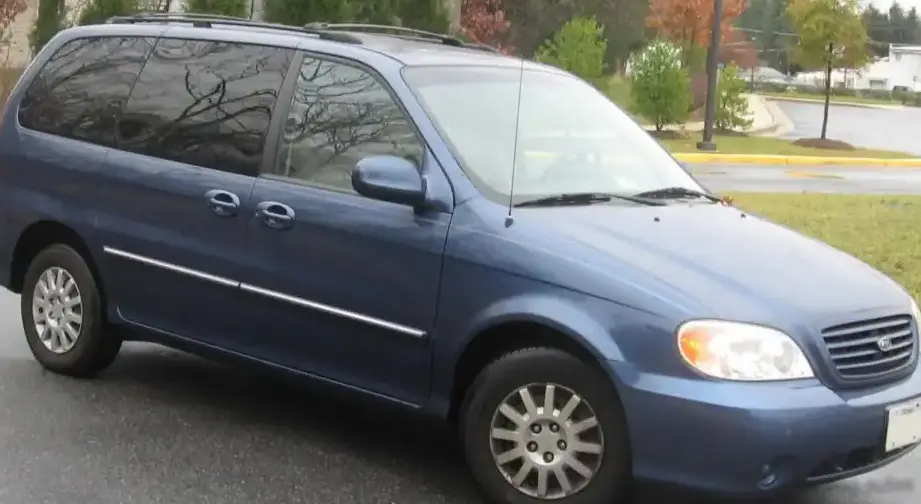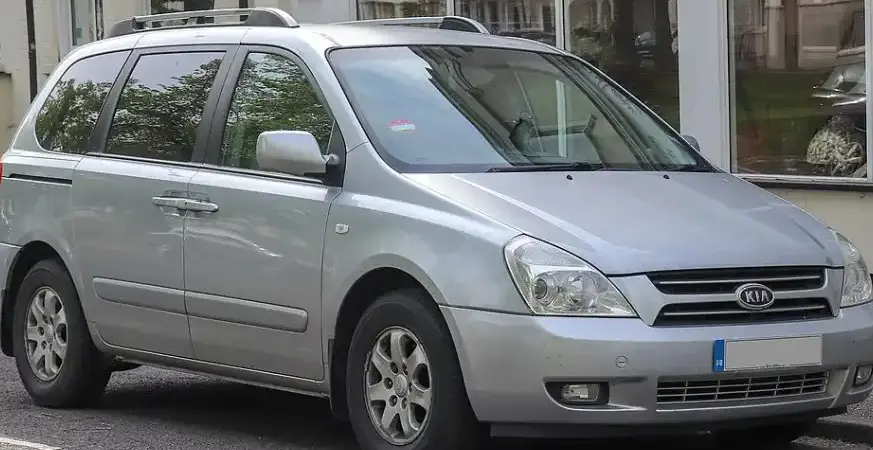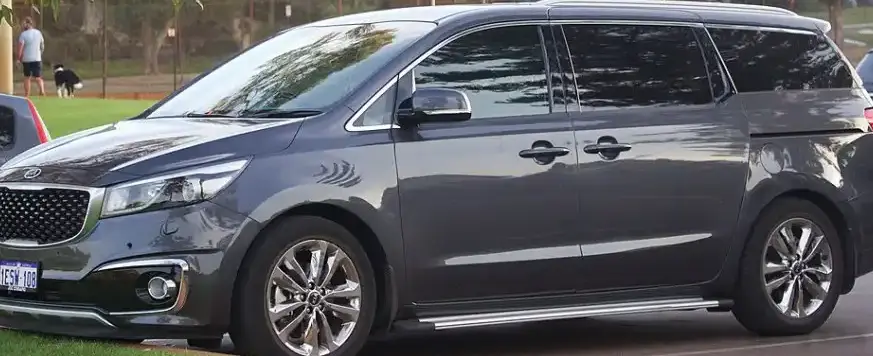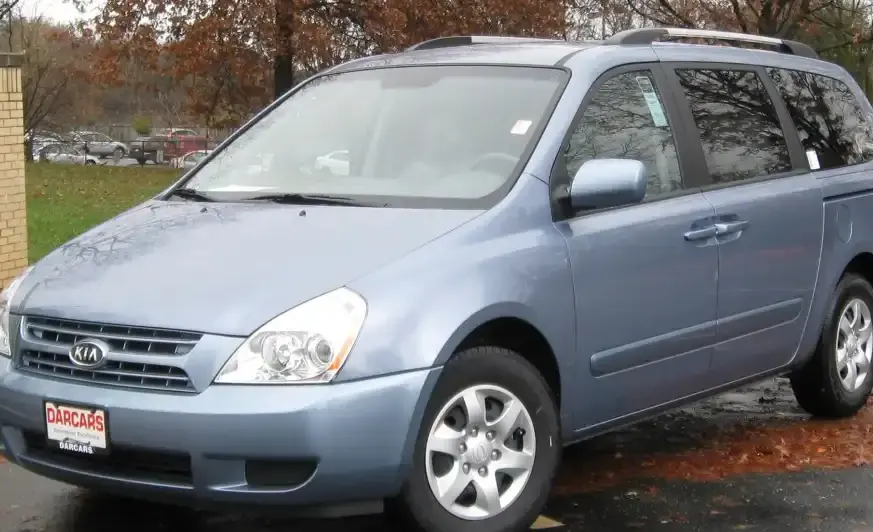
The Kia Sedona II Long Wheelbase (LWB) 3.8 V6 Automatic, produced from 2006 to 2014, represented a significant step forward for Kia in the competitive minivan segment. Positioned as a mid-to-upper trim level within the second-generation Sedona (codenamed MQ), this variant offered a compelling blend of space, power, and features aimed at families seeking a comfortable and practical vehicle. The LWB designation indicated an extended wheelbase compared to the standard Sedona, providing increased third-row legroom and cargo capacity. This model was primarily marketed in North America, where the minivan segment held considerable strength, and aimed to challenge established players like the Honda Odyssey and Toyota Sienna.
Technical Specifications
| Brand | Kia |
| Model | Sedona |
| Generation | Sedona II LWB |
| Type (Engine) | 3.8 V6 (254 Hp) Automatic |
| Start of production | 2006 |
| End of production | 2014 |
| Powertrain Architecture | Internal Combustion engine |
| Body type | Minivan |
| Seats | 7-8 |
| Doors | 5 |
| Fuel consumption (urban) | 14.7 l/100 km (16 US mpg, 19.2 UK mpg, 6.8 km/l) |
| Fuel consumption (extra urban) | 10.2 l/100 km (23.1 US mpg, 27.7 UK mpg, 9.8 km/l) |
| Fuel consumption (combined) | 13.1 l/100 km (18 US mpg, 21.6 UK mpg, 7.6 km/l) |
| Fuel Type | Petrol (Gasoline) |
| Acceleration 0 – 100 km/h | 9 sec |
| Acceleration 0 – 62 mph | 9 sec |
| Acceleration 0 – 60 mph | 8.6 sec |
| Maximum speed | 214 km/h (132.97 mph) |
| Emission standard | Euro 4 |
| Weight-to-power ratio | 8.3 kg/Hp, 120.6 Hp/tonne |
| Weight-to-torque ratio | 6.1 kg/Nm, 162.8 Nm/tonne |
| Power | 254 Hp @ 6000 rpm |
| Power per litre | 67.2 Hp/l |
| Torque | 343 Nm @ 3500 rpm (252.98 lb.-ft. @ 3500 rpm) |
| Engine layout | Front, Transverse |
| Engine displacement | 3778 cm3 (230.55 cu. in.) |
| Number of cylinders | 6 |
| Engine configuration | V-engine |
| Cylinder Bore | 96 mm (3.78 in.) |
| Piston Stroke | 87 mm (3.43 in.) |
| Compression ratio | 10.4:1 |
| Number of valves per cylinder | 4 |
| Fuel injection system | Multi-port manifold injection |
| Engine aspiration | Naturally aspirated engine |
| Valvetrain | DOHC |
| Kerb Weight | 2107 kg (4645.14 lbs.) |
| Max. weight | 2675 kg (5897.37 lbs.) |
| Max load | 568 kg (1252.23 lbs.) |
| Trunk (boot) space – minimum | 2268 l (80.09 cu. ft.) |
| Trunk (boot) space – maximum | 4007 l (141.51 cu. ft.) |
| Fuel tank capacity | 80 l (21.13 US gal, 17.6 UK gal) |
| Length | 5130 mm (201.97 in.) |
| Width | 1985 mm (78.15 in.) |
| Height | 1815 mm (71.46 in.) |
| Wheelbase | 3020 mm (118.9 in.) |
| Front track | 1685 mm (66.34 in.) |
| Rear (Back) track | 1685 mm (66.34 in.) |
| Drag coefficient (Cd) | 0.34 |
| Minimum turning circle | 12.07 m (39.6 ft.) |
| Drivetrain Architecture | The Internal combustion engine (ICE) drives the front wheels of the vehicle. |
| Drive wheel | Front wheel drive |
| Number of gears | 5 |
| Gearbox type | automatic transmission |
| Front brakes | Ventilated discs |
| Rear brakes | Disc |
| Assisting systems | ABS (Anti-lock braking system) |
| Tires size | 235/60 R17 |
| Wheel rims size | 17 |
Powertrain & Engine Architecture
The heart of the Sedona II LWB 3.8 V6 was the 3.8-liter (3778 cc) naturally aspirated V6 engine. This engine, internally designated as the G6DA, was a mainstay in Kia’s lineup during this period. It featured a 60-degree V-angle, a cast iron block, and aluminum cylinder heads. The engine utilized a multi-port fuel injection (MPI) system, delivering fuel directly into the intake ports, and a double overhead camshaft (DOHC) valvetrain with four valves per cylinder. This configuration allowed for a respectable 254 horsepower at 6000 rpm and 253 lb-ft of torque at 3500 rpm. The engine’s design prioritized smooth operation and reliability over outright performance. The five-speed automatic transmission, a common unit in Hyundai-Kia vehicles of the era, was the sole transmission offering for this variant. While not known for its sportiness, the transmission provided adequate shifts for everyday driving and highway cruising.
Driving Characteristics
The 3.8L V6 and five-speed automatic combination in the Sedona LWB delivered a comfortable, if not particularly exhilarating, driving experience. Acceleration from 0-60 mph took approximately 8.6 seconds, which was competitive within the minivan class but noticeably slower than some of the V6-powered rivals. The automatic transmission was tuned for smooth shifts and fuel efficiency, sometimes at the expense of responsiveness. The gear ratios were optimized for highway cruising, making long trips relatively effortless. However, passing maneuvers required careful planning. The extended wheelbase of the LWB model contributed to a stable and composed ride, even when fully loaded. The steering was light and easy, making maneuvering in tight spaces relatively simple, but lacked significant road feel.
Equipment & Trim Levels
The Sedona II LWB 3.8 V6 Automatic typically came well-equipped, reflecting its position as a mid-to-upper trim level. Standard features generally included air conditioning, power windows and locks, keyless entry, a CD player with auxiliary input, and alloy wheels. Higher trim levels, such as the SX, added features like leather upholstery, a sunroof, heated front seats, and a premium sound system. Optional extras included a rear-seat entertainment system, navigation, and upgraded safety features. Interior upholstery was typically cloth on lower trims and leather on higher trims. The dashboard layout was functional and straightforward, with easy-to-read gauges and logically placed controls.
Chassis & Braking
The Sedona II LWB utilized a front-wheel-drive platform with an independent MacPherson strut suspension in the front and a multi-link suspension in the rear. This setup provided a comfortable ride and decent handling characteristics. The LWB model’s longer wheelbase contributed to improved stability. Braking duties were handled by ventilated discs in the front and solid discs in the rear. Anti-lock Braking System (ABS) was standard. The suspension was tuned for comfort rather than sporty handling, prioritizing a smooth ride over sharp cornering. Stabilizer bars were included both front and rear to reduce body roll.
Market Reception & Comparison
The Kia Sedona II LWB 3.8 V6 Automatic was generally well-received by critics and consumers. It was praised for its spacious interior, comfortable ride, and competitive price point. However, some reviewers noted that its acceleration and handling were not as refined as those of some of its rivals, such as the Honda Odyssey and Toyota Sienna. Fuel economy was also a point of criticism, with the 18 mpg combined rating being somewhat lower than some competitors. Compared to the base 2.7L four-cylinder Sedona, the 3.8L V6 offered significantly more power and a smoother driving experience, justifying the higher price. Compared to the diesel options available in some markets, the gasoline V6 was simpler to maintain but less fuel-efficient.
Legacy
The Kia Sedona II LWB 3.8 V6 Automatic has proven to be a relatively reliable vehicle in the used car market. The 3.8L V6 engine is known for its durability, and the five-speed automatic transmission is generally dependable. Common maintenance issues include routine items such as oil changes, spark plug replacements, and occasional sensor failures. While not known for exceptional fuel economy, the Sedona LWB remains a popular choice for families seeking a spacious and affordable minivan. Its blend of practicality, comfort, and value has ensured its continued presence on roads today.