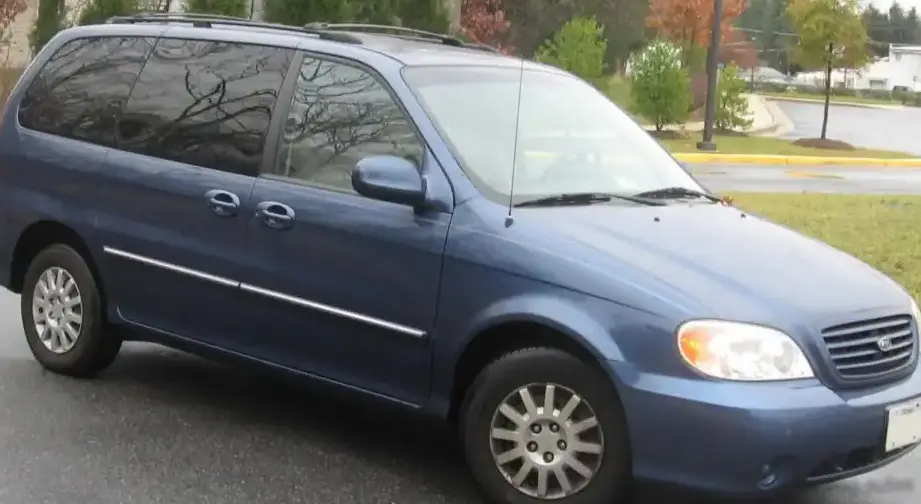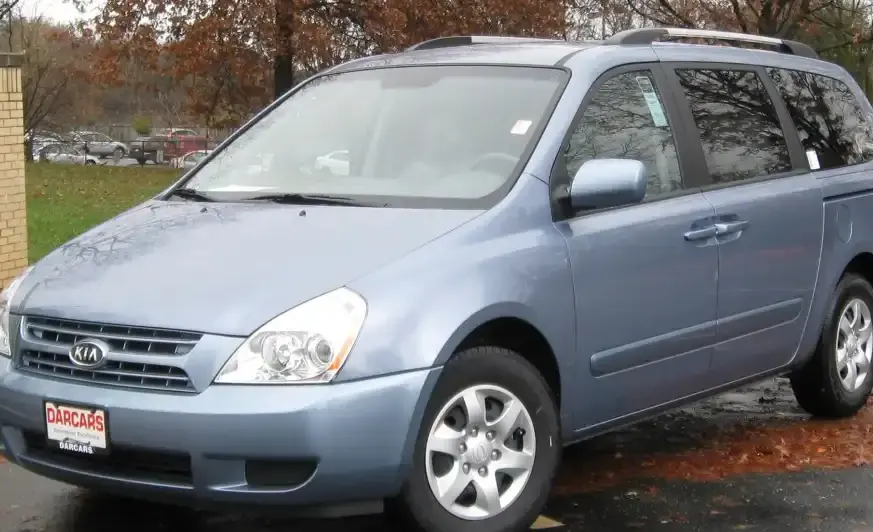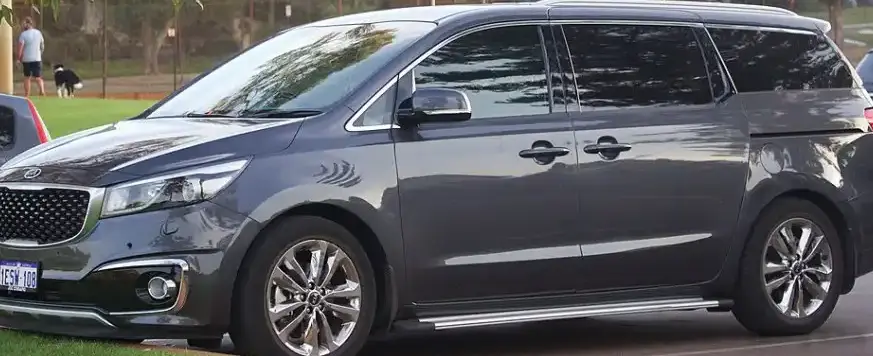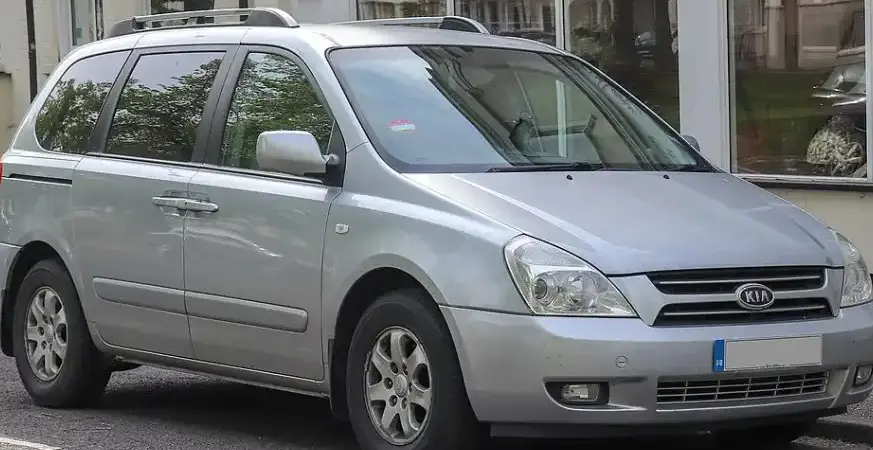
The Kia Sedona II SWB 3.8 V6 Automatic, produced from 2006 to 2014, represented a significant step forward for Kia in the North American minivan market. This short-wheelbase (SWB) version of the second-generation Sedona (internally designated as the MQ) aimed to provide a more manageable size for families who didn’t require the extended length of the long-wheelbase model, while still offering the practicality and space expected of a minivan. The 3.8-liter V6 engine paired with a five-speed automatic transmission was a key configuration, positioned as a strong mid-range offering within the Sedona lineup, balancing performance and fuel efficiency. It competed directly with established players like the Honda Odyssey, Toyota Sienna, and Dodge Caravan.
Technical Specifications
| Brand | Kia |
| Model | Sedona |
| Generation | Sedona II SWB |
| Type (Engine) | 3.8 V6 (254 Hp) Automatic |
| Start of production | 2006 |
| End of production | 2014 |
| Powertrain Architecture | Internal Combustion engine |
| Body type | Minivan |
| Seats | 7-8 |
| Doors | 5 |
| Fuel consumption (urban) | 14.7 l/100 km (16 US mpg, 19.2 UK mpg, 6.8 km/l) |
| Fuel consumption (extra urban) | 10.2 l/100 km (23.1 US mpg, 27.7 UK mpg, 9.8 km/l) |
| Fuel consumption (combined) | 13.1 l/100 km (18 US mpg, 21.6 UK mpg, 7.6 km/l) |
| Fuel Type | Petrol (Gasoline) |
| Acceleration 0 – 100 km/h | 8.6 sec |
| Acceleration 0 – 62 mph | 8.6 sec |
| Acceleration 0 – 60 mph | 8.2 sec |
| Maximum speed | 214 km/h (132.97 mph) |
| Emission standard | Euro 4 |
| Weight-to-power ratio | 7.8 kg/Hp, 128.3 Hp/tonne |
| Weight-to-torque ratio | 5.8 kg/Nm, 173.2 Nm/tonne |
| Power | 254 Hp @ 6000 rpm |
| Power per litre | 67.2 Hp/l |
| Torque | 343 Nm @ 3500 rpm (252.98 lb.-ft. @ 3500 rpm) |
| Engine layout | Front, Transverse |
| Engine displacement | 3778 cm3 (230.55 cu. in.) |
| Number of cylinders | 6 |
| Engine configuration | V-engine |
| Cylinder Bore | 96 mm (3.78 in.) |
| Piston Stroke | 87 mm (3.43 in.) |
| Compression ratio | 10.4:1 |
| Number of valves per cylinder | 4 |
| Fuel injection system | Multi-port manifold injection |
| Engine aspiration | Naturally aspirated engine |
| Valvetrain | DOHC |
| Kerb Weight | 1980 kg (4365.15 lbs.) |
| Max. weight | 2675 kg (5897.37 lbs.) |
| Max load | 695 kg (1532.21 lbs.) |
| Trunk (boot) space – minimum | 1750 l (61.8 cu. ft.) |
| Trunk (boot) space – maximum | 3435 l (121.31 cu. ft.) |
| Fuel tank capacity | 80 l (21.13 US gal, 17.6 UK gal) |
| Length | 4810 mm (189.37 in.) |
| Width | 1985 mm (78.15 in.) |
| Height | 1815 mm (71.46 in.) |
| Wheelbase | 2890 mm (113.78 in.) |
| Front track | 1685 mm (66.34 in.) |
| Rear (Back) track | 1685 mm (66.34 in.) |
| Drag coefficient (Cd) | 0.34 |
| Minimum turning circle | 11.64 m (38.19 ft.) |
| Drivetrain Architecture | Front wheel drive |
| Number of gears | 5 |
| Gearbox type | Automatic transmission |
| Front brakes | Ventilated discs |
| Rear brakes | Disc |
| Assisting systems | ABS (Anti-lock braking system) |
| Tires size | 225/70 R16 |
| Wheel rims size | 16 |
Powertrain & Engine Architecture
The heart of the Sedona II SWB 3.8 V6 Automatic is the 3.8-liter (3778 cc) naturally aspirated V6 engine. This engine, part of Kia’s G6DA series, utilizes a cast iron block with an aluminum cylinder head. It features dual overhead camshafts (DOHC) and four valves per cylinder, contributing to its respectable power output. The engine employs multi-port fuel injection, a common technology at the time, delivering fuel directly into the intake ports. The 254 horsepower peak is achieved at 6000 rpm, while the 253 lb-ft of torque is readily available at 3500 rpm. This torque curve provides good responsiveness for everyday driving and hauling passengers. Paired with the engine is a five-speed automatic transmission, providing smooth shifts and adequate gear ratios for both city and highway driving. While not a particularly advanced transmission by modern standards, it was reliable and well-suited to the engine’s characteristics.
Driving Characteristics
The 3.8L V6 and five-speed automatic combination in the Sedona SWB delivered a comfortable and capable driving experience. Acceleration to 60 mph took approximately 8.2 seconds, which was competitive for a minivan in its class. The automatic transmission, while not offering manual shift control, provided smooth and predictable gear changes. The gear ratios were tuned for everyday usability, prioritizing smooth acceleration and fuel economy over outright performance. Compared to the base 2.7L four-cylinder engine, the 3.8L V6 offered a significant boost in power and responsiveness, making it much more suitable for fully loaded vehicles or highway driving. It didn’t possess the sporty feel of some competitors, but it provided ample power for merging onto highways and overtaking slower traffic. The front-wheel-drive configuration contributed to predictable handling, although it wasn’t designed for aggressive cornering.
Equipment & Trim Levels
The 3.8L V6 Automatic trim typically represented a mid-level offering in the Sedona lineup. Standard features generally included air conditioning, power windows and locks, a CD player with auxiliary input, and cloth upholstery. Higher trim levels, such as the LX and EX, added features like leather upholstery, a sunroof, upgraded audio systems, and automatic climate control. Optional extras included a DVD entertainment system, power sliding doors, and a navigation system. Safety features, such as anti-lock brakes (ABS) and front airbags, were standard across all trims.
Chassis & Braking
The Sedona II SWB utilized a conventional front-wheel-drive chassis with an independent MacPherson strut suspension in the front and a multi-link suspension in the rear. This setup provided a comfortable ride quality, absorbing bumps and irregularities in the road effectively. Braking duties were handled by ventilated disc brakes in the front and solid disc brakes in the rear. ABS was standard, enhancing braking performance and stability, especially in slippery conditions. The suspension was tuned for comfort rather than sporty handling, prioritizing a smooth and stable ride for passengers.
Market Reception & Comparison
The Kia Sedona II SWB 3.8 V6 Automatic was generally well-received by automotive critics. It was praised for its spacious interior, comfortable ride, and strong value proposition. However, some reviewers noted that its handling wasn’t as sharp as some of its competitors, and the interior materials weren’t quite as refined. Fuel economy, at around 18 mpg combined, was average for the class. Compared to the base 2.7L engine, the 3.8L V6 offered a significant improvement in performance, making it the preferred choice for most buyers. It also offered a more competitive alternative to the more expensive Honda Odyssey and Toyota Sienna.
Legacy
The Kia Sedona II SWB 3.8 V6 Automatic has proven to be a relatively reliable vehicle in the used car market. The 3.8L V6 engine is known for its durability, and the five-speed automatic transmission is generally dependable. Common maintenance items include regular oil changes, timing belt replacement (typically around 60,000-100,000 miles), and inspection of the cooling system. Today, these Sedonas represent an affordable and practical option for families seeking a used minivan. While they may lack the advanced technology of newer models, they offer a comfortable and spacious interior, a reliable powertrain, and a good value for the price.