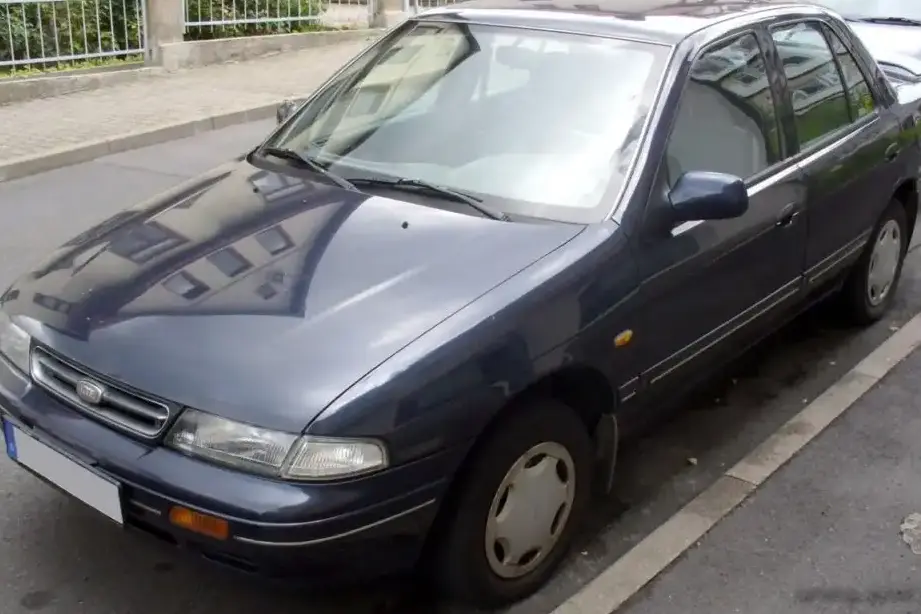
The Kia Sephia (FA) 1.8 i 16V, produced between 1995 and 1998, represented a significant step forward for the South Korean automaker in establishing a presence in the global compact car market. Positioned as a mid-range offering within the Sephia lineup, this variant aimed to provide a balance of performance, fuel efficiency, and affordability. The FA generation Sephia, built on Kia’s own platform, was a crucial model for the company as it sought to move beyond its reputation as a budget brand and compete with established Japanese and European manufacturers. This 1.8-liter, 16-valve engine paired with a five-speed manual transmission was a popular choice for buyers seeking a more engaging driving experience than the base models offered.
Technical Specifications
| Brand | Kia |
| Model | Sephia |
| Generation | Sephia (FA) |
| Type (Engine) | 1.8 i 16V (112 Hp) |
| Start of production | 1995 |
| End of production | 1998 |
| Powertrain Architecture | Internal Combustion engine |
| Body type | Sedan |
| Seats | 5 |
| Doors | 4 |
| Fuel Type | Petrol (Gasoline) |
| Acceleration 0 – 100 km/h | 10.3 sec |
| Acceleration 0 – 62 mph | 10.3 sec |
| Acceleration 0 – 60 mph | 9.8 sec |
| Maximum speed | 185 km/h (114.95 mph) |
| Weight-to-power ratio | 9.9 kg/Hp, 100.5 Hp/tonne |
| Weight-to-torque ratio | 7.3 kg/Nm, 136.4 Nm/tonne |
| Power | 112 Hp @ 5800 rpm |
| Power per litre | 62.5 Hp/l |
| Torque | 152 Nm @ 4400 rpm (112.11 lb.-ft. @ 4400 rpm) |
| Engine layout | Front, Transverse |
| Engine displacement | 1793 cm3 (109.42 cu. in.) |
| Number of cylinders | 4 |
| Engine configuration | Inline |
| Cylinder Bore | 81 mm (3.19 in.) |
| Piston Stroke | 87 mm (3.43 in.) |
| Compression ratio | 9.5:1 |
| Number of valves per cylinder | 4 |
| Fuel injection system | Multi-port manifold injection |
| Engine aspiration | Naturally aspirated engine |
| Valvetrain | DOHC |
| Kerb Weight | 1114 kg (2455.95 lbs.) |
| Max. weight | 1590 kg (3505.35 lbs.) |
| Max load | 476 kg (1049.4 lbs.) |
| Trunk (boot) space – minimum | 370 l (13.07 cu. ft.) |
| Trunk (boot) space – maximum | 692 l (24.44 cu. ft.) |
| Fuel tank capacity | 50 l (13.21 US gal | 11 UK gal) |
| Length | 4360 mm (171.65 in.) |
| Width | 1692 mm (66.61 in.) |
| Height | 1390 mm (54.72 in.) |
| Wheelbase | 2500 mm (98.43 in.) |
| Front track | 1440 mm (56.69 in.) |
| Rear (Back) track | 1435 mm (56.5 in.) |
| Drivetrain Architecture | The Internal combustion engine (ICE) drives the front wheels of the vehicle. |
| Drive wheel | Front wheel drive |
| Number of gears and type of gearbox | 5 gears, manual transmission |
| Front suspension | Wishbone |
| Rear suspension | Spring Strut |
| Front brakes | Ventilated discs |
| Rear brakes | Drum |
| Assisting systems | ABS (Anti-lock braking system) |
| Steering type | Steering rack and pinion |
| Power steering | Hydraulic Steering |
| Tires size | 185/60 R14 |
Powertrain & Engine Architecture
The heart of the Sephia 1.8 i 16V is the Kia-engineered, Mitsubishi-derived 1.8-liter inline-four cylinder engine. This engine, internally designated with various codes depending on the specific market, featured a double overhead camshaft (DOHC) valvetrain operating 16 valves (four per cylinder). The multi-port fuel injection system delivered fuel directly to each intake port, optimizing combustion efficiency. The engine’s 9.5:1 compression ratio was a compromise between performance and the ability to run on readily available fuel grades. The five-speed manual transmission provided a relatively direct connection between the engine and the front wheels, contributing to a more engaging driving experience. The transmission’s gear ratios were tuned for a balance of acceleration and highway cruising efficiency.
Driving Characteristics
The 1.8-liter engine in the Sephia delivered a noticeable improvement in performance compared to the smaller 1.5-liter engine offered in base models. Acceleration to 60 mph took approximately 9.8 seconds, making it competitive with other compact cars of the era. While not a sports car, the 112 horsepower and 152 Nm (112 lb-ft) of torque provided sufficient power for everyday driving and occasional highway passing maneuvers. The five-speed manual transmission allowed drivers to maintain optimal engine speed for various driving conditions. Compared to the automatic transmission option, the manual offered better fuel economy and a more connected feel. The suspension, while tuned for comfort, provided adequate handling characteristics for typical commuting and road trips.
Equipment & Trim Levels
The Sephia 1.8 i 16V typically came standard with features such as power steering, air conditioning, and an AM/FM radio. Higher trim levels offered options like power windows and locks, a sunroof, and upgraded interior upholstery. The interior design was functional and straightforward, prioritizing practicality over luxury. The dashboard layout was clean and easy to navigate, with clearly labeled controls. Safety features included standard anti-lock brakes (ABS), a relatively uncommon feature on compact cars in the mid-1990s.
Chassis & Braking
The Sephia’s chassis featured an independent front suspension with wishbones and a rear suspension utilizing a spring strut setup. This configuration provided a reasonable balance between ride comfort and handling stability. The front brakes were ventilated discs, offering good stopping power, while the rear brakes were drums. The steering system employed a rack-and-pinion setup with hydraulic power assistance, providing responsive and precise steering feel. The 185/60 R14 tires offered adequate grip for most driving conditions.
Market Reception & Comparison
The Kia Sephia 1.8 i 16V was generally well-received by automotive critics as a solid and affordable compact car. It was praised for its spacious interior, comfortable ride, and relatively strong engine performance. Compared to its competitors, such as the Honda Civic and Toyota Corolla, the Sephia offered a lower price point, but lacked the same level of refinement and brand recognition. The 1.8-liter engine provided a noticeable advantage over the base 1.5-liter engine in terms of acceleration and overall driving experience. Fuel economy was competitive with other cars in its class, averaging around 25-30 mpg in mixed driving conditions.
Legacy
The Kia Sephia (FA) 1.8 i 16V played a vital role in establishing Kia as a credible player in the global automotive market. The 1.8-liter engine proved to be relatively reliable, with proper maintenance. Today, well-maintained examples of the Sephia 1.8 i 16V are becoming increasingly sought after by collectors and enthusiasts. While parts availability can be a challenge, the relatively simple mechanical design of the car makes it a viable option for those seeking an affordable and reliable classic car. The Sephia’s success paved the way for Kia’s continued growth and development, ultimately leading to the company’s current position as a major automotive manufacturer.