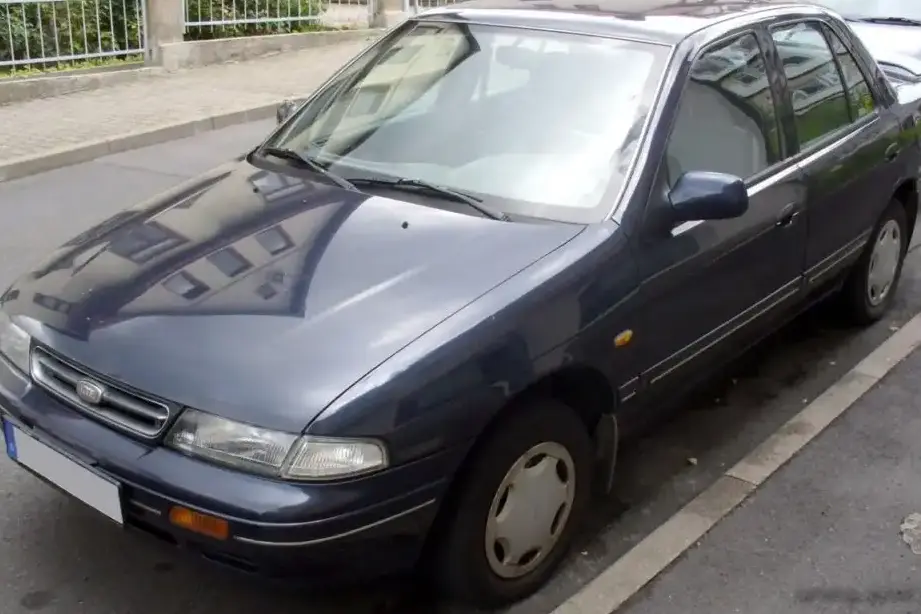
The Kia Sephia, introduced in 1993, represented a significant step forward for the South Korean automaker as it aimed to establish a stronger presence in global markets. The FA series, specifically the hatchback variant produced between 1996 and 1997, offered a more practical and compact alternative to the sedan. The 1.5 i 16V engine, producing 80 horsepower, was a key component of the Sephia’s entry-level offering, designed for affordability and fuel efficiency. This variant played a crucial role in attracting budget-conscious buyers, particularly in emerging markets where Kia was actively expanding its reach. It was positioned as the base model, offering essential transportation without the added cost of more powerful engines or luxurious features.
Technical Specifications
| Brand | Kia |
| Model | Sephia |
| Generation | Sephia Hatchback (FA) |
| Type (Engine) | 1.5 i 16V (80 Hp) |
| Start of production | 1996 |
| End of production | 1997 |
| Powertrain Architecture | Internal Combustion engine |
| Body type | Hatchback |
| Fuel Type | Petrol (Gasoline) |
| Power | 80 Hp |
| Engine Model/Code | B5E |
| Engine aspiration | Naturally aspirated engine |
| Engine oil capacity | 3.2 l (3.38 US qt | 2.82 UK qt) |
| Coolant capacity | 6 l (6.34 US qt | 5.28 UK qt) |
Powertrain & Engine Architecture
The heart of the Sephia FA 1.5 i 16V is the B5E engine, a 1.5-liter inline-four cylinder gasoline engine. This engine utilizes a single overhead camshaft (SOHC) design with four valves per cylinder – hence the “16V” designation. The B5E engine is naturally aspirated, meaning it doesn’t employ a turbocharger or supercharger. Fuel delivery is managed by a multi-point fuel injection system, a relatively modern feature for its time, contributing to improved fuel efficiency and reduced emissions compared to carbureted engines. The engine’s block is constructed from cast iron, providing durability, while the cylinder head is made of aluminum alloy, helping to reduce weight. The automatic transmission paired with this engine is typically a three-speed unit. While not known for its sophistication, it provided convenient operation for drivers prioritizing ease of use over performance. The transmission’s gear ratios were optimized for fuel economy and smooth, if not particularly brisk, acceleration.
Driving Characteristics
The 80 horsepower output of the 1.5-liter engine, coupled with the three-speed automatic transmission, resulted in modest performance. Acceleration was adequate for city driving and highway merging, but it wasn’t designed for spirited driving. The automatic transmission, while convenient, did contribute to a noticeable loss of power compared to the available five-speed manual transmission. Gear changes were relatively smooth, but the limited number of gears meant the engine often operated at higher RPMs during highway cruising, potentially impacting fuel economy and noise levels. The Sephia’s suspension was tuned for comfort, providing a reasonably compliant ride over uneven road surfaces. However, this comfort came at the expense of handling precision; the car exhibited noticeable body roll during cornering. The steering was light and easy to use, making it well-suited for urban environments.
Equipment & Trim Levels
The Sephia FA 1.5 i 16V automatic, as the entry-level trim, typically came equipped with basic features. Standard equipment generally included manual windows and door locks, a basic AM/FM radio, and cloth upholstery. Air conditioning was often an optional extra, as were power steering and power windows. Interior appointments were functional rather than luxurious, with hard plastic surfaces dominating the cabin. The dashboard layout was straightforward and easy to understand. Safety features were also basic for the time, typically including seatbelts and a driver’s side airbag. Optional extras could include upgraded audio systems, alloy wheels, and a sunroof, but these were rarely seen on the base model.
Chassis & Braking
The Sephia FA utilized a front-engine, front-wheel-drive layout. The suspension consisted of MacPherson struts at the front and a torsion beam axle at the rear. This configuration was common for compact cars of the era, offering a balance between cost-effectiveness and acceptable ride quality. Braking duties were handled by disc brakes at the front and drum brakes at the rear. This combination was typical for vehicles in this price range. The braking system lacked advanced features like ABS (Anti-lock Braking System) on the base model, which was reserved for higher trim levels. The steering system was a rack-and-pinion setup, providing reasonably precise steering feel, although it lacked the feedback of more sophisticated systems.
Market Reception & Comparison
The Kia Sephia FA 1.5 i 16V automatic was generally well-received as an affordable and practical transportation option. Critics acknowledged its value for money, but often noted its lack of refinement and performance compared to competitors from established Japanese and European brands. Compared to the higher-trim Sephia models with larger engines (like the 1.8L), the 1.5L automatic offered significantly less power and acceleration. However, it also delivered better fuel economy. Against rivals like the Honda Civic, Toyota Corolla, and Nissan Sentra, the Sephia offered a lower price point but generally lacked the same level of build quality and reliability. The automatic transmission, while convenient, was often criticized for its sluggishness and impact on fuel economy compared to the manual transmission.
Legacy
The Kia Sephia, and specifically the FA hatchback with the 1.5-liter engine, played a vital role in establishing Kia’s foothold in the global automotive market. While not known for exceptional performance or luxury, it offered a reliable and affordable option for budget-conscious buyers. The B5E engine, while relatively simple in design, proved to be reasonably durable and maintenance costs were generally low. Today, these vehicles are relatively rare and often found in well-maintained condition, appealing to collectors seeking affordable classic cars. The Sephia’s legacy lies in its contribution to Kia’s brand building and its demonstration of the company’s commitment to providing value-for-money vehicles. Parts availability can be a challenge, but many components are still obtainable through aftermarket suppliers or salvaged vehicles. The 1.5L automatic Sephia remains a testament to a period when affordability and practicality were paramount in the automotive industry.