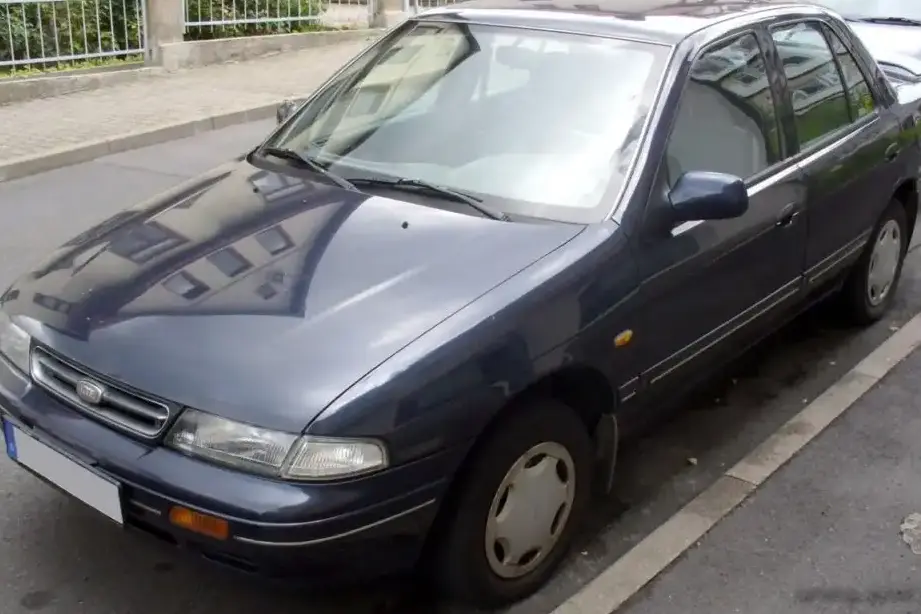
The Kia Sephia, specifically the FA series hatchback produced between 1995 and 1999, represented a significant step forward for the South Korean automaker as it attempted to establish a foothold in the North American and European markets. This generation Sephia, available in both sedan and hatchback body styles, aimed to provide affordable and reliable transportation. The 1.8 i 16V variant, producing 112 horsepower, was positioned as a mid-range offering, balancing performance with fuel economy and cost. It served as a crucial model in Kia’s early efforts to overcome perceptions of lower build quality and compete with established Japanese and European brands.
Technical Specifications
| Brand | Kia |
| Model | Sephia |
| Generation | Sephia Hatchback (FA) |
| Type (Engine) | 1.8 i 16V (112 Hp) |
| Start of production | 1995 |
| End of production | 1999 |
| Powertrain Architecture | Internal Combustion engine |
| Body type | Hatchback |
| Fuel Type | Petrol (Gasoline) |
| Power | 112 Hp |
| Engine aspiration | Naturally aspirated engine |
Powertrain & Engine Architecture
The heart of the 1995-1999 Kia Sephia 1.8 i 16V hatchback is a 1.8-liter inline-four cylinder engine. This engine, internally designated as the G4CS, is a naturally aspirated unit featuring a cast iron block and an aluminum cylinder head. The “16V” designation indicates the engine utilizes four valves per cylinder – two intake and two exhaust – enhancing volumetric efficiency and contributing to its power output. Fuel delivery is managed by a multi-point fuel injection system, a common setup for vehicles of this era. While not particularly advanced, this system provided reliable and consistent fuel atomization. The engine’s valvetrain employs a single overhead camshaft (SOHC) design, simplifying the engine’s construction and reducing maintenance requirements.
The 1.8L engine was typically paired with a four-speed automatic transmission. This transmission, while providing ease of use, wasn’t known for its sporty responsiveness. It prioritized smooth shifts and fuel efficiency over outright acceleration. The automatic transmission featured standard torque converter technology, providing multiplication of engine torque at lower speeds. The gear ratios were tuned for everyday driving conditions, with a focus on comfortable cruising rather than aggressive performance. Manual transmission options were also available, offering a more engaging driving experience and slightly improved fuel economy.
Driving Characteristics
The Sephia 1.8L automatic offered a fairly unremarkable, but adequate, driving experience. With 112 horsepower and approximately 125 lb-ft of torque, acceleration was best described as leisurely. The four-speed automatic transmission, while smooth, contributed to a noticeable delay in response when requesting sudden bursts of power. Compared to the base 1.5L engine, the 1.8L provided a noticeable improvement in acceleration and highway passing power. However, it didn’t offer the same level of performance as larger-engined competitors. The automatic transmission’s gear ratios were spaced to prioritize fuel economy, meaning the engine often felt strained when climbing hills or carrying a full load. The suspension, tuned for comfort, provided a relatively soft ride, absorbing bumps and imperfections in the road reasonably well. However, this came at the expense of handling precision; the Sephia wasn’t a particularly sporty car to drive.
Equipment & Trim Levels
The 1.8 i 16V Sephia hatchback typically came equipped with a reasonable level of standard features for its price point. These generally included power steering, air conditioning, and an AM/FM radio with cassette player. Depending on the specific trim level (often designated as “SE” or “Sport” in some markets), additional features such as power windows and locks, central locking, and upgraded interior trim were available. Interior upholstery was typically cloth, with a relatively simple and durable design. The dashboard layout was functional but lacked the aesthetic sophistication of some European competitors. Optional extras included alloy wheels, a sunroof, and upgraded audio systems. The hatchback body style itself offered increased practicality compared to the sedan, with a larger cargo area accessible through the rear liftgate.
Chassis & Braking
The Kia Sephia FA hatchback utilized a relatively conventional chassis design. It featured a MacPherson strut front suspension and a torsion beam rear suspension. This setup provided a good balance between ride comfort and handling stability, although it wasn’t particularly sophisticated. The torsion beam rear suspension, while cost-effective, limited independent wheel movement, potentially affecting handling during cornering. Braking duties were typically handled by disc brakes on the front wheels and drum brakes on the rear wheels. This configuration was common for vehicles in this price range during the mid-1990s. Anti-lock braking systems (ABS) were often available as an optional extra, enhancing braking performance and safety, particularly on slippery surfaces. Stabilizer bars were included on both the front and rear axles to reduce body roll during cornering.
Market Reception & Comparison
The Kia Sephia 1.8L automatic received mixed reviews from automotive critics. While praised for its affordability and relatively spacious interior, it was often criticized for its lack of refinement and underwhelming performance. Compared to established Japanese competitors like the Honda Civic and Toyota Corolla, the Sephia felt less polished and lacked the same level of build quality. However, it offered a lower price point, making it an attractive option for budget-conscious buyers. Fuel economy was generally considered to be average for its class, with the automatic transmission slightly reducing efficiency compared to the manual version. Reliability was a concern for some early models, but Kia gradually improved build quality throughout the production run. The 1.8L engine proved to be reasonably durable, but maintenance costs could be higher than some competitors due to the limited availability of parts in certain markets.
Legacy
The Kia Sephia, and specifically the 1.8 i 16V hatchback, played a crucial role in establishing Kia as a viable automotive brand in international markets. While not a groundbreaking vehicle, it offered a compelling value proposition for buyers seeking affordable transportation. Today, the Sephia FA is a relatively rare sight on the roads, and well-maintained examples are becoming increasingly collectible. The 1.8L engine, while not known for its exceptional performance, proved to be reasonably reliable with proper maintenance. Parts availability can be a challenge, but many components are still obtainable through aftermarket suppliers or salvage yards. The Sephia’s legacy lies in its contribution to Kia’s growth and its role as a stepping stone towards the more sophisticated and highly regarded vehicles the company produces today. It represents a pivotal moment in Kia’s history, demonstrating their ambition to compete on a global scale.