Technical Specifications
| Brand | Kia |
| Model | Shuma |
| Generation | Shuma (FB) |
| Type (Engine) | 1.5 i 16V (88 Hp) |
| Start of production | 1997 |
| End of production | 2001 |
| Powertrain Architecture | Internal Combustion engine |
| Body type | Hatchback |
| Seats | 5 |
| Doors | 5 |
| Fuel consumption (urban) | 10.5 l/100 km (22.4 US mpg) |
| Fuel consumption (extra urban) | 6.3 l/100 km (37.3 US mpg) |
| Fuel Type | Petrol (Gasoline) |
| Acceleration 0 – 100 km/h | 11.8 sec |
| Acceleration 0 – 62 mph | 11.8 sec |
| Acceleration 0 – 60 mph | 11.2 sec |
| Maximum speed | 180 km/h (111.85 mph) |
| Weight-to-power ratio | 12.5 kg/Hp |
| Weight-to-torque ratio | 8.1 kg/Nm |
| Power | 88 Hp @ 5000 rpm |
| Torque | 135 Nm @ 4000 rpm (99.57 lb.-ft. @ 4000 rpm) |
| Engine layout | Front, Transverse |
| Engine Model/Code | BFD |
| Engine displacement | 1498 cm3 (91.41 cu. in.) |
| Number of cylinders | 4 |
| Engine configuration | Inline |
| Cylinder Bore | 78 mm (3.07 in.) |
| Piston Stroke | 78.4 mm (3.09 in.) |
| Compression ratio | 9.3:1 |
| Number of valves per cylinder | 4 |
| Fuel injection system | Multi-port manifold injection |
| Engine aspiration | Naturally aspirated |
| Engine oil capacity | 3.6 l (3.8 US qt | 3.17 UK qt) |
| Coolant capacity | 6 l (6.34 US qt | 5.28 UK qt) |
| Kerb Weight | 1100 kg (2425.08 lbs.) |
| Max. weight | 1600 kg (3527.4 lbs.) |
| Max load | 500 kg (1102.31 lbs.) |
| Trunk (boot) space – minimum | 328 l (11.58 cu. ft.) |
| Trunk (boot) space – maximum | 780 l (27.55 cu. ft.) |
| Fuel tank capacity | 50 l (13.21 US gal | 11 UK gal) |
| Length | 4475 mm (176.18 in.) |
| Width | 1711 mm (67.36 in.) |
| Height | 1427 mm (56.18 in.) |
| Wheelbase | 2560 mm (100.79 in.) |
| Front track | 1465 mm (57.68 in.) |
| Rear track | 1455 mm (57.28 in.) |
| Drivetrain | Front wheel drive |
| Number of gears | 4, automatic transmission |
| Front suspension | Coil spring |
| Rear suspension | Coil spring |
| Front brakes | Disc |
| Rear brakes | Drum |
| Assisting systems | ABS (Anti-lock braking system) |
| Steering type | Steering rack and pinion |
| Power steering | Hydraulic |
| Tires size | 185/60R14 |
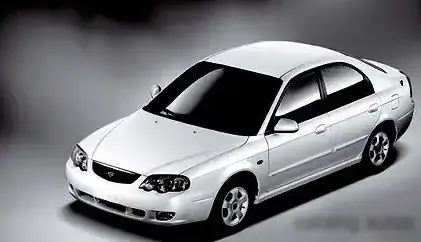
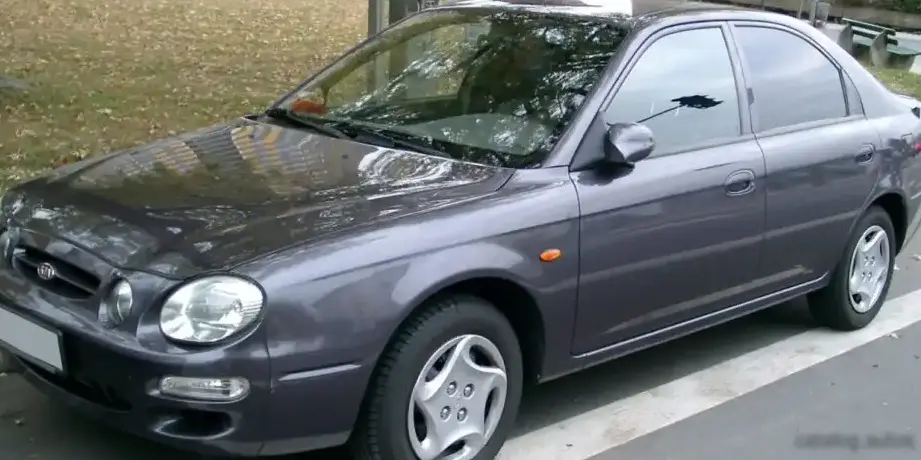
The Kia Shuma (FB) 1.5 i 16V, produced between 1997 and 2001, marked Kia’s initial foray into the highly competitive compact hatchback market. Positioned as an affordable and practical family vehicle, the Shuma aimed to deliver a balance of functionality and value, particularly in European and Asian markets where compact hatchbacks were in high demand. This specific 1.5-liter, 88 horsepower variant, coupled with a four-speed automatic transmission, served as the base engine and transmission choice for many Shuma buyers, prioritizing ease of use and fuel efficiency over outright performance. It was a key part of the broader FB generation of the Shuma, representing a significant advancement for Kia in terms of design and engineering.
Powertrain & Engine Architecture
The core of the Shuma 1.5 i 16V was the BFD engine, a 1.5-liter inline-four cylinder gasoline engine. This engine featured a single overhead camshaft (SOHC) design with four valves per cylinder, hence the 16V designation. The BFD engine utilized multi-point fuel injection, a common technology in the late 1990s, to deliver fuel directly into the intake ports. While not as sophisticated as direct injection systems, this provided a good compromise between efficiency and performance for the time. The engine’s 9.3:1 compression ratio was typical for naturally aspirated engines of that era. Paired with this engine was a four-speed automatic transmission, engineered for smooth and convenient operation. This transmission wasn’t designed for sporty driving, instead focusing on comfortable shifts and ease of use. The automatic transmission was a major draw for buyers who valued the convenience of not having to manually shift gears, especially in city traffic.
Driving Characteristics
The Shuma 1.5 i 16V Automatic offered modest performance. Generating 88 horsepower and 135 Nm (99.57 lb-ft) of torque, acceleration from 0 to 60 mph took approximately 11.2 seconds, and it reached a top speed of 180 km/h (111.85 mph). The automatic transmission’s gear ratios were optimized for fuel economy and relaxed cruising rather than quick acceleration. Compared to the manual transmission version of the same engine, the automatic experienced a slight performance decrease due to the transmission’s inherent efficiency losses. Higher-trim Shumas equipped with larger engines, like the 1.8-liter, provided considerably more power and a more engaging driving experience, but came at a higher cost. The 1.5L automatic was best suited for daily commutes and comfortable highway driving.
Equipment & Trim Levels
The 1.5 i 16V Automatic generally came with a basic level of standard equipment. Typical features included power steering, central locking, electric front windows, and an AM/FM radio. Interior upholstery was usually cloth, and the dashboard had a functional, though somewhat simple, design. Optional extras could include air conditioning, alloy wheels, and an upgraded audio system. Trim levels varied by market, but the 1.5L automatic generally represented the entry-level offering in the Shuma lineup. It targeted buyers who prioritized affordability and practicality over luxury features.
Chassis & Braking
The Shuma’s chassis featured a coil spring suspension system at both the front and rear. The front suspension utilized MacPherson struts, while the rear employed a torsion beam setup. This configuration provided a reasonable balance between ride comfort and handling. Braking was handled by disc brakes at the front and drum brakes at the rear. An Anti-lock Braking System (ABS) was standard, improving safety by preventing wheel lockup during hard braking. The Shuma’s suspension and braking systems were adequate for its weight and intended use, but weren’t as advanced as those found in some competing vehicles.
Market Reception & Comparison
The Kia Shuma 1.5 i 16V Automatic was generally well-received as an affordable and reliable family car. Reviewers praised its spacious interior and practical hatchback design. However, the engine’s performance was often considered somewhat underwhelming, especially when paired with the automatic transmission. Compared to other compact hatchbacks of the time, such as the Volkswagen Golf or Ford Focus, the Shuma offered a lower price point but lacked the same level of refinement and driving dynamics. Fuel economy was a strong point, with the 1.5L engine achieving around 37.3 US mpg on the highway. Reliability was generally good, although some owners reported minor issues with the automatic transmission over time.
Legacy
The Kia Shuma 1.5 i 16V Automatic, while not a performance standout, played a crucial role in establishing Kia as a competitive player in the European and Asian compact car markets. The BFD engine proved to be reasonably durable, and many examples remain on the road today. In the used car market, these Shumas are often sought after by buyers looking for an inexpensive and practical vehicle. Maintenance costs are typically low, and parts availability remains reasonable. While it may not offer the excitement of higher-performance variants, the 1.5L automatic Shuma stands as a testament to Kia’s early efforts to produce affordable and dependable vehicles.