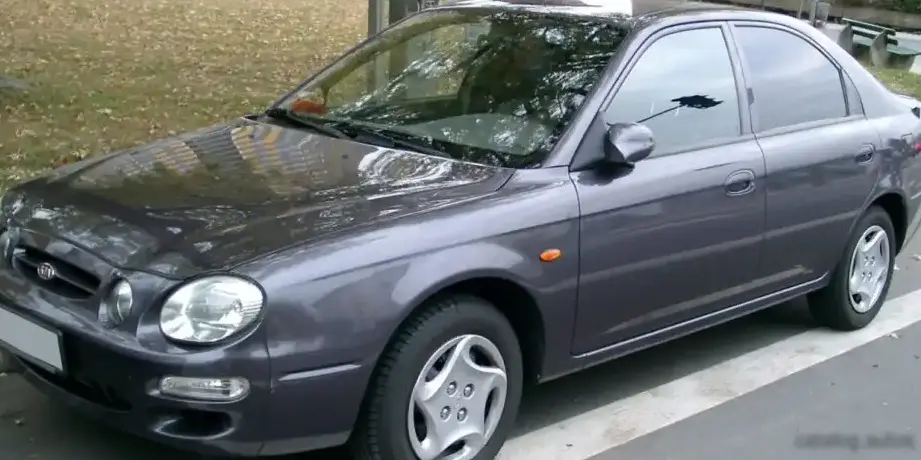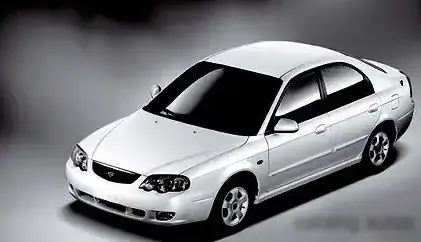
The Kia Shuma II 1.6 i 16V, produced between 2001 and 2004, represented Kia’s entry into the competitive compact hatchback segment in Europe and other international markets. Positioned as a mainstream offering, it aimed to provide affordable transportation with a focus on practicality and value. This variant, powered by the 1.6-liter inline-four engine producing 101 horsepower, was often considered the sweet spot in the Shuma II lineup, balancing performance with fuel efficiency. It was a key model for Kia as they sought to establish a stronger brand presence outside of their native South Korea.
Technical Specifications
| Brand | Kia |
| Model | Shuma |
| Generation | Shuma II |
| Type (Engine) | 1.6 i 16V (101 Hp) |
| Start of production | 2001 |
| End of production | 2004 |
| Powertrain Architecture | Internal Combustion engine |
| Body type | Hatchback |
| Seats | 5 |
| Doors | 5 |
| Fuel consumption (urban) | 10.7 l/100 km (22 US mpg) |
| Fuel consumption (extra urban) | 6.5 l/100 km (36.2 US mpg) |
| Fuel Type | Petrol (Gasoline) |
| Acceleration 0 – 100 km/h | 11.5 sec |
| Acceleration 0 – 62 mph | 11.5 sec |
| Acceleration 0 – 60 mph | 10.9 sec |
| Maximum speed | 186 km/h (115.58 mph) |
| Weight-to-power ratio | 11 kg/Hp |
| Weight-to-torque ratio | 7.7 kg/Nm |
| Power | 101 Hp @ 5500 rpm |
| Torque | 144 Nm @ 4500 rpm (106.21 lb.-ft. @ 4500 rpm) |
| Engine layout | Front, Transverse |
| Engine Model/Code | A6D |
| Engine displacement | 1594 cm3 (97.27 cu. in.) |
| Number of cylinders | 4 |
| Engine configuration | Inline |
| Cylinder Bore | 78 mm (3.07 in.) |
| Piston Stroke | 83.4 mm (3.28 in.) |
| Compression ratio | 9.5:1 |
| Number of valves per cylinder | 4 |
| Fuel injection system | Multi-port manifold injection |
| Engine aspiration | Naturally aspirated engine |
| Valvetrain | DOHC |
| Engine oil capacity | 3.4 l (3.59 US qt | 2.99 UK qt) |
| Kerb Weight | 1115 kg (2458.15 lbs.) |
| Max. weight | 1625 kg (3582.51 lbs.) |
| Max load | 510 kg (1124.36 lbs.) |
| Trunk (boot) space – minimum | 440 l (15.54 cu. ft.) |
| Trunk (boot) space – maximum | 1207 l (42.62 cu. ft.) |
| Fuel tank capacity | 50 l (13.21 US gal | 11 UK gal) |
| Length | 4525 mm (178.15 in.) |
| Width | 1720 mm (67.72 in.) |
| Height | 1415 mm (55.71 in.) |
| Wheelbase | 2560 mm (100.79 in.) |
| Front track | 1465 mm (57.68 in.) |
| Rear (Back) track | 1455 mm (57.28 in.) |
| Drivetrain Architecture | Front wheel drive |
| Number of gears | 5 gears, manual transmission |
| Front suspension | Coil spring |
| Rear suspension | Coil spring |
| Front brakes | Ventilated discs |
| Rear brakes | Drum |
| Assisting systems | ABS (Anti-lock braking system) |
| Steering type | Steering rack and pinion |
| Power steering | Hydraulic Steering |
| Tires size | 185/65 R14 |
Powertrain & Engine Architecture
The heart of the Shuma II 1.6 i 16V is the Kia-developed A6D engine, a 1.6-liter inline-four cylinder gasoline engine. This engine utilizes a multi-port fuel injection system, delivering fuel directly into the intake ports just before the intake valves. The engine features a double overhead camshaft (DOHC) valvetrain, operating 16 valves (four per cylinder) to optimize airflow and improve volumetric efficiency. The 9.5:1 compression ratio was a common figure for engines of this era, balancing performance and fuel economy. The A6D engine, while not particularly groundbreaking, was known for its relative simplicity and ease of maintenance. The 5-speed manual transmission was the standard offering for this trim, providing a reasonably direct connection between the engine and the front wheels. The transmission’s gear ratios were tuned for everyday driving, prioritizing fuel efficiency over outright acceleration.
Driving Characteristics
The 101 horsepower and 144 Nm (106 lb-ft) of torque produced by the 1.6-liter engine provided adequate, though not exhilarating, performance. Acceleration from 0 to 60 mph took around 10.9 seconds, and the top speed was approximately 115.58 mph. In real-world driving, the Shuma II 1.6 i 16V felt best suited to city and suburban commutes. The engine was reasonably responsive at lower RPMs, making it easy to navigate traffic. However, when fully loaded or attempting to overtake on the highway, the engine could feel strained, requiring downshifts to maintain momentum. Compared to the more powerful (and often more expensive) Shuma II variants, such as those equipped with larger engines, this 1.6-liter model prioritized fuel economy and affordability over outright performance. The 5-speed manual transmission offered a decent level of control, but the shift quality wasn’t particularly sporty.
Equipment & Trim Levels
The Shuma II 1.6 i 16V typically came with a fairly basic level of standard equipment. This included power steering, central locking, electric front windows, and an AM/FM radio. Interior upholstery was typically cloth, with a relatively simple dashboard layout. Optional extras included air conditioning, alloy wheels, and a more advanced audio system. The trim level for this engine/transmission combination generally represented the entry to mid-range offering within the Shuma II lineup. It was aimed at buyers who wanted a practical and reliable hatchback without the added cost of more luxurious features.
Chassis & Braking
The Shuma II utilized a relatively conventional chassis design, with coil spring suspension at all four corners. The front suspension employed MacPherson struts, while the rear suspension used a torsion beam setup. This configuration provided a comfortable ride quality, although it wasn’t particularly sporty. The braking system consisted of ventilated discs at the front and drum brakes at the rear. ABS (Anti-lock Braking System) was standard, enhancing safety by preventing wheel lockup during hard braking. The Shuma II’s suspension and braking systems were adequate for its weight class and intended use, but they weren’t designed for high-performance driving.
Market Reception & Comparison
The Kia Shuma II 1.6 i 16V was generally well-received by critics as a value-for-money option in the compact hatchback segment. It offered a reasonable level of equipment and a reliable powertrain at a competitive price point. However, it wasn’t considered a class leader in terms of performance or refinement. Compared to rivals like the Ford Focus or Volkswagen Golf, the Shuma II lacked the same level of driving sophistication. Fuel economy was a strong point, with the 1.6-liter engine achieving around 36.2 US mpg on the highway. Reliability was generally good, although some owners reported minor issues with the electrical system.
Legacy
The Kia Shuma II 1.6 i 16V has become a relatively affordable and readily available used car. The A6D engine is known for its durability, and with proper maintenance, it can provide many years of reliable service. However, finding parts for older Kias can sometimes be challenging. Today, the Shuma II is often seen as a practical and economical choice for first-time car buyers or those seeking a budget-friendly hatchback. While it may not offer the same level of prestige or performance as some of its rivals, it remains a testament to Kia’s growing presence in the global automotive market.