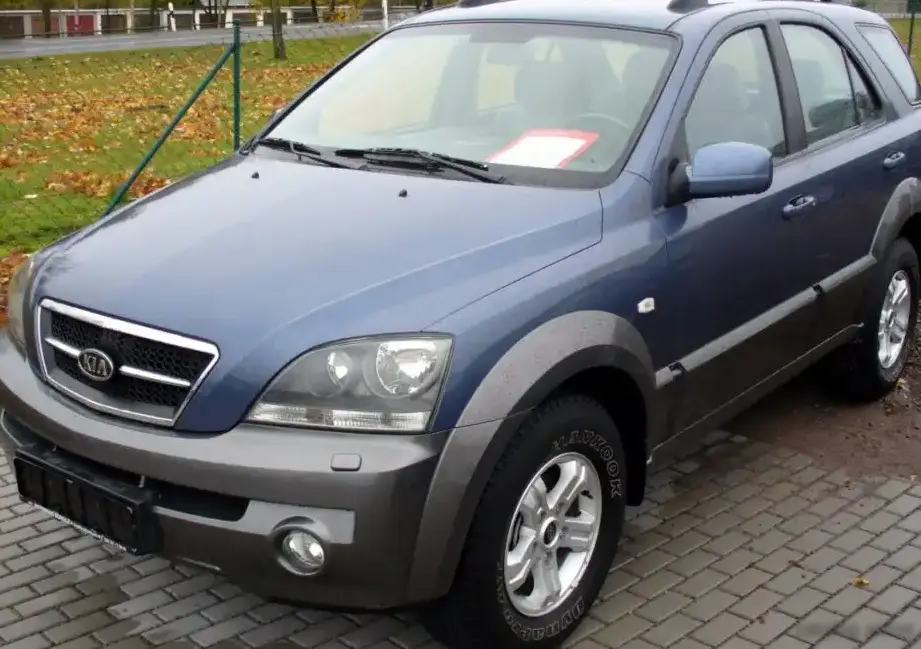
The Kia Sorento I (facelift, produced from 2006 to 2009) 3.3i V6 Automatic represents a significant offering in Kia’s early foray into the mid-size SUV market. Introduced as part of the first-generation Sorento (codenamed BC), this variant aimed to provide a more premium experience with a larger engine and the convenience of an automatic transmission. Positioned as the top-tier trim level during its production run, it catered to buyers seeking a capable and well-equipped family vehicle. The facelift brought styling updates and refinements to the original Sorento, enhancing its appeal and competitiveness.
Technical Specifications
| Brand | Kia |
| Model | Sorento |
| Generation | Sorento I (facelift 2006) |
| Type (Engine) | 3.3i V6 Automatic (238 Hp) |
| Start of production | 2006 |
| End of production | 2009 |
| Powertrain Architecture | Internal Combustion engine |
| Body type | SUV |
| Seats | 5 |
| Doors | 5 |
| Fuel Type | Petrol (Gasoline) |
| Acceleration 0 – 100 km/h | 9.8 sec |
| Acceleration 0 – 62 mph | 9.8 sec |
| Acceleration 0 – 60 mph | 9.3 sec |
| Maximum speed | 190 km/h (118.06 mph) |
| Emission standard | Euro 4 |
| Weight-to-power ratio | 8.3 kg/Hp, 121.1 Hp/tonne |
| Power | 238 Hp @ 6000 rpm |
| Power per litre | 72.3 Hp/l |
| Engine layout | Front, Longitudinal |
| Engine Model/Code | G6DB |
| Engine displacement | 3294 cm3 (201.01 cu. in.) |
| Number of cylinders | 6 |
| Engine configuration | V-engine |
| Number of valves per cylinder | 4 |
| Fuel injection system | Multi-port manifold injection |
| Engine aspiration | Naturally aspirated engine |
| Valvetrain | DOHC |
| Engine oil capacity | 5.2 l (5.49 US qt | 4.58 UK qt) |
| Coolant capacity | 9 l (9.51 US qt | 7.92 UK qt) |
| Kerb Weight | 1965 kg (4332.08 lbs) |
| Length | 4590 mm (180.71 in) |
| Width | 1865 mm (73.43 in) |
| Height | 1730 mm (68.11 in) |
| Drive wheel | All wheel drive (4×4) |
| Number of gears and type of gearbox | 5 gears, automatic transmission |
| Front brakes | Ventilated discs |
| Rear brakes | Ventilated discs |
| Assisting systems | ABS (Anti-lock braking system) |
| Tires size | 245/65R17; 245/70R16 |
Powertrain & Engine Architecture
The heart of the 2006-2009 Kia Sorento 3.3i is the G6DB engine, a 3.3-liter naturally aspirated V6. This engine utilizes a cast iron block with an aluminum cylinder head, a common configuration for durability and weight reduction. The engine employs multi-port fuel injection (MPI), delivering fuel directly into the intake ports just before the intake valves. This system, while not as advanced as direct injection, was reliable and provided adequate performance for the vehicle’s intended use. The dual overhead camshaft (DOHC) valvetrain, with four valves per cylinder, contributes to efficient cylinder filling and exhaust scavenging. The engine produces 238 horsepower at 6000 rpm and 226 lb-ft of torque. The engine is mounted longitudinally in the chassis, driving all four wheels through a five-speed automatic transmission. This transmission, while providing smooth shifts, isn’t known for being particularly fuel-efficient compared to more modern automatics.
Driving Characteristics
The 3.3i V6 Automatic Sorento offers a comfortable and capable driving experience. Acceleration from 0-60 mph takes approximately 9.3 seconds, which was respectable for a mid-size SUV of its era. The automatic transmission provides smooth gear changes, but can feel somewhat sluggish during quick acceleration or when attempting to downshift for passing maneuvers. The all-wheel-drive system enhances traction in various weather conditions, making it a suitable vehicle for those living in areas with snow or rain. Compared to the base 2.4L four-cylinder engine, the 3.3i V6 provides significantly more power and torque, resulting in a more confident and relaxed driving experience, especially when fully loaded with passengers and cargo. It also feels more responsive than the diesel options available in European markets.
Equipment & Trim Levels
As the top-of-the-line trim, the 3.3i V6 Automatic Sorento came standard with a generous array of features. These typically included air conditioning, power windows and locks, a CD player with multiple speakers, and alloy wheels. Higher-end models often featured leather upholstery, a sunroof, and upgraded audio systems. Safety features such as ABS brakes were standard. Optional extras could include a navigation system, heated seats, and automatic climate control. The interior design was functional and relatively spacious, offering comfortable seating for five passengers. The overall aesthetic was geared towards practicality and durability rather than outright luxury.
Chassis & Braking
The Sorento I utilized a body-on-frame construction, a traditional SUV design that prioritized robustness and off-road capability. The suspension consisted of independent front suspension with coil springs and a multi-link rear suspension. This setup provided a reasonably comfortable ride, although it wasn’t as refined as the unibody construction found in many modern crossovers. Braking duties were handled by ventilated disc brakes on all four wheels, providing adequate stopping power for the vehicle’s weight. The ABS system helped to maintain steering control during hard braking. Stabilizer bars were fitted to both the front and rear axles to reduce body roll during cornering.
Market Reception & Comparison
The Kia Sorento, particularly the 3.3i V6 Automatic variant, was generally well-received by critics as a capable and affordable SUV. It offered a compelling alternative to more established competitors like the Honda Pilot and Toyota Highlander, often at a lower price point. However, some reviewers noted that the interior materials and overall refinement weren’t quite on par with those of its Japanese rivals. Fuel economy was also a point of criticism, as the 3.3i V6 engine wasn’t particularly efficient. Compared to the base 2.4L engine, the 3.3i V6 offered a significant performance upgrade, but at the cost of increased fuel consumption. The diesel variants, popular in Europe, offered better fuel economy but lacked the smooth power delivery of the V6.
Legacy
The Kia Sorento I, and specifically the 3.3i V6 Automatic, played a crucial role in establishing Kia as a viable player in the SUV market. While not without its flaws, the vehicle offered a compelling combination of space, capability, and affordability. The G6DB engine proved to be relatively reliable, although regular maintenance is essential to prevent issues such as oil leaks and timing belt failures. Today, the 2006-2009 Sorento 3.3i V6 Automatic can be found on the used car market at relatively affordable prices. It remains a popular choice for those seeking a rugged and dependable SUV for family transportation or light off-road adventures. Its simplicity and relatively low running costs make it an attractive option for budget-conscious buyers.