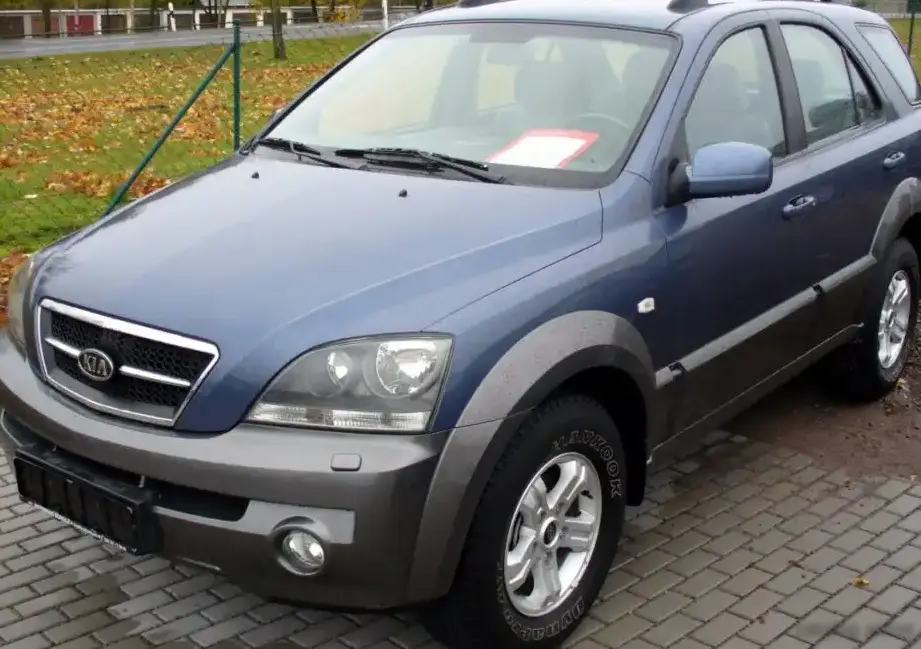
The Kia Sorento II 2.4 4WD (175 Hp) represents a significant iteration in Kia’s expansion into the mid-size crossover SUV market. Produced from 2009 to 2012, this variant occupied a middle ground within the second-generation Sorento (XM) lineup, offering a balance between affordability, practicality, and all-weather capability. The Sorento II, built on the XM platform, aimed to provide a more refined and spacious alternative to traditional SUVs, leaning towards a car-based crossover design. This particular 2.4-liter, four-wheel-drive configuration was targeted at families and individuals seeking a versatile vehicle for both daily commuting and occasional off-road excursions.
Technical Specifications
| Brand | Kia |
| Model | Sorento |
| Generation | Sorento II |
| Type (Engine) | 2.4 4WD (175 Hp) |
| Start of production | 2009 |
| End of production | 2012 |
| Powertrain Architecture | Internal Combustion engine |
| Body type | SUV |
| Seats | 7 |
| Doors | 5 |
| Fuel consumption (urban) | 11.4 l/100 km (20.6 US mpg) |
| Fuel consumption (extra urban) | 7.1 l/100 km (33.1 US mpg) |
| Fuel consumption (combined) | 8.7 l/100 km (27 US mpg) |
| Fuel Type | Petrol (Gasoline) |
| Acceleration 0 – 100 km/h | 11.1 sec |
| Acceleration 0 – 62 mph | 11.1 sec |
| Acceleration 0 – 60 mph | 10.5 sec |
| Maximum speed | 186 km/h (115.58 mph) |
| Emission standard | Euro 5 |
| Weight-to-power ratio | 9.1 kg/Hp |
| Weight-to-torque ratio | 7.1 kg/Nm |
| Power | 175 Hp @ 6000 rpm |
| Torque | 225 Nm @ 3750 rpm (165.95 lb.-ft. @ 3750 rpm) |
| Engine layout | Front, Transverse |
| Engine displacement | 2349 cm3 (143.34 cu. in.) |
| Number of cylinders | 4 |
| Engine configuration | Inline |
| Number of valves per cylinder | 4 |
| Fuel injection system | Multi-port manifold injection |
| Engine aspiration | Naturally aspirated engine |
| Engine oil capacity | 4.6 l (4.86 US qt | 4.05 UK qt) |
| Kerb Weight | 1590 kg (3505.35 lbs.) |
| Length | 4685 mm (184.45 in.) |
| Width | 1885 mm (74.21 in.) |
| Height | 1710 mm (67.32 in.) |
| Wheelbase | 2700 mm (106.3 in.) |
| Front track | 1618 mm (63.7 in.) |
| Rear track | 1621 mm (63.82 in.) |
| Drive wheel | All wheel drive (4×4) |
| Number of gears | 6 |
| Gearbox type | Manual transmission |
| Front brakes | Ventilated discs |
| Rear brakes | Ventilated discs |
| Assisting systems | ABS (Anti-lock braking system) |
Powertrain & Engine Architecture
The heart of the Sorento II 2.4 4WD is the Kia-developed 2.4-liter inline-four cylinder engine. Designated as the G4KA engine family, this powerplant utilizes a dual overhead camshaft (DOHC) design with four valves per cylinder. The engine employs multi-point fuel injection, delivering fuel directly into the intake ports. This configuration, while not as advanced as direct injection systems, offered a good balance of cost-effectiveness and performance for the target market. The engine produces 175 horsepower at 6000 rpm and 225 Nm (165.95 lb-ft) of torque at 3750 rpm. This power is then channeled through a six-speed manual transmission to the all-wheel-drive system. The all-wheel-drive system is primarily front-wheel drive, engaging the rear wheels when slip is detected, providing enhanced traction in adverse conditions.
Driving Characteristics
The 2.4-liter engine, paired with the six-speed manual transmission, provided adequate, though not exhilarating, performance. Acceleration from 0 to 60 mph took approximately 10.5 seconds, making it competitive within its class but slower than V6-powered Sorento models. The manual transmission offered drivers more control over the engine’s power band, allowing for precise gear selection. The all-wheel-drive system enhanced stability and grip, particularly on slippery surfaces. However, the 2.4-liter engine required more frequent downshifting when tackling steep inclines or carrying a full load of passengers and cargo. Compared to the more powerful 2.7-liter V6, the 2.4-liter felt less refined and exhibited more engine noise under heavy acceleration.
Equipment & Trim Levels
The Sorento II 2.4 4WD typically came standard with features such as air conditioning, power windows and locks, a basic audio system, and ABS brakes. Higher trim levels added features like alloy wheels, a sunroof, leather upholstery, and a more advanced audio system with Bluetooth connectivity. Safety features included dual front airbags, side airbags, and curtain airbags. The interior design was functional and spacious, offering seating for up to seven passengers. The third-row seats were best suited for children or shorter adults.
Chassis & Braking
The Sorento II utilized a MacPherson strut front suspension and a multi-link rear suspension. This setup provided a comfortable ride quality, absorbing bumps and irregularities in the road surface effectively. The 2.4 4WD model featured ventilated disc brakes on all four wheels, providing adequate stopping power. The ABS system helped to prevent wheel lockup during hard braking, enhancing stability and control. Stabilizer bars were included on both the front and rear axles to reduce body roll during cornering.
Market Reception & Comparison
The Kia Sorento II 2.4 4WD was generally well-received by automotive critics as a practical and affordable family SUV. It was praised for its spacious interior, comfortable ride, and standard all-wheel-drive system. However, some critics noted that the 2.4-liter engine lacked the power and refinement of the V6 option. Fuel economy was considered average for its class, with combined fuel consumption rated at 8.7 l/100 km (27 US mpg). Compared to competitors like the Honda CR-V and Toyota RAV4, the Sorento offered a more aggressive styling and a lower price point.
Legacy
The Kia Sorento II 2.4 4WD has proven to be a relatively reliable vehicle in the used car market. The G4KA engine is known for its durability, although regular maintenance is essential to prevent issues. Common problems include oil leaks and occasional sensor failures. The all-wheel-drive system has also proven to be robust, with few reported issues. Today, these Sorentos represent an affordable entry point into the mid-size SUV segment, offering a practical and capable vehicle for families and individuals alike. Its blend of affordability, space, and all-weather capability continues to make it a popular choice among used car buyers.