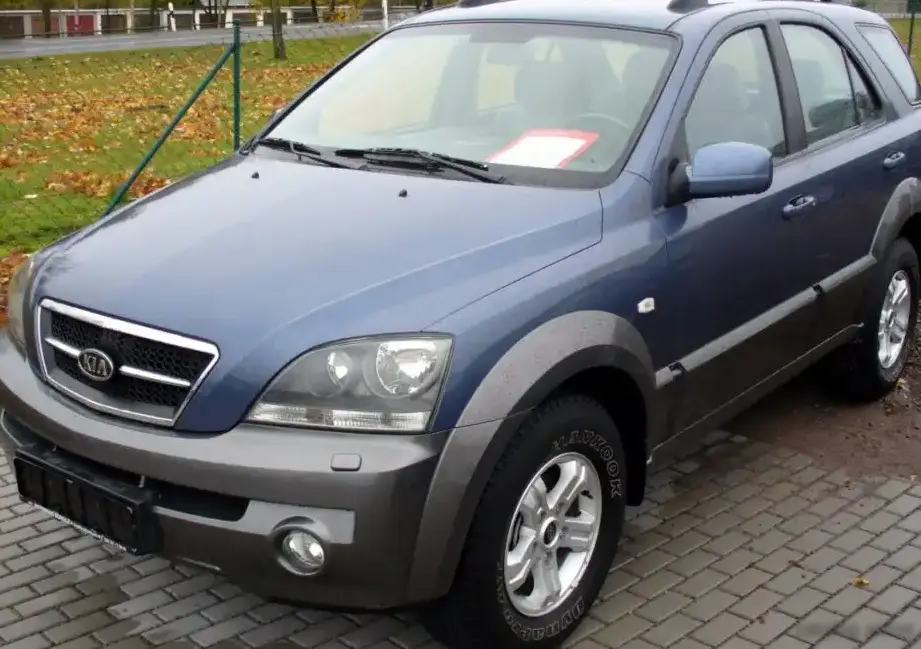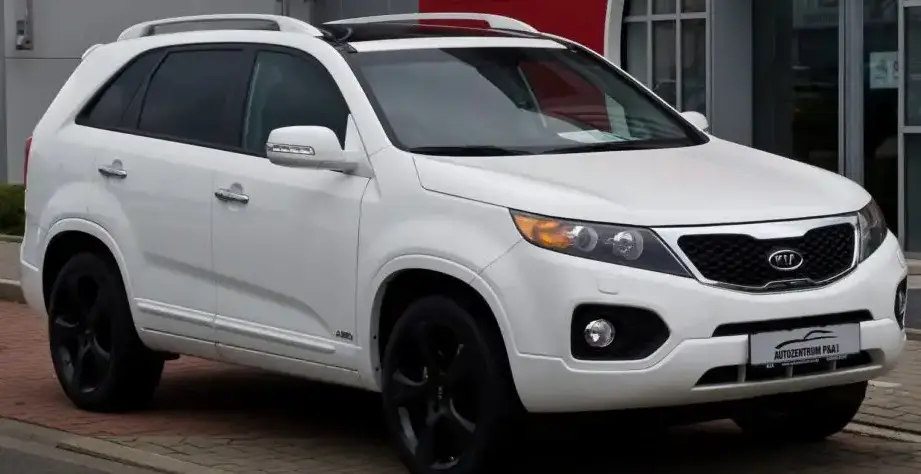
The Kia Sorento II 3.5 V6 CVVT (276 Hp) AWD Sportmatic represents a significant offering in Kia’s second-generation Sorento lineup, produced from 2009 to 2012. Positioned as a premium trim within the range, this variant combined a powerful V6 engine with all-wheel drive and a six-speed automatic transmission featuring a “Sportmatic” manual shift mode. The Sorento II, built on the UM platform, aimed to provide a compelling alternative to established mid-size SUVs, particularly in markets where three-row seating and all-weather capability were highly valued. This specific configuration was primarily targeted towards North American and European consumers seeking a blend of performance, space, and practicality.
Technical Specifications
| Brand | Kia |
| Model | Sorento |
| Generation | Sorento II |
| Type (Engine) | 3.5 V6 CVVT (276 Hp) AWD Sportmatic |
| Start of production | 2009 |
| End of production | 2012 |
| Powertrain Architecture | Internal Combustion engine |
| Body type | SUV |
| Seats | 7 |
| Doors | 5 |
| Fuel consumption (urban) | 13.1 l/100 km (18 US mpg, 21.6 UK mpg, 7.6 km/l) |
| Fuel consumption (extra urban) | 9.8 l/100 km (24 US mpg, 28.8 UK mpg, 10.2 km/l) |
| Fuel Type | Petrol (Gasoline) |
| Weight-to-power ratio | 6.5 kg/Hp, 154.6 Hp/tonne |
| Weight-to-torque ratio | 5.3 kg/Nm, 188.2 Nm/tonne |
| Power | 276 Hp @ 6300 rpm |
| Power per litre | 79.5 Hp/l |
| Torque | 336 Nm @ 5000 rpm (247.82 lb.-ft. @ 5000 rpm) |
| Engine layout | Front, Transverse |
| Engine Model/Code | G6DC |
| Engine displacement | 3470 cm3 (211.75 cu. in.) |
| Number of cylinders | 6 |
| Engine configuration | V-engine |
| Cylinder Bore | 92 mm (3.62 in.) |
| Piston Stroke | 87 mm (3.43 in.) |
| Compression ratio | 10.6:1 |
| Number of valves per cylinder | 4 |
| Fuel injection system | Multi-port manifold injection |
| Engine aspiration | Naturally aspirated engine |
| Valvetrain | DOHC |
| Engine oil capacity | 5.7 l (6.02 US qt | 5.02 UK qt) |
| Kerb Weight | 1785 kg (3935.25 lbs.) |
| Trunk (boot) space – minimum | 258 l (9.11 cu. ft.) |
| Trunk (boot) space – maximum | 2053 l (72.5 cu. ft.) |
| Fuel tank capacity | 68 l (17.96 US gal | 14.96 UK gal) |
| Permitted trailer load with brakes (12%) | 1588 kg (3500.94 lbs.) |
| Length | 4671 mm (183.9 in.) |
| Width | 1885 mm (74.21 in.) |
| Height | 1709 mm (67.28 in.) |
| Wheelbase | 2700 mm (106.3 in.) |
| Front track | 1618 mm (63.7 in.) |
| Rear (Back) track | 1621 mm (63.82 in.) |
| Ride height (ground clearance) | 191 mm (7.52 in.) |
| Drag coefficient (Cd) | 0.38 |
| Minimum turning circle (turning diameter) | 10.9 m (35.76 ft.) |
| Approach angle | 28° |
| Departure angle | 23° |
| Drivetrain Architecture | All wheel drive (4×4). ICE drives front wheels, rear wheels engaged via clutch. |
| Number of gears and type of gearbox | 6 gears, automatic transmission Sportmatic |
| Front suspension | Independent type McPherson, Transverse stabilizer |
| Rear suspension | Independent multi-link suspension, Transverse stabilizer |
| Front brakes | Ventilated discs, 299.72 mm |
| Rear brakes | Disc, 302.26 mm |
| Assisting systems | ABS (Anti-lock braking system) |
| Steering type | Steering rack and pinion |
| Power steering | Hydraulic Steering |
| Tires size | 235/60 R18 |
| Wheel rims size | 7J x 18 |
Powertrain & Engine Architecture
At the heart of the Sorento II 3.5 V6 AWD Sportmatic lies the G6DC engine, a 3.5-liter naturally aspirated V6. This engine utilizes a dual overhead camshaft (DOHC) valvetrain with four valves per cylinder, and Kia’s Continuously Variable Valve Timing (CVVT) technology. CVVT optimizes valve timing based on engine speed and load, improving both performance and fuel efficiency. The engine employs multi-point fuel injection, delivering fuel directly to the intake ports. The 60-degree V-angle contributes to a relatively smooth engine operation. The six-speed automatic transmission, designated as “Sportmatic,” offered both fully automatic operation and a manual shift mode allowing drivers to select gears for more control. The all-wheel-drive system is primarily front-wheel drive, engaging the rear wheels via a multi-plate clutch when slippage is detected, providing enhanced traction in adverse conditions.
Driving Characteristics
The 276 horsepower and 247.82 lb-ft of torque provided by the 3.5L V6 and six-speed automatic resulted in respectable acceleration for a mid-size SUV. While not a sports car, the Sorento II 3.5 V6 offered ample power for highway merging and overtaking. The Sportmatic function allowed for more engaged driving, but the transmission wasn’t particularly quick to respond to manual shifts. Compared to the base 2.4L four-cylinder engine, the V6 offered a significantly more refined and powerful driving experience. The AWD system provided confident handling in slippery conditions, but added weight compared to front-wheel-drive models. The automatic transmission’s gear ratios were tuned for a balance of fuel economy and performance, prioritizing smooth cruising over outright acceleration.
Equipment & Trim Levels
The 3.5 V6 AWD Sportmatic trim typically included a generous array of standard features. These commonly included leather upholstery, heated front seats, a premium audio system, automatic climate control, power-adjustable driver’s seat, and alloy wheels. Optional extras often included a sunroof, navigation system, and rear-seat entertainment system. The interior design focused on providing a comfortable and spacious environment for passengers, with a focus on family-friendly features. The dashboard layout was functional and straightforward, with easy-to-use controls.
Chassis & Braking
The Sorento II utilized an independent McPherson strut suspension in the front and an independent multi-link suspension in the rear. This setup provided a comfortable ride quality while maintaining reasonable handling characteristics. Stabilizer bars were fitted to both axles to reduce body roll during cornering. Braking duties were handled by ventilated discs at the front and solid discs at the rear. Anti-lock braking system (ABS) was standard, enhancing safety during emergency braking situations. The suspension tuning was geared towards providing a comfortable ride rather than sporty handling.
Market Reception & Comparison
The Kia Sorento II 3.5 V6 AWD Sportmatic was generally well-received by automotive critics. It was praised for its spacious interior, comfortable ride, and powerful engine. However, some reviewers noted that the fuel economy was relatively poor compared to some competitors. Compared to other V6-powered SUVs in its class, such as the Honda Pilot and Toyota Highlander, the Sorento offered a more affordable price point, but lacked some of the refinement and brand recognition of its Japanese rivals. The 2.4L four-cylinder Sorento offered better fuel economy but lacked the power and refinement of the V6.
Legacy
The G6DC 3.5L V6 engine, while generally reliable, is known to require regular maintenance, including timely oil changes and coolant flushes. Some owners have reported issues with the timing chain tensioner over the long term. The six-speed automatic transmission has also proven to be relatively durable, but proper fluid maintenance is crucial. Today, the Sorento II 3.5 V6 AWD Sportmatic can be found on the used car market at relatively affordable prices. It remains a viable option for buyers seeking a spacious, capable, and well-equipped SUV, but potential buyers should be aware of the potential maintenance requirements associated with the V6 engine and automatic transmission.