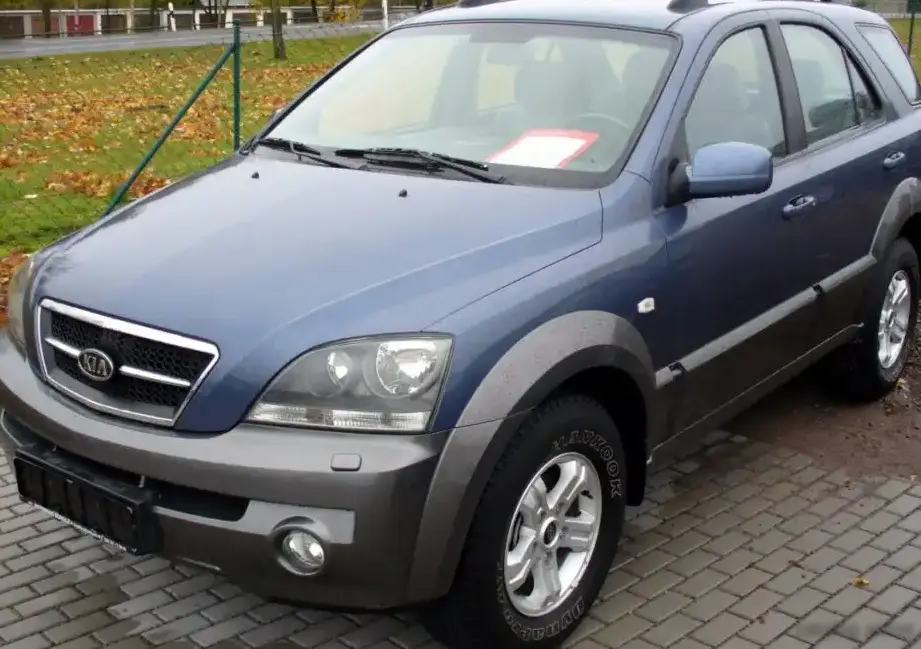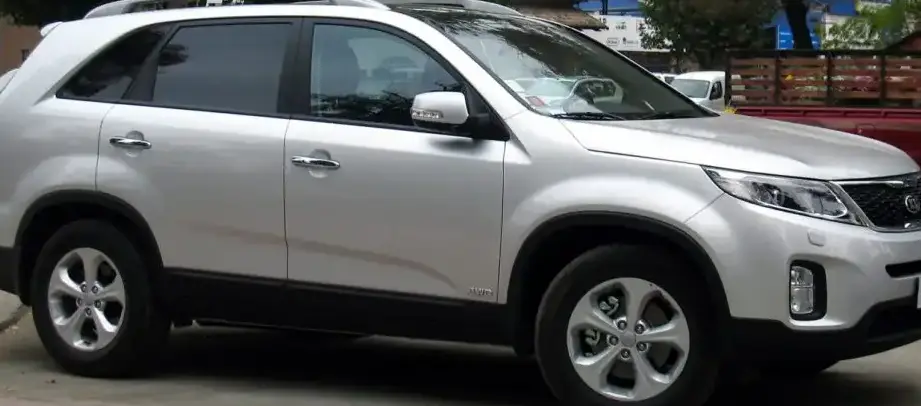
The Kia Sorento II, specifically the facelifted version introduced in 2012, represented a significant step forward for the Korean automaker in the competitive mid-size SUV segment. This iteration, produced through 2014, offered a blend of practicality, comfort, and increasingly sophisticated technology. Among the engine and drivetrain options available, the 2.2D 16V CRDi with 197 horsepower and a six-speed automatic transmission paired with four-wheel drive (4WD) occupied a prominent position, appealing to buyers seeking a balance of performance, fuel efficiency, and all-weather capability. This variant was positioned as a mid-to-upper trim level, offering more power and refinement than the base engine options while remaining more accessible than potential future high-performance trims.
Technical Specifications
| Brand | Kia |
| Model | Sorento |
| Generation | Sorento II (facelift 2012) |
| Type (Engine) | 2.2D 16V CRDi (197 Hp) 4WD Automatic |
| Start of production | 2012 |
| End of production | 2014 |
| Powertrain Architecture | Internal Combustion engine |
| Body type | SUV |
| Seats | 5-7 |
| Doors | 5 |
| Fuel consumption (urban) | 8.9 l/100 km (26.4 US mpg, 31.7 UK mpg, 11.2 km/l) |
| Fuel consumption (extra urban) | 5.5 l/100 km (42.8 US mpg, 51.4 UK mpg, 18.2 km/l) |
| Fuel consumption (combined) | 6.8 l/100 km (34.6 US mpg, 41.5 UK mpg, 14.7 km/l) |
| CO2 emissions | 178 g/km |
| Fuel Type | Diesel |
| Acceleration 0 – 100 km/h | 9.9 sec |
| Acceleration 0 – 62 mph | 9.9 sec |
| Acceleration 0 – 60 mph | 9.4 sec |
| Maximum speed | 190 km/h (118.06 mph) |
| Emission standard | Euro 5 |
| Weight-to-power ratio | 9.2 kg/Hp, 108.5 Hp/tonne |
| Weight-to-torque ratio | 4.2 kg/Nm, 240.2 Nm/tonne |
| Power | 197 Hp |
| Power per litre | 89.6 Hp/l |
| Torque | 436 Nm @ 1800 rpm (321.58 lb.-ft. @ 1800 rpm) |
| Engine layout | Front, Transverse |
| Engine Model/Code | D4HB |
| Engine displacement | 2199 cm3 (134.19 cu. in.) |
| Number of cylinders | 4 |
| Engine configuration | Inline |
| Fuel injection system | Diesel Commonrail |
| Engine aspiration | Turbocharger, Intercooler |
| Engine oil capacity | 6.7 l (7.08 US qt | 5.9 UK qt) |
| Coolant capacity | 9 l (9.51 US qt | 7.92 UK qt) |
| Kerb Weight | 1815 kg (4001.39 lbs.) |
| Max. weight | 2510 kg (5533.6 lbs.) |
| Max load | 695 kg (1532.21 lbs.) |
| Trunk (boot) space – minimum | 515 l (18.19 cu. ft.) |
| Fuel tank capacity | 70 l (18.49 US gal | 15.4 UK gal) |
| Length | 4685 mm (184.45 in.) |
| Width | 1885 mm (74.21 in.) |
| Height | 1745 mm (68.7 in.) |
| Wheelbase | 2700 mm (106.3 in.) |
| Minimum turning circle | 10.9 m (35.76 ft.) |
| Drive wheel | All wheel drive (4×4) |
| Number of gears | 6 |
| Gearbox type | automatic transmission |
| Assisting systems | ABS (Anti-lock braking system) |
| Steering type | Steering rack and pinion |
| Power steering | Electric Steering |
| Tires size | 235/65 R17; 235/60 R18; 235/55 R19 |
| Wheel rims size | 17; 18; 19 |
INTRODUCTION
The 2012-2014 Kia Sorento II facelift, powered by the 2.2D CRDi engine and equipped with a six-speed automatic transmission and 4WD, was a key offering in Kia’s European and increasingly North American lineup. Built on the UD platform (internally designated as the 1HX0/A3), this Sorento generation aimed to provide a more refined and capable SUV experience. The facelift brought styling updates, improved interior materials, and enhancements to the engine for better efficiency and performance. This particular variant targeted families and individuals needing a versatile vehicle capable of handling both daily commutes and occasional off-road excursions, offering a step up in power and sophistication compared to the lower-trim models.
Powertrain & Engine Architecture
At the heart of this Sorento variant lies the D4HB 2.2-liter inline-four cylinder diesel engine. This engine utilizes a common-rail direct injection system, delivering fuel at extremely high pressure for optimized combustion. The D4HB benefits from a variable geometry turbocharger (VGT) and an intercooler, enhancing both low-end torque and overall power output. The 16-valve configuration, with dual overhead camshafts (DOHC), contributes to efficient cylinder filling and exhaust scavenging. The six-speed automatic transmission, sourced from Hyundai Powertech, was chosen for its smooth shifting characteristics and ability to handle the engine’s substantial 436 Nm (321.58 lb-ft) of torque. This transmission features a torque converter and electronically controlled gear changes, adapting to driving conditions and driver input.
Driving Characteristics
The 197 horsepower and 436 Nm of torque provided by the 2.2D CRDi engine and automatic transmission combination delivered a respectable driving experience. Acceleration from 0-60 mph took approximately 9.4 seconds, making it competitive within its class. While not a sports SUV, the engine provided ample power for highway merging and overtaking maneuvers. The automatic transmission, while smooth, wasn’t particularly quick to downshift, sometimes exhibiting a slight hesitation during aggressive acceleration. Compared to the manual transmission versions of the same engine, the automatic offered greater convenience but slightly reduced responsiveness. The 4WD system, typically operating in front-wheel drive under normal conditions, seamlessly engaged the rear wheels when traction was lost, providing enhanced stability in slippery conditions. The gear ratios were tuned for a balance of fuel economy and usability, prioritizing mid-range torque for everyday driving.
Equipment & Trim Levels
The 2.2D CRDi Automatic 4WD Sorento typically came well-equipped, often representing a mid-to-high trim level. Standard features generally included air conditioning, power windows and locks, a multi-function steering wheel, and a basic audio system with USB connectivity. Higher trim levels added features such as leather upholstery, heated front seats, a panoramic sunroof, a navigation system, and a rearview camera. Safety features like ABS, Electronic Stability Control (ESC), and multiple airbags were standard across the range. Optional extras often included upgraded audio systems, parking sensors, and a trailer hitch.
Chassis & Braking
The Sorento II utilized a MacPherson strut front suspension and a multi-link rear suspension, providing a comfortable ride quality. The suspension was tuned to balance handling and comfort, absorbing bumps and irregularities in the road surface effectively. The 4WD system added to the vehicle’s stability, particularly on loose or uneven surfaces. Braking duties were handled by ventilated front disc brakes and either disc or drum brakes on the rear, depending on the specific trim level. The inclusion of ABS and ESC enhanced braking performance and control, especially in emergency situations. Stabilizer bars were fitted front and rear to reduce body roll during cornering.
Market Reception & Comparison
The Kia Sorento II, and specifically the 2.2D CRDi Automatic 4WD variant, received generally positive reviews from automotive critics. It was praised for its spacious interior, comfortable ride, and competitive pricing. The diesel engine was noted for its fuel efficiency and strong torque output. However, some critics pointed out the slightly unrefined nature of the diesel engine compared to some of its competitors and the somewhat slow response of the automatic transmission. Compared to the 2.0-liter petrol engine options, the 2.2D CRDi offered significantly better fuel economy and more torque, making it a more practical choice for long-distance driving and towing. Against rivals like the Hyundai Santa Fe, Nissan X-Trail, and Ford Kuga, the Sorento offered a compelling package with a longer warranty and a growing reputation for reliability.
Legacy
The D4HB engine, when properly maintained, has proven to be a relatively reliable powertrain. Common issues, if any, often relate to the diesel particulate filter (DPF) requiring regeneration, particularly with frequent short trips. The six-speed automatic transmission is also generally durable, but regular fluid changes are crucial for longevity. Today, used examples of the 2012-2014 Kia Sorento II 2.2D CRDi Automatic 4WD remain relatively popular, offering a good value proposition for buyers seeking a spacious, capable, and fuel-efficient SUV. Its blend of practicality, comfort, and all-weather capability continues to appeal to a wide range of drivers, solidifying its place as a significant model in Kia’s history.