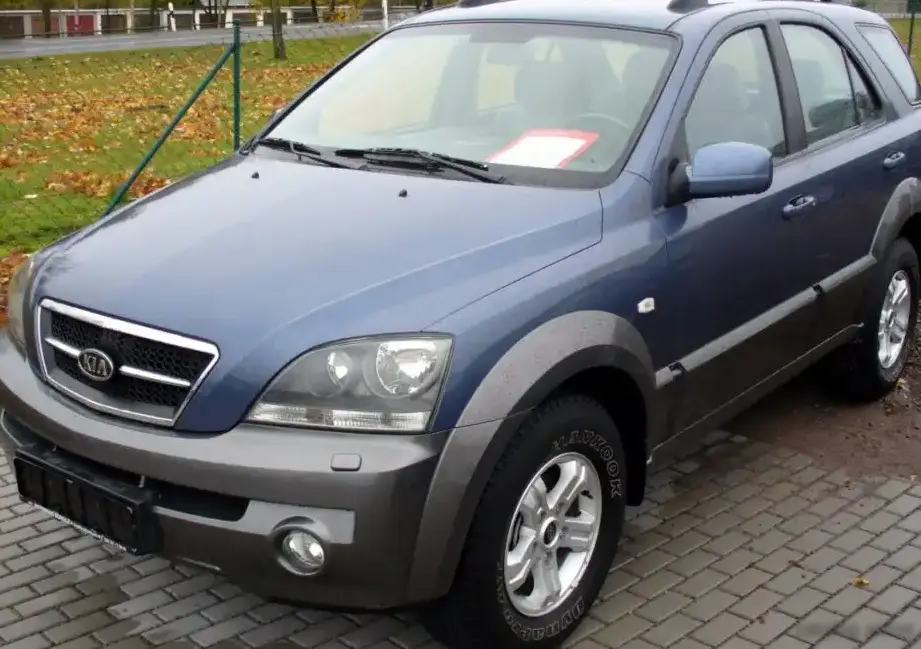
The Kia Sorento III, specifically the facelifted version introduced in 2018, represented a significant step forward for the Korean automaker in the competitive mid-size SUV segment. This variant, equipped with a 2.0-liter turbocharged diesel engine producing 185 horsepower and paired with an eight-speed automatic transmission and all-wheel drive (AWD), was offered from 2018 through 2020. It occupied a middle ground within the Sorento III lineup, offering a balance between fuel efficiency, performance, and features, appealing to families and drivers seeking a versatile and comfortable vehicle.
Technical Specifications
| Brand | Kia |
| Model | Sorento |
| Generation | Sorento III (facelift 2018) |
| Type (Engine) | 2.0 (185 Hp) AWD Automatic |
| Start of production | 2018 |
| End of production | 2020 |
| Powertrain Architecture | Internal Combustion engine |
| Body type | SUV |
| Seats | 5-7 |
| Doors | 5 |
| Fuel consumption (urban) | 8.1 l/100 km (29 US mpg, 34.9 UK mpg, 12.3 km/l) |
| Fuel consumption (extra urban) | 6 l/100 km (39.2 US mpg, 47.1 UK mpg, 16.7 km/l) |
| Fuel consumption (combined) | 6.7 l/100 km (35.1 US mpg, 42.2 UK mpg, 14.9 km/l) |
| Fuel Type | Diesel |
| Acceleration 0 – 100 km/h | 10.4 sec |
| Acceleration 0 – 62 mph | 10.4 sec |
| Acceleration 0 – 60 mph | 9.9 sec |
| Maximum speed | 201 km/h (124.9 mph) |
| Weight-to-power ratio | 10.7 kg/Hp, 93.2 Hp/tonne |
| Weight-to-torque ratio | 4.9 kg/Nm, 202.4 Nm/tonne |
| Power | 185 Hp @ 4000 rpm |
| Power per litre | 92.7 Hp/l |
| Torque | 402 Nm @ 1750-2750 rpm (296.5 lb.-ft. @ 1750-2750 rpm) |
| Engine layout | Front, Transverse |
| Engine displacement | 1995 cm3 (121.74 cu. in.) |
| Number of cylinders | 4 |
| Engine configuration | Inline |
| Cylinder Bore | 84 mm (3.31 in.) |
| Piston Stroke | 90 mm (3.54 in.) |
| Compression ratio | 16:1 |
| Number of valves per cylinder | 4 |
| Fuel injection system | Diesel Commonrail |
| Engine aspiration | Turbocharger, Intercooler |
| Engine oil capacity | 4.8 l (5.07 US qt | 4.22 UK qt) |
| Coolant | 7.3 l (7.71 US qt | 6.42 UK qt) |
| Kerb Weight | 1986 kg (4378.38 lbs.) |
| Max. weight | 2510 kg (5533.6 lbs.) |
| Max load | 524 kg (1155.22 lbs.) |
| Trunk (boot) space – minimum | 660 l (23.31 cu. ft.) |
| Trunk (boot) space – maximum | 1732 l (61.17 cu. ft.) |
| Fuel tank capacity | 71 l (18.76 US gal | 15.62 UK gal) |
| Length | 4800 mm (188.98 in.) |
| Width | 1890 mm (74.41 in.) |
| Width including mirrors | 2140 mm (84.25 in.) |
| Height | 1685-1690 mm (66.34 – 66.54 in.) |
| Wheelbase | 2780 mm (109.45 in.) |
| Front track | 1628-1633 mm (64.09 – 64.29 in.) |
| Rear (Back) track | 1639-1644 mm (64.53 – 64.72 in.) |
| Front overhang | 945 mm (37.2 in.) |
| Rear overhang | 1075 mm (42.32 in.) |
| Ride height (ground clearance) | 185 mm (7.28 in.) |
| Drag coefficient (Cd) | 0.33 |
| Minimum turning circle | 11.34 m (37.2 ft.) |
| Approach angle | 16.9° |
| Departure angle | 21° |
| Ramp-over angle | 18° |
| Drive wheel | All wheel drive (4×4) |
| Number of gears | 6 |
| Gearbox type | Automatic transmission |
| Front suspension | Independent, type McPherson with coil spring and anti-roll bar |
| Rear suspension | Independent multi-link suspension |
| Front brakes | Ventilated discs |
| Rear brakes | Disc |
| Assisting systems | ABS (Anti-lock braking system) |
| Steering type | Steering rack and pinion |
| Power steering | Electric Steering |
| Tires size | 235/65 R17; 235/60 R18 |
| Wheel rims size | 17; 18 |
INTRODUCTION
The Kia Sorento III, launched in 2014 and receiving a significant facelift in 2018, quickly became a popular choice for families seeking a spacious, well-equipped, and reliable SUV. The 2018 facelift brought updated styling, improved safety features, and refinements to the powertrain options. The 2.0-liter diesel AWD automatic variant was a key offering, particularly in European and Asian markets, where diesel engines remained prevalent. It provided a compelling alternative to gasoline-powered options, offering superior fuel economy and torque for comfortable long-distance driving and towing. This version sat in the middle of the Sorento range, above the base models and below the more powerful 2.2-liter diesel and gasoline V6 options.
Powertrain & Engine Architecture
At the heart of this Sorento variant lies the Kia/Hyundai 2.0-liter CRDi (Common Rail Diesel Injection) engine, often identified by engine codes like D4FA. This engine is an inline-four cylinder unit featuring a turbocharger and intercooler to boost power and efficiency. The engine utilizes a sophisticated common rail direct injection system, delivering fuel directly into the combustion chamber at extremely high pressure for optimized combustion. The engine also incorporates a variable geometry turbocharger (VGT) which adjusts the turbine vanes to optimize boost across the engine’s rev range. The eight-speed automatic transmission, sourced from Hyundai Powertech, was a key upgrade with the facelift, replacing the older six-speed unit. This transmission offers smoother shifts and improved fuel economy compared to its predecessor. The transmission features a torque converter and electronically controlled gear selection.
Driving Characteristics
The 185 horsepower and 402 Nm (296.5 lb-ft) of torque delivered by the 2.0-liter diesel engine, combined with the eight-speed automatic transmission and all-wheel drive, provided a comfortable and capable driving experience. Acceleration from 0-60 mph took around 9.9 seconds, which was adequate for everyday driving and highway merging. The AWD system provides enhanced traction in inclement weather conditions. The eight-speed automatic transmission is well-tuned for smooth and responsive shifts, although it isn’t as sporty as some dual-clutch transmissions. The torque delivery is strong from low RPMs, making it easy to navigate city traffic and handle moderate inclines. Compared to the higher-output 2.2-liter diesel, this variant felt less powerful, but it offered a noticeable improvement in fuel economy.
Equipment & Trim Levels
The 2.0-liter AWD automatic Sorento typically came well-equipped, even in base trim levels. Standard features often included automatic climate control, a touchscreen infotainment system with Apple CarPlay and Android Auto compatibility, rear parking sensors, and a rearview camera. Higher trim levels added features such as leather upholstery, heated and ventilated front seats, a panoramic sunroof, a premium sound system, and advanced driver-assistance systems (ADAS) like adaptive cruise control, lane departure warning, and automatic emergency braking. Interior upholstery was typically cloth on lower trims and leather on higher trims. Dashboard configurations were generally consistent across the range, with a focus on user-friendliness and practicality.
Chassis & Braking
The Sorento III utilized a robust chassis with independent suspension all around – McPherson struts at the front and a multi-link setup at the rear. This suspension configuration provided a comfortable ride quality and good handling characteristics. The front brakes were ventilated discs, while the rear brakes were discs on most trims. Anti-lock Braking System (ABS) was standard, along with Electronic Stability Control (ESC). The steering was electrically assisted, providing a light and responsive feel. Stabilizer bars were fitted front and rear to reduce body roll during cornering.
Market Reception & Comparison
The 2.0-liter diesel AWD automatic Sorento was generally well-received by automotive critics. It was praised for its fuel efficiency, comfortable ride, spacious interior, and generous equipment levels. However, some reviewers noted that the engine could be a bit noisy under hard acceleration. Compared to the 2.2-liter diesel, the 2.0-liter offered better fuel economy but less outright performance. Against competitors like the Hyundai Santa Fe, Nissan X-Trail, and Ford Kuga, the Sorento offered a compelling value proposition with its combination of features, space, and warranty.
Legacy
The Kia Sorento III, particularly the 2.0-liter diesel AWD automatic variant, has proven to be a reliable and durable vehicle. The engine, while complex, is generally robust when properly maintained. Common issues include diesel particulate filter (DPF) clogging (particularly with frequent short trips) and potential issues with the turbocharger. The eight-speed automatic transmission has also proven to be relatively reliable. On the used car market, these Sorentos represent a good value for buyers seeking a spacious, comfortable, and fuel-efficient SUV. Regular maintenance, including oil changes and DPF regeneration, is crucial to ensure long-term reliability.