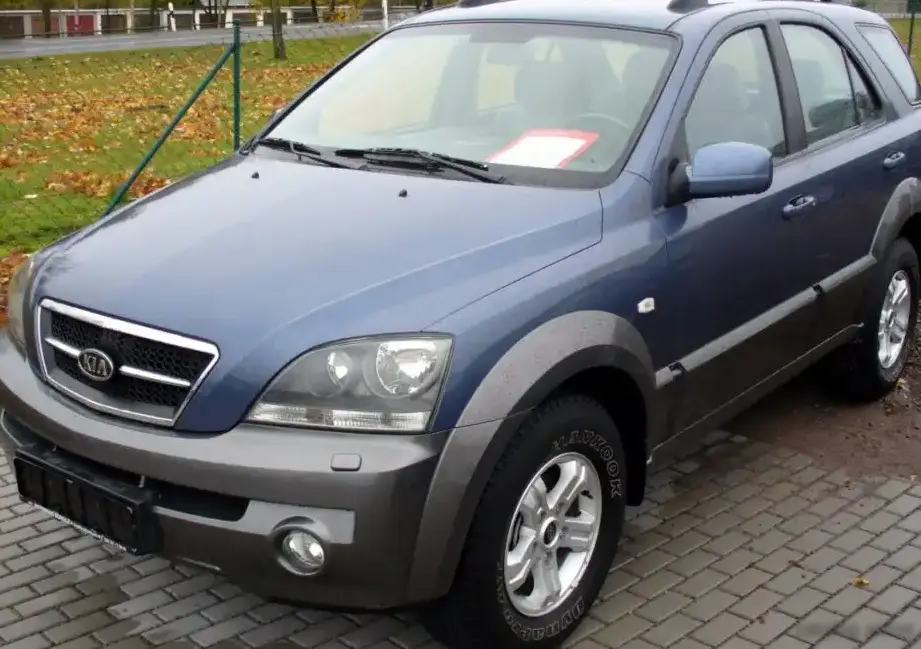
The Kia Sorento III (facelift, introduced in 2018) 2.2 CRDi represents a significant iteration of Kia’s popular mid-size SUV. Produced from 2018 through 2020, this variant occupied a key position in the Sorento lineup, offering a balance of performance, fuel efficiency, and practicality for families. It was designed to appeal to buyers seeking a capable and comfortable SUV with diesel power, particularly in European and Asian markets where diesel engines remained prevalent. The facelift brought styling updates, improved technology, and refinements to the existing powertrain options, including this 200 horsepower diesel.
Technical Specifications
| Brand | Kia |
| Model | Sorento |
| Generation | Sorento III (facelift 2018) |
| Type (Engine) | 2.2 CRDi (200 Hp) |
| Start of production | 2018 |
| End of production | 2020 |
| Powertrain Architecture | Internal Combustion engine |
| Body type | SUV |
| Seats | 5 |
| Doors | 5 |
| Fuel consumption (urban) | 6.7-6.9 l/100 km (35.1 – 34.1 US mpg, 42.2 – 40.9 UK mpg, 14.9 – 14.5 km/l) |
| Fuel consumption (extra urban) | 4.9-5.0 l/100 km (48 – 47 US mpg, 57.6 – 56.5 UK mpg, 20.4 – 20 km/l) |
| Fuel consumption (combined) | 5.6-5.7 l/100 km (42 – 41.3 US mpg, 50.4 – 49.6 UK mpg, 17.9 – 17.5 km/l) |
| CO2 emissions | 147-149 g/km |
| Fuel Type | Diesel |
| Acceleration 0 – 100 km/h | 8.7 sec |
| Acceleration 0 – 62 mph | 8.7 sec |
| Acceleration 0 – 60 mph | 8.3 sec |
| Maximum speed | 205 km/h (127.38 mph) |
| Weight-to-power ratio | 9.2 kg/Hp, 108.8 Hp/tonne |
| Weight-to-torque ratio | 4.1 kg/Nm, 244.8 Nm/tonne |
| Power | 200 Hp @ 3800 rpm |
| Power per litre | 91 Hp/l |
| Torque | 450 Nm @ 1750-2750 rpm (331.9 lb.-ft. @ 1750-2750 rpm) |
| Engine layout | Front, Transverse |
| Engine Model/Code | D4HB |
| Engine displacement | 2199 cm3 (134.19 cu. in.) |
| Number of cylinders | 4 |
| Engine configuration | Inline |
| Cylinder Bore | 85.4 mm (3.36 in.) |
| Piston Stroke | 96 mm (3.78 in.) |
| Compression ratio | 16:1 |
| Number of valves per cylinder | 4 |
| Fuel injection system | Diesel Commonrail |
| Engine aspiration | Turbocharger, Intercooler |
| Engine oil capacity | 6.5 l (6.87 US qt | 5.72 UK qt) |
| Coolant capacity | 9.1 l (9.62 US qt | 8.01 UK qt) |
| Kerb Weight | 1838 kg (4052.1 lbs.) |
| Max. weight | 2510 kg (5533.6 lbs.) |
| Max load | 672 kg (1481.51 lbs.) |
| Trunk (boot) space – minimum | 660 l (23.31 cu. ft.) |
| Trunk (boot) space – maximum | 1732 l (61.17 cu. ft.) |
| Fuel tank capacity | 71 l (18.76 US gal | 15.62 UK gal) |
| Max. roof load | 100 kg (220.46 lbs.) |
| Permitted trailer load with brakes (12%) | 2500 kg (5511.56 lbs.) |
| Permitted trailer load without brakes | 750 kg (1653.47 lbs.) |
| Permitted towbar download | 100 kg (220.46 lbs.) |
| Length | 4800 mm (188.98 in.) |
| Width | 1890 mm (74.41 in.) |
| Width including mirrors | 2140 mm (84.25 in.) |
| Height | 1685-1690 mm (66.34 – 66.54 in.) |
| Wheelbase | 2780 mm (109.45 in.) |
| Front track | 1628-1633 mm (64.09 – 64.29 in.) |
| Rear (Back) track | 1639-1644 mm (64.53 – 64.72 in.) |
| Front overhang | 945 mm (37.2 in.) |
| Rear overhang | 1075 mm (42.32 in.) |
| Ride height (ground clearance) | 185 mm (7.28 in.) |
| Minimum turning circle (turning diameter) | 11.34 m (37.2 ft.) |
| Front suspension | Independent, type McPherson with coil spring and anti-roll bar |
| Rear suspension | Independent multi-link suspension |
| Front brakes | Ventilated discs |
| Rear brakes | Disc |
| Steering type | Steering rack and pinion |
| Power steering | Electric Steering |
| Tires size | 235/65 R17; 235/60 R18; 235/55 R19 |
| Wheel rims size | 7.0J x 17; 7.5J x 18; 7.5J x 19 |
INTRODUCTION
The 2018 facelift of the Kia Sorento III brought a refreshed look and updated features to Kia’s popular seven-seat SUV. The 2.2 CRDi variant, producing 200 horsepower, was a mainstay of the European and Asian lineups, offering a compelling blend of fuel economy and performance. Positioned as a mid-range option, it sat above the lower-powered diesel variants and below the more expensive gasoline-powered models. Built on the UM platform (internally designated as the 1HX0), the Sorento aimed to provide a comfortable and practical family vehicle with a touch of sophistication.
Powertrain & Engine Architecture
At the heart of the Sorento 2.2 CRDi is the D4HB engine, a 2.2-liter inline-four cylinder diesel. This engine utilizes a common-rail direct injection system, delivering fuel at extremely high pressure for optimized combustion. The D4HB is turbocharged with a variable geometry turbocharger (VGT) and intercooled, enhancing both power and torque across a broad RPM range. The engine boasts 16 valves (four per cylinder) and a compression ratio of 16:1. The 200 horsepower output is achieved at 3800 rpm, while the substantial 450 Nm (331.9 lb-ft) of torque is available from 1750 to 2750 rpm. This engine was paired with a six-speed automatic transmission, designed to provide smooth and efficient gear changes. The transmission was tuned for comfort and fuel economy, rather than outright performance.
Driving Characteristics
The Sorento 2.2 CRDi with the six-speed automatic delivers a comfortable and composed driving experience. While not a sports SUV, the 200 horsepower and 450 Nm of torque provide ample power for everyday driving and highway cruising. The automatic transmission is generally smooth, although it can occasionally feel hesitant during quick acceleration. Compared to the manual transmission versions, the automatic offers greater convenience, particularly in urban traffic. However, the manual versions typically achieve slightly better fuel economy. Compared to the higher-output gasoline engines, the diesel offers superior fuel efficiency and low-end torque, making it ideal for towing or carrying a full load of passengers. The gear ratios are optimized for fuel economy, with a relatively tall final drive.
Equipment & Trim Levels
The 2.2 CRDi variant of the Sorento III (facelift) typically came well-equipped, even in base trim. Standard features often included air conditioning, a touchscreen infotainment system with Bluetooth connectivity, rear parking sensors, and alloy wheels. Higher trim levels added features such as leather upholstery, heated front seats, a panoramic sunroof, a premium audio system, and advanced safety technologies like lane departure warning and automatic emergency braking. Interior upholstery was typically cloth on lower trims and leather on higher trims. Dashboard configurations were generally consistent across the range, with a focus on user-friendliness and practicality.
Chassis & Braking
The Sorento III utilizes a front-wheel-drive layout as standard, with all-wheel drive available as an option. The front suspension consists of independent McPherson struts with coil springs and an anti-roll bar, while the rear suspension employs an independent multi-link setup. This configuration provides a good balance of ride comfort and handling. Braking duties are handled by ventilated discs at the front and solid discs at the rear. Anti-lock Braking System (ABS) is standard, along with Electronic Stability Control (ESC). The chassis was tuned to prioritize comfort and stability over sporty handling.
Market Reception & Comparison
The Kia Sorento 2.2 CRDi was generally well-received by automotive critics. It was praised for its spacious interior, comfortable ride, and fuel-efficient diesel engine. However, some critics noted that the automatic transmission could feel sluggish at times. Compared to competitors like the Hyundai Santa Fe, Nissan X-Trail, and Ford Kuga, the Sorento offered a compelling value proposition, with a generous level of standard equipment and a long warranty. The diesel variants consistently demonstrated better fuel economy than their gasoline counterparts, making them a popular choice for drivers who covered long distances.
Legacy
The Kia Sorento III 2.2 CRDi has proven to be a reliable and durable SUV. The D4HB engine, while complex, is generally considered robust when properly maintained. Common issues include diesel particulate filter (DPF) clogging, particularly on vehicles used primarily for short trips. The automatic transmission is also generally reliable, but regular fluid changes are essential. On the used car market, these Sorentos represent a good value, offering a lot of space and practicality for the price. Their fuel efficiency and relatively low running costs continue to make them an attractive option for families and individuals alike.