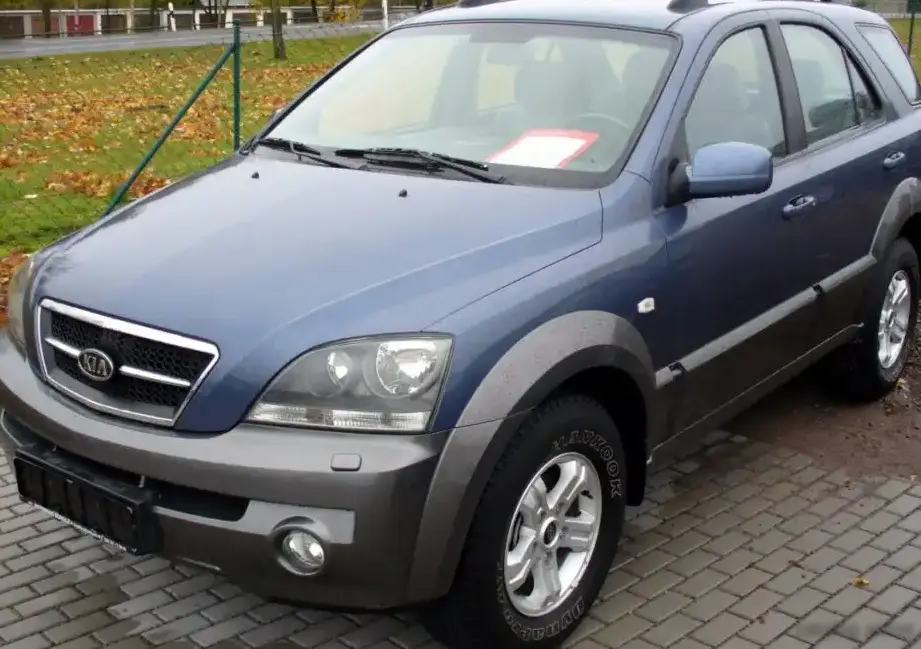
The Kia Sorento III, particularly the facelifted version introduced in 2018, represented a significant step forward for the Korean automaker in the competitive mid-size SUV segment. This variant, equipped with the 2.2 CRDi diesel engine producing 200 horsepower and paired with an eight-speed automatic transmission and all-wheel drive, was a key offering in many international markets. Production of this specific configuration ran from 2018 to 2020. Positioned as a mid-to-upper trim level, it aimed to balance fuel efficiency, performance, and family-oriented practicality within the Sorento lineup, which also included gasoline engine options and varying levels of equipment.
Technical Specifications
| Brand | Kia |
| Model | Sorento |
| Generation | Sorento III (facelift 2018) |
| Type (Engine) | 2.2 CRDi (200 Hp) AWD Automatic 7 Seat |
| Start of production | 2018 |
| End of production | 2020 |
| Powertrain Architecture | Internal Combustion engine |
| Body type | SUV |
| Seats | 7 |
| Doors | 5 |
| Fuel consumption (urban) | 7.3 l/100 km (32.2 US mpg, 38.7 UK mpg, 13.7 km/l) |
| Fuel consumption (extra urban) | 6 l/100 km (39.2 US mpg, 47.1 UK mpg, 16.7 km/l) |
| Fuel consumption (combined) | 6.5 l/100 km (36.2 US mpg, 43.5 UK mpg, 15.4 km/l) |
| CO2 emissions | 170 g/km |
| Fuel Type | Diesel |
| Acceleration 0 – 100 km/h | 9.4 sec |
| Acceleration 0 – 62 mph | 9.4 sec |
| Acceleration 0 – 60 mph | 8.9 sec |
| Maximum speed | 205 km/h (127.38 mph) |
| Power | 200 Hp @ 3800 rpm |
| Torque | 450 Nm @ 1750-2750 rpm (331.9 lb.-ft. @ 1750-2750 rpm) |
| Engine layout | Front, Transverse |
| Engine Model/Code | D4HB |
| Engine displacement | 2199 cm3 (134.19 cu. in.) |
| Number of cylinders | 4 |
| Engine configuration | Inline |
| Cylinder Bore | 85.4 mm (3.36 in.) |
| Piston Stroke | 96 mm (3.78 in.) |
| Compression ratio | 16:1 |
| Number of valves per cylinder | 4 |
| Fuel injection system | Diesel Commonrail |
| Engine aspiration | Turbocharger, Intercooler |
| Engine oil capacity | 6.5 l (6.87 US qt | 5.72 UK qt) |
| Coolant capacity | 8.9 l (9.4 US qt | 7.83 UK qt) |
| Kerb Weight | 1953 kg (4305.63 lbs.) |
| Max. weight | 2620 kg (5776.11 lbs.) |
| Max load | 667 kg (1470.48 lbs.) |
| Trunk (boot) space – minimum | 142 l (5.01 cu. ft.) |
| Trunk (boot) space – maximum | 1662 l (58.69 cu. ft.) |
| Fuel tank capacity | 71 l (18.76 US gal | 15.62 UK gal) |
| Max. roof load | 100 kg (220.46 lbs.) |
| Permitted trailer load with brakes (12%) | 2000 kg (4409.25 lbs.) |
| Permitted trailer load without brakes | 750 kg (1653.47 lbs.) |
| Permitted towbar download | 100 kg (220.46 lbs.) |
| Length | 4800 mm (188.98 in.) |
| Width | 1890 mm (74.41 in.) |
| Width including mirrors | 2140 mm (84.25 in.) |
| Height | 1685-1690 mm (66.34 – 66.54 in.) |
| Wheelbase | 2780 mm (109.45 in.) |
| Front track | 1628-1633 mm (64.09 – 64.29 in.) |
| Rear (Back) track | 1639-1644 mm (64.53 – 64.72 in.) |
| Front overhang | 945 mm (37.2 in.) |
| Rear overhang | 1075 mm (42.32 in.) |
| Ride height (ground clearance) | 185 mm (7.28 in.) |
| Minimum turning circle | 11.34 m (37.2 ft.) |
| Drive wheel | All wheel drive (4×4) |
| Number of gears and type of gearbox | 8 gears, automatic transmission |
| Front suspension | Independent, type McPherson with coil spring and anti-roll bar |
| Rear suspension | Independent multi-link suspension |
| Front brakes | Ventilated discs |
| Rear brakes | Disc |
| Tires size | 235/65 R17; 235/60 R18; 235/55 R19 |
| Wheel rims size | 7.0J x 17; 7.5J x 18; 7.5J x 19 |
Powertrain & Engine Architecture
The heart of this Sorento variant is the D4HB 2.2-liter inline-four cylinder diesel engine. This engine is a member of Kia/Hyundai’s robust diesel family, known for its durability and relatively refined operation. It utilizes a cast iron block and aluminum cylinder head. The D4HB employs a common-rail direct injection system, delivering fuel at extremely high pressures for optimized combustion. A variable geometry turbocharger (VGT) and intercooler work in tandem to boost power and torque across a broad RPM range. The engine produces 200 horsepower at 3800 rpm and a substantial 450 Nm (331.9 lb-ft) of torque between 1750 and 2750 rpm. This torque output is particularly beneficial for towing and provides strong acceleration even with a fully loaded vehicle. The engine also features a diesel particulate filter (DPF) to meet stringent Euro 6 emissions standards.
The engine is mated to a smooth-shifting eight-speed automatic transmission. This transmission, sourced from Hyundai Powertech, offers quick and precise gear changes, contributing to both performance and fuel efficiency. The all-wheel-drive system is typically an on-demand system, primarily driving the front wheels under normal conditions and engaging the rear wheels when traction is lost.
Driving Characteristics
The 2.2 CRDi automatic Sorento offers a comfortable and capable driving experience. The abundant torque makes overtaking and merging onto highways effortless. While not a sports SUV, the 9.4-second 0-60 mph acceleration is respectable for its class and weight. The eight-speed automatic transmission helps keep the engine in its optimal power band, providing responsive acceleration. Compared to the base gasoline engines, the diesel offers significantly more torque and better fuel economy. However, it lacks the outright responsiveness of the gasoline engines. Compared to manual transmission versions of the same engine, the automatic offers convenience but may result in a slight reduction in fuel economy and a less engaging driving experience.
Equipment & Trim Levels
The 2018-2020 Sorento 2.2 CRDi AWD Automatic typically came well-equipped, often representing a mid-to-high trim level. Standard features generally included leather upholstery, heated front seats, a touchscreen infotainment system with navigation, Apple CarPlay and Android Auto compatibility, a rearview camera, parking sensors, and automatic climate control. Optional extras could include a panoramic sunroof, premium sound system, adaptive cruise control, lane departure warning, and blind-spot monitoring. Trim levels varied by market, but generally offered increasing levels of luxury and technology.
Chassis & Braking
The Sorento III utilizes a McPherson strut front suspension and a multi-link rear suspension. This setup provides a good balance between ride comfort and handling. Stabilizer bars are fitted to both axles to reduce body roll during cornering. Braking duties are handled by ventilated discs at the front and solid discs at the rear. Anti-lock braking system (ABS) is standard, along with electronic stability control (ESC) and traction control. The steering is electrically assisted, providing a light and easy steering feel.
Market Reception & Comparison
The Sorento 2.2 CRDi Automatic was generally well-received by automotive critics. It was praised for its spacious interior, comfortable ride, strong engine performance, and good fuel economy. Critics noted that the diesel engine was a good match for the Sorento’s size and weight, providing ample power for everyday driving and towing. Compared to competitors like the Hyundai Santa Fe, Nissan X-Trail, and Toyota RAV4, the Sorento offered a compelling combination of value, features, and practicality. The diesel engine’s fuel economy was a key selling point, particularly in Europe where diesel fuel was often cheaper than gasoline.
Legacy
The D4HB engine, when properly maintained, has proven to be a durable and reliable powertrain. However, like all modern diesel engines, it is susceptible to issues with the DPF if not driven on longer journeys periodically. The eight-speed automatic transmission has also proven to be generally reliable. On the used car market, the 2018-2020 Sorento 2.2 CRDi Automatic remains a popular choice, offering a good balance of practicality, comfort, and value. Its all-wheel-drive capability and seven-seat configuration make it a versatile option for families and those who need to carry passengers or cargo. Regular maintenance, including oil changes and DPF servicing, is crucial to ensure the long-term reliability of this vehicle.