Technical Specifications
| Brand | Kia |
| Model | Soul |
| Generation | Soul II |
| Type (Engine) | EV 31 kWh (110 Hp) |
| Start of production | 2014 |
| End of production | March, 2017 |
| Powertrain Architecture | BEV (Electric Vehicle) |
| Body type | Crossover |
| Seats | 5 |
| Doors | 5 |
| Fuel Type | Electricity |
| Acceleration 0 – 100 km/h | 11.2 sec |
| Acceleration 0 – 62 mph | 11.2 sec |
| Acceleration 0 – 60 mph | 10.6 sec |
| Maximum speed | 145 km/h (90.1 mph) |
| Weight-to-power ratio | 13.5 kg/Hp, 73.8 Hp/tonne |
| Weight-to-torque ratio | 5.2 kg/Nm, 191.3 Nm/tonne |
| Gross battery capacity | 31 kWh |
| Net (usable) battery capacity | 27 kWh |
| Battery voltage | 360 V |
| Battery technology | Lithium-polymer (LiPo) |
| Battery weight | 277 kg (610.68 lbs) |
| Battery location | Below the floor |
| All-electric range (NEDC) | 212 km (131.73 mi) |
| Average Energy consumption (NEDC) | 14.7 kWh/100 km (23.66 kWh/100 mi) |
| MPGe | 142 |
| km/kWh | 6.8 |
| mi/kWh | 4.2 |
| Electric motor power | 110 Hp @ 2730-8000 rpm |
| Electric motor Torque | 285 Nm @ 0-2730 rpm (210.21 lb.-ft. @ 0-2730 rpm) |
| Electric motor model/code | MG80 |
| Electric motor location | Front axle, Transverse |
| System power | 110 Hp @ 2730-8000 rpm |
| System torque | 285 Nm @ 0-2730 rpm (210.21 lb.-ft. @ 0-2730 rpm) |
| Kerb Weight | 1490 kg (3284.89 lbs) |
| Max. weight | 1960 kg (4321.06 lbs) |
| Max load | 470 kg (1036.17 lbs) |
| Trunk (boot) space – minimum | 281 l (9.92 cu. ft) |
| Trunk (boot) space – maximum | 891 l (31.47 cu. ft) |
| Length | 4140 mm (162.99 in) |
| Width | 1800 mm (70.87 in) |
| Width including mirrors | 2100 mm (82.68 in) |
| Height | 1593 mm (62.72 in) |
| Wheelbase | 2570 mm (101.18 in) |
| Front track | 1576 mm (62.05 in) |
| Rear (Back) track | 1585 mm (62.4 in) |
| Front overhang | 840 mm (33.07 in) |
| Rear overhang | 730 mm (28.74 in) |
| Ride height (ground clearance) | 151 mm (5.94 in) |
| Minimum turning circle | 10.6 m (34.78 ft) |
| Drivetrain Architecture | One electric motor drives the front wheels |
| Drive wheel | Front wheel drive |
| Number of gears | 1 |
| Gearbox type | Automatic transmission |
| Front suspension | Independent type McPherson, Transverse stabilizer |
| Rear suspension | Transverse stabilizer, Coil spring, Torsion |
| Front brakes | Ventilated discs, 300 mm |
| Rear brakes | Disc, 284 mm |
| Assisting systems | ABS (Anti-lock braking system) |
| Steering type | Steering rack and pinion |
| Power steering | Electric Steering |
| Tires size | 205/60 R16 |
| Wheel rims size | 6.5J x 16 |
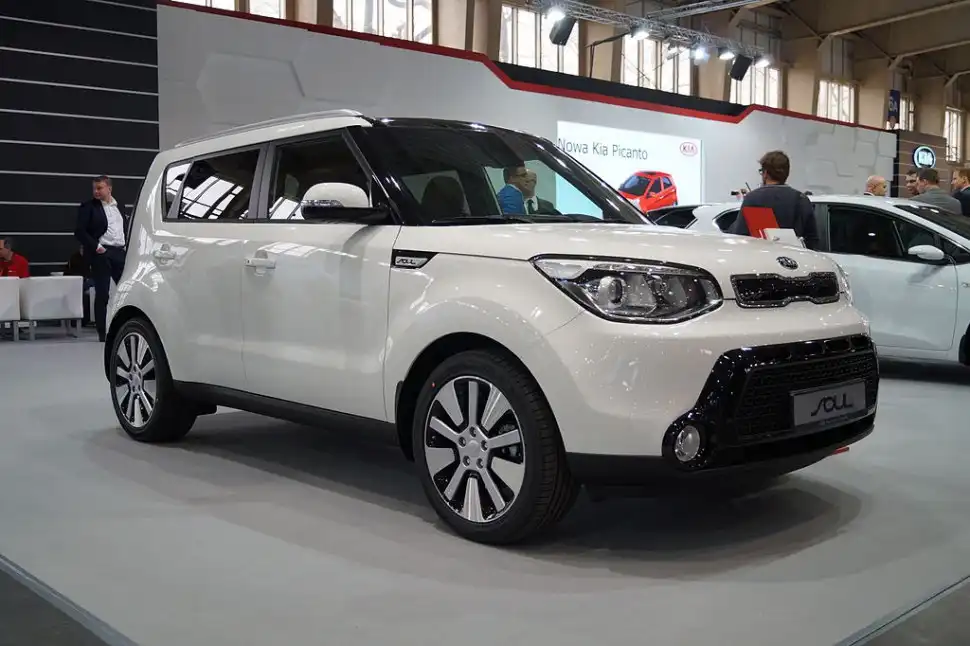
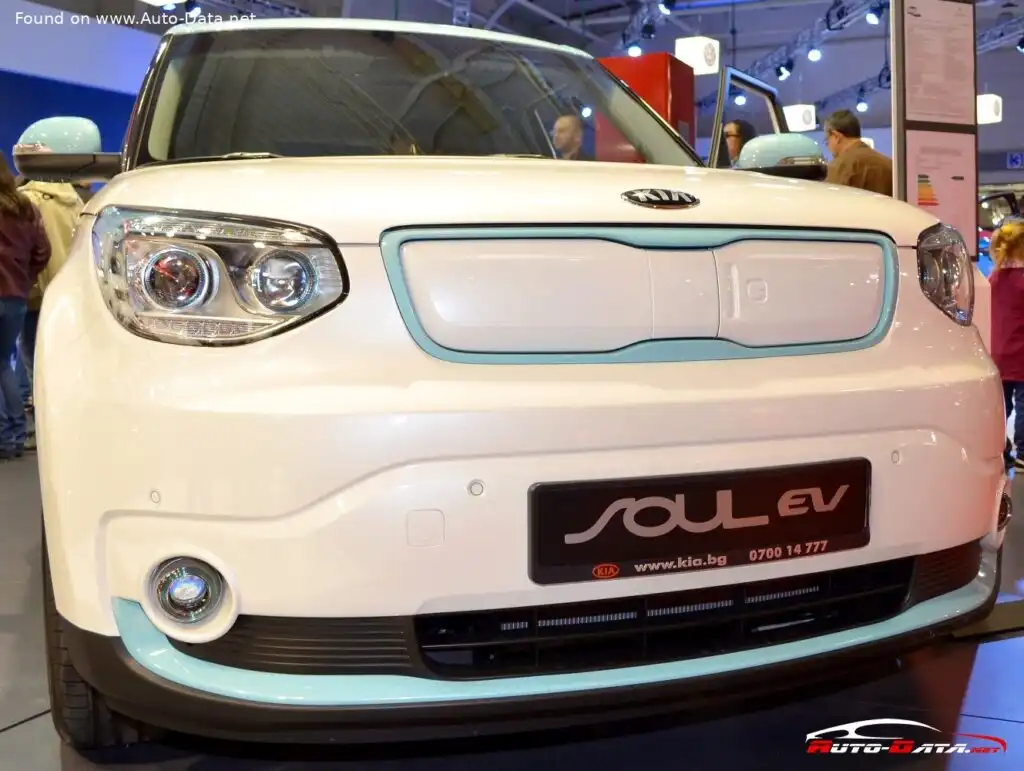
The Kia Soul II EV 31 kWh, launched in 2014, was a pivotal model for Kia, marking their entry into the burgeoning electric vehicle market. Built on the 1HX0/A3 platform shared with the gasoline-powered second-generation Soul, the EV variant distinguished itself with a fully electric powertrain. This version aimed to provide a practical, affordable, and stylish alternative to traditional gasoline vehicles, particularly appealing to urban commuters. The 31 kWh battery pack offered a usable range of approximately 93 miles (150 km) under real-world driving conditions, making it suitable for daily commutes and city driving. It was available in select markets globally, with a strong focus on regions promoting electric vehicle adoption.
Powertrain & Engine Architecture
At the heart of the Soul II EV lies a single electric motor, designated MG80, producing 110 horsepower and 285 Nm (210 lb-ft) of torque. This motor is transversely mounted on the front axle, driving the front wheels. The 31 kWh lithium-polymer battery pack is positioned under the floor, contributing to a lower center of gravity and improved handling. The vehicle utilizes a single-speed automatic transmission, typical of electric vehicles, providing seamless acceleration. The motor’s power delivery is characterized by instant torque, offering brisk acceleration from a standstill. The charging system supports both Level 1 (120V) and Level 2 (240V) charging, with a DC fast charging option available for quicker replenishment. The onboard charger converts AC power to DC for battery storage, and a battery management system (BMS) monitors and regulates battery health and performance.
Driving Characteristics
The 110 hp electric motor provides adequate performance for urban driving, with a 0-60 mph time of around 10.6 seconds. While not particularly sporty, the instant torque delivery makes merging onto highways and navigating city traffic relatively effortless. Compared to the gasoline-powered Soul variants, the EV offers a quieter and smoother driving experience. The single-speed automatic transmission simplifies operation, eliminating the need for gear changes. The lower center of gravity, thanks to the underfloor battery pack, contributes to improved stability and handling. However, the added weight of the battery pack does slightly impact overall agility compared to lighter gasoline models. Regenerative braking allows for energy recapture during deceleration, extending the driving range and reducing brake wear.
Equipment & Trim Levels
The Soul II EV 31 kWh typically came standard with features such as air conditioning, power windows and locks, a touchscreen infotainment system with Bluetooth connectivity, and a rearview camera. Higher trim levels offered upgrades like a premium audio system, heated front seats, and a navigation system. Interior upholstery was generally cloth, with optional leather available on select trims. The dashboard layout was similar to the gasoline-powered Soul, but with unique EV-specific displays showing battery charge level and energy consumption. Optional extras included a quick-charging port and various cosmetic enhancements.
Chassis & Braking
The Soul II EV utilizes a McPherson strut front suspension and a torsion beam rear suspension, providing a comfortable ride quality. A transverse stabilizer bar is included on both axles to reduce body roll during cornering. The braking system consists of ventilated discs on the front wheels and solid discs on the rear. Anti-lock braking system (ABS) is standard, enhancing safety and control during emergency braking. The steering system is an electric power-assisted rack and pinion setup, offering precise and responsive steering feel. The vehicle rides on 16-inch alloy wheels with 205/60 R16 tires.
Market Reception & Comparison
The Kia Soul II EV was generally well-received by critics for its unique styling, practical interior, and affordable price point. It was often praised as a compelling entry-level EV option. Compared to other EVs available at the time, such as the Nissan Leaf and BMW i3, the Soul EV offered a more conventional crossover design and a lower price. However, its limited range compared to some competitors was a noted drawback. Fuel economy, expressed as MPGe, was rated at 142, making it highly efficient. Reliability reports have generally been positive, with few major issues reported with the powertrain.
Legacy
The Kia Soul II EV played a significant role in establishing Kia as a player in the electric vehicle market. It demonstrated the brand’s commitment to sustainable mobility and paved the way for future EV models. While the 31 kWh variant has been superseded by models with larger battery packs and increased range, it remains a popular choice in the used car market. The powertrain has proven to be relatively reliable, with many units still in operation today. The Soul EV’s success helped to normalize electric vehicles and broaden their appeal to a wider audience, contributing to the growth of the EV market as a whole.