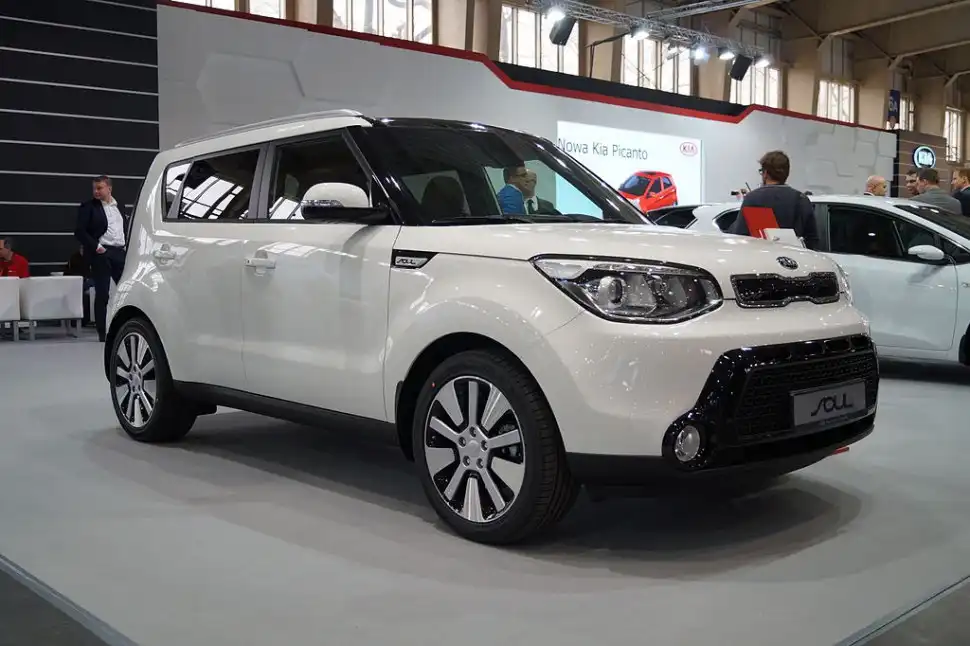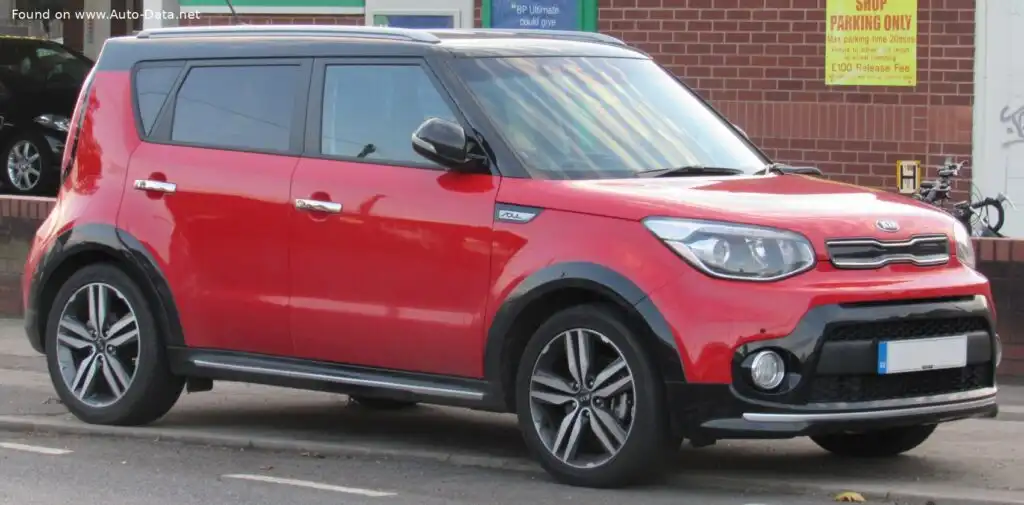
The Kia Soul II (facelift, produced from 2017-2019) with the 2.0-liter Gasoline Direct Injection (GDI) engine paired with a 6-speed automatic transmission represents a significant iteration within the second generation of Kia’s distinctive urban crossover. Introduced as part of a mid-cycle refresh, this variant aimed to broaden the Soul’s appeal by offering a balance of fuel efficiency, adequate performance, and the convenience of an automatic gearbox. Positioned as a mid-range offering within the Soul lineup, it slotted between the base 1.6L engine and the more performance-oriented turbocharged options. The Soul II, built on the JB platform, was a key model for Kia in expanding its presence in the North American and European markets, offering a unique and stylish alternative to traditional subcompact hatchbacks.
Technical Specifications
| Brand | Kia |
| Model | Soul |
| Generation | Soul II (facelift 2016) |
| Type (Engine) | 2.0 GDI (161 Hp) Automatic |
| Start of production | 2017 |
| End of production | 2019 |
| Powertrain Architecture | Internal Combustion engine |
| Body type | Crossover |
| Seats | 5 |
| Doors | 5 |
| Fuel consumption (urban) | 9.4 l/100 km (25 US mpg) |
| Fuel consumption (extra urban) | 7.8 l/100 km (30.2 US mpg) |
| Fuel consumption (combined) | 8.7 l/100 km (27 US mpg) |
| Fuel Type | Petrol (Gasoline) |
| Weight-to-power ratio | 8.9 kg/Hp |
| Weight-to-torque ratio | 7.1 kg/Nm |
| Power | 161 Hp @ 6200 rpm |
| Torque | 203 Nm @ 4700 rpm (149.73 lb.-ft. @ 4700 rpm) |
| Engine layout | Front, Transverse |
| Engine displacement | 1999 cm3 (121.99 cu. in.) |
| Number of cylinders | 4 |
| Engine configuration | Inline |
| Compression ratio | 11.5:1 |
| Number of valves per cylinder | 4 |
| Fuel injection system | Direct injection |
| Engine aspiration | Naturally aspirated engine |
| Valvetrain | DOHC |
| Kerb Weight | 1437 kg (3168.04 lbs.) |
| Trunk (boot) space – minimum | 238 l (8.4 cu. ft.) |
| Trunk (boot) space – maximum | 878 l (31.01 cu. ft.) |
| Fuel tank capacity | 54 l (14.27 US gal) |
| Length | 4140 mm (162.99 in.) |
| Width | 1800 mm (70.87 in.) |
| Width including mirrors | 2100 mm (82.68 in.) |
| Height | 1613 mm (63.5 in.) |
| Wheelbase | 2570 mm (101.18 in.) |
| Front track | 1560-1567 mm (61.42 – 61.69 in.) |
| Rear track | 1572-1580 mm (61.89 – 62.2 in.) |
| Front overhang | 840 mm (33.07 in.) |
| Rear overhang | 730 mm (28.74 in.) |
| Ride height (ground clearance) | 150 mm (5.91 in.) |
| Minimum turning circle | 10.6 m (34.78 ft.) |
| Drivetrain Architecture | Front wheel drive |
| Number of gears | 6 |
| Gearbox type | Automatic transmission |
| Front suspension | Independent, McPherson with coil spring and anti-roll bar |
| Rear suspension | Semi-independent, coil spring |
| Front brakes | Ventilated discs |
| Rear brakes | Disc |
| Tires size | 215/55 R17; 235/45 R18 |
| Wheel rims size | 17; 18 |
Powertrain & Engine Architecture
The heart of this Soul variant is the Kia-developed 2.0-liter GDI inline-four cylinder engine. Designated as the NU engine family, it utilizes direct fuel injection to enhance combustion efficiency and power output. The engine boasts a compression ratio of 11.5:1 and a dual overhead camshaft (DOHC) valvetrain with four valves per cylinder. This configuration allows for optimized airflow and efficient cylinder filling. The GDI system injects fuel directly into the combustion chamber, enabling precise fuel metering and improved fuel economy. The engine is transversely mounted in the front of the vehicle, driving the front wheels. Paired with the engine is a 6-speed automatic transmission, offering smooth and convenient gear changes. This transmission was chosen for its balance of efficiency and drivability, catering to a broader range of drivers who preferred the ease of an automatic over a manual gearbox.
Driving Characteristics
The 161 horsepower and 149.73 lb-ft of torque produced by the 2.0 GDI engine, when coupled with the 6-speed automatic, delivers adequate performance for everyday driving. Acceleration is reasonably brisk, though not particularly sporty. The automatic transmission is tuned for comfort and fuel efficiency, with gear changes generally smooth and unobtrusive. Compared to the manual transmission versions of the same engine, the automatic sacrifices some responsiveness, but offers a more relaxed driving experience. Against the turbocharged variants, the 2.0 GDI automatic is noticeably less powerful, resulting in slower acceleration and a less engaging driving experience. However, it provides a more linear power delivery, making it easier to modulate in city traffic. The automatic transmission’s gear ratios are optimized for fuel economy, with a taller final drive contributing to lower engine speeds at highway cruising speeds.
Equipment & Trim Levels
The 2.0 GDI automatic Soul typically came standard with features such as air conditioning, power windows and locks, a touchscreen infotainment system with Bluetooth connectivity, and a rearview camera. Higher trim levels added features like alloy wheels, a panoramic sunroof, upgraded audio systems, and advanced safety technologies such as lane departure warning and forward collision alert. Interior upholstery was typically cloth, with available upgrades to leatherette or full leather on higher trims. Dashboard configurations were consistent across the range, featuring a modern and functional design. Optional extras included navigation systems, premium sound systems, and various cosmetic enhancements.
Chassis & Braking
The Soul II utilizes a McPherson strut front suspension and a semi-independent coil spring rear suspension. This setup provides a comfortable ride quality, absorbing bumps and irregularities in the road surface effectively. Stabilizer bars are included on both axles to reduce body roll during cornering. The braking system consists of ventilated discs on the front wheels and solid discs on the rear. Anti-lock Braking System (ABS) is standard, enhancing braking performance and stability. The steering system is an electric power-assisted rack and pinion, providing light and precise steering feel.
Market Reception & Comparison
The 2.0 GDI automatic Soul was generally well-received by critics as a practical and affordable crossover. It was praised for its stylish design, spacious interior, and user-friendly features. However, some reviewers noted that the engine lacked the punch of the turbocharged options. Fuel economy was considered competitive for its class, averaging around 27 US mpg in combined driving. Compared to other trims, the 2.0 GDI automatic offered a good balance of price and features, making it an attractive option for budget-conscious buyers. Reliability reports generally indicate good long-term dependability, with few major issues reported with the engine or transmission.
Legacy
The Kia Soul II 2.0 GDI automatic has proven to be a reliable and durable vehicle in the used car market. The NU engine family is known for its longevity, and the 6-speed automatic transmission has a good track record. While not the most exciting variant in the Soul lineup, it remains a popular choice for those seeking a practical, affordable, and stylish crossover. Its continued presence on the used car market is a testament to its overall quality and dependability. Maintenance costs are generally reasonable, with readily available parts and a wide network of Kia service centers.