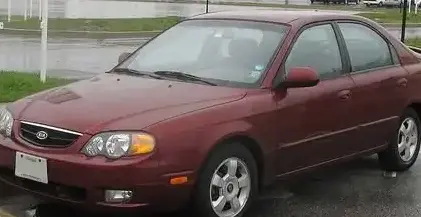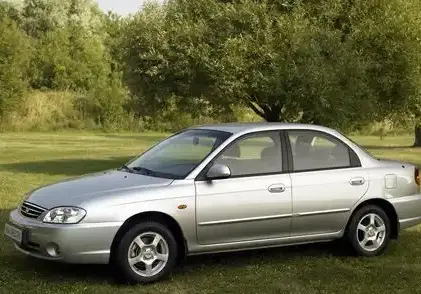
The Kia Spectra 1.6i 16V, produced between 2005 and 2006, represented an entry-level offering within the second generation (2000-2009) of Kia’s compact sedan. Positioned as a budget-friendly option, this variant aimed to provide reliable transportation with reasonable fuel economy. It served as a key model for Kia as they continued to establish a foothold in the North American market, competing with established players like the Honda Civic and Toyota Corolla. This specific configuration – the 1.6-liter engine paired with a five-speed manual transmission – was a common choice for buyers prioritizing affordability and practicality. While an automatic transmission was available, the manual version offered slightly improved fuel efficiency and a more engaging driving experience.
Technical Specifications
| Brand | Kia |
| Model | Spectra |
| Generation | Spectra |
| Type (Engine) | 1.6i 16V (105 Hp) |
| Start of production | 2005 |
| End of production | 2006 |
| Powertrain Architecture | Internal Combustion engine |
| Body type | Sedan |
| Seats | 5 |
| Doors | 4 |
| Fuel consumption (urban) | 10.5 l/100 km (22.4 US mpg) |
| Fuel consumption (extra urban) | 6 l/100 km (39.2 US mpg) |
| Fuel Type | Petrol (Gasoline) |
| Acceleration 0 – 100 km/h | 11.6 sec |
| Acceleration 0 – 62 mph | 11.6 sec |
| Acceleration 0 – 60 mph | 11 sec |
| Maximum speed | 186 km/h (115.58 mph) |
| Weight-to-power ratio | 10.7 kg/Hp |
| Weight-to-torque ratio | 7.8 kg/Nm |
| Power | 105 Hp @ 5500 rpm |
| Torque | 144 Nm @ 4500 rpm (106.21 lb.-ft. @ 4500 rpm) |
| Engine layout | Front, Transverse |
| Engine displacement | 1594 cm3 (97.27 cu. in.) |
| Number of cylinders | 4 |
| Engine configuration | Inline |
| Cylinder Bore | 78 mm (3.07 in.) |
| Piston Stroke | 83.4 mm (3.28 in.) |
| Compression ratio | 9.5:1 |
| Number of valves per cylinder | 4 |
| Fuel injection system | Multi-port manifold injection |
| Engine aspiration | Naturally aspirated |
| Valvetrain | DOHC |
| Kerb Weight | 1125 kg (2480.2 lbs.) |
| Trunk (boot) space – minimum | 440 l (15.54 cu. ft.) |
| Trunk (boot) space – maximum | 1125 l (39.73 cu. ft.) |
| Fuel tank capacity | 50 l (13.21 US gal | 11 UK gal) |
| Length | 4510 mm (177.56 in.) |
| Width | 1720 mm (67.72 in.) |
| Height | 1415 mm (55.71 in.) |
| Wheelbase | 2560 mm (100.79 in.) |
| Drivetrain Architecture | Front wheel drive |
| Number of gears and type of gearbox | 5 gears, manual transmission |
| Front suspension | Independent, type McPherson with coil spring and anti-roll bar |
| Rear suspension | Independent multi-link spring suspension with stabilizer |
| Front brakes | Disc |
| Rear brakes | Drum |
| Power steering | Hydraulic Steering |
Powertrain & Engine Architecture
The heart of the Spectra 1.6i 16V is the G4GD engine, a 1.6-liter inline-four cylinder gasoline engine. This engine utilizes a multi-port fuel injection system, delivering fuel directly into the intake ports just before the intake valves. The engine features a double overhead camshaft (DOHC) valvetrain, operating four valves per cylinder. This configuration enhances volumetric efficiency, contributing to improved power output and fuel economy. The engine’s 9.5:1 compression ratio is a typical value for naturally aspirated engines of this era, balancing performance and reliability. The five-speed manual transmission offered a relatively standard gear ratio spread, prioritizing fuel efficiency in higher gears and providing adequate acceleration in lower gears. The transmission was known for its smooth operation, though it wasn’t particularly sporty in feel.
Driving Characteristics
The 105 horsepower and 144 Nm (106 lb-ft) of torque produced by the 1.6-liter engine resulted in adequate, but not exhilarating, performance. Acceleration from 0 to 60 mph took approximately 11 seconds, making it suitable for everyday commuting and city driving. The manual transmission allowed drivers to maintain control over engine speed, maximizing efficiency or extracting more power when needed. Compared to the available automatic transmission, the manual version offered a more connected driving experience and slightly better fuel economy. It was noticeably slower than higher-trim Spectra models equipped with the larger 2.0-liter engine, which offered significantly more power and quicker acceleration.
Equipment & Trim Levels
The 1.6i 16V typically came with a basic level of standard equipment. This included air conditioning, power steering, and an AM/FM radio. Interior upholstery was typically cloth, and the dashboard featured a straightforward design with easy-to-use controls. Optional extras included power windows and locks, a CD player, and alloy wheels. The Spectra aimed for value, so even with options, it remained competitively priced. The trim level was generally considered the base model, focusing on essential features for budget-conscious buyers.
Chassis & Braking
The Spectra 1.6i 16V utilized a McPherson strut front suspension and a multi-link rear suspension. This setup provided a comfortable ride quality, absorbing bumps and irregularities in the road surface effectively. Front disc brakes and rear drum brakes provided adequate stopping power for the vehicle’s weight and performance. Hydraulic power steering offered light and responsive steering feel, making it easy to maneuver in tight spaces. The suspension tuning was geared towards comfort rather than sporty handling, prioritizing a smooth and predictable ride.
Market Reception & Comparison
The Kia Spectra 1.6i 16V was generally well-received as an affordable and reliable compact sedan. Critics praised its value for money and spacious interior. However, it was often criticized for its lack of refinement and relatively uninspired driving dynamics compared to competitors like the Honda Civic and Toyota Corolla. Fuel economy was considered average for its class. Compared to the 2.0-liter Spectra, the 1.6i 16V offered lower running costs but sacrificed performance. The 1.6L engine was seen as a good choice for those prioritizing fuel efficiency and affordability over outright speed.
Legacy
The Kia Spectra 1.6i 16V, while not a standout performer, played a significant role in establishing Kia as a viable competitor in the compact car segment. The G4GD engine proved to be relatively reliable, and parts availability remains good. Today, these vehicles are often found as affordable used cars, offering basic transportation at a low cost. While not highly sought after by collectors, well-maintained examples can still provide years of reliable service. The Spectra’s legacy lies in its contribution to Kia’s growing reputation for value and dependability.