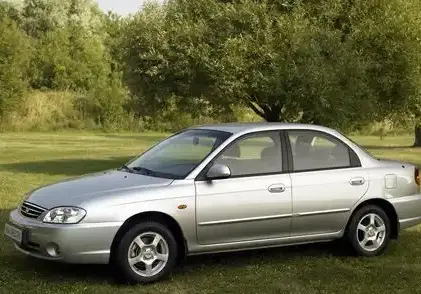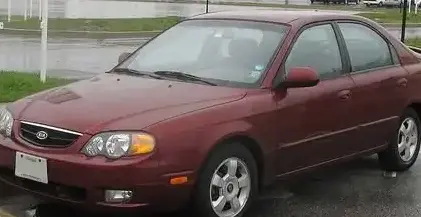
The Kia Spectra, marketed in the United States between 2001 and 2003, represented Kia’s second attempt to establish a foothold in the competitive North American compact car segment. The 2.0i variant, producing 140 horsepower, was a key offering during this period, positioned as a mainstream, value-oriented option. This generation of Spectra (internally known as the B-platform) aimed to provide affordable transportation with a focus on practicality and a relatively long warranty – a key selling point for the brand at the time. Production spanned from 2001 to 2003, with minor revisions occurring throughout the model years. It was a direct competitor to vehicles like the Honda Civic, Toyota Corolla, and Mazda Protegé.
Technical Specifications
| Brand | Kia |
| Model | Spectra |
| Generation | Spectra (USA) |
| Type (Engine) | 2.0i (140 Hp) |
| Start of production | 2001 |
| End of production | 2003 |
| Powertrain Architecture | Internal Combustion engine |
| Body type | Sedan |
| Fuel Type | Petrol (Gasoline) |
| Power | 140 Hp @ 6000 rpm |
| Power per litre | 70.1 Hp/l |
| Torque | 181 Nm @ 4000 rpm |
| Torque (lb-ft) | 133.5 lb.-ft. @ 4000 rpm |
| Engine layout | Front, Longitudinal |
| Engine displacement | 1998 cm3 |
| Engine displacement (cu. in.) | 121.93 cu. in. |
| Number of cylinders | 4 |
| Engine configuration | Inline |
| Cylinder Bore | 86 mm |
| Cylinder Bore (in.) | 3.39 in. |
| Piston Stroke | 86 mm |
| Piston Stroke (in.) | 3.39 in. |
| Compression ratio | 9.5:1 |
| Number of valves per cylinder | 4 |
| Fuel injection system | Multi-port manifold injection |
| Engine aspiration | Naturally aspirated engine |
| Valvetrain | DOHC |
Powertrain & Engine Architecture
The heart of the 2.0i Spectra was the Kia-developed, naturally aspirated 2.0-liter inline-four cylinder engine. This engine, internally designated as the G4GF, utilized a cast iron block and an aluminum cylinder head. It featured a double overhead camshaft (DOHC) valvetrain with four valves per cylinder, contributing to its relatively respectable power output for its displacement. Fuel delivery was handled by a multi-point fuel injection system, providing adequate atomization for efficient combustion. The engine’s 9.5:1 compression ratio was a compromise between performance and the ability to run on readily available 87 octane gasoline. The engine was transversely mounted in the front of the vehicle, driving the front wheels. While a five-speed manual transmission was available, the 2.0i was frequently paired with a four-speed automatic transmission. This automatic, while providing convenience, was a somewhat dated design and contributed to slightly lower fuel economy compared to the manual version.
Driving Characteristics
The 140 horsepower and 133.5 lb-ft of torque offered by the 2.0i Spectra provided adequate, though not exhilarating, performance. Acceleration from 0 to 60 mph typically took around 9-10 seconds. The four-speed automatic transmission, while smooth in operation, lacked the responsiveness of more modern transmissions. Gear ratios were geared towards fuel efficiency rather than outright acceleration. The engine felt relatively strained at higher RPMs, and passing maneuvers required careful planning. Compared to the base 1.8L engine offered in some markets, the 2.0i provided a noticeable improvement in power and responsiveness. However, it didn’t offer the same level of performance as larger-engined competitors. The Spectra’s suspension was tuned for comfort, resulting in a relatively soft ride, but also some body roll during cornering.
Equipment & Trim Levels
The 2.0i Spectra typically came standard with features considered essential for the time, including air conditioning, power windows and locks, and an AM/FM radio with a cassette player. Higher trim levels, such as the LS, added features like alloy wheels, a CD player, and upgraded interior upholstery. Interior materials were generally durable but not particularly luxurious. The dashboard layout was functional and straightforward, prioritizing ease of use over aesthetic appeal. Optional extras included a sunroof, cruise control, and upgraded sound systems. Safety features were relatively basic, consisting of dual front airbags and anti-lock brakes (ABS) on some trims.
Chassis & Braking
The Spectra utilized a front MacPherson strut suspension and a rear multi-link suspension. This setup provided a reasonable balance between ride comfort and handling. The base models typically featured drum brakes on the rear wheels, while higher trim levels received disc brakes all around. The steering was hydraulically assisted, providing light and easy steering feel. Stabilizer bars were included at both the front and rear to reduce body roll. The chassis was relatively lightweight, contributing to the car’s fuel efficiency. Tire sizes were typically 185/65R14 or 195/60R15, depending on the trim level.
Market Reception & Comparison
The Kia Spectra 2.0i was generally well-received as a value-oriented compact car. Critics praised its spacious interior, comfortable ride, and generous warranty. However, it was often criticized for its somewhat bland styling, uninspired handling, and the dated four-speed automatic transmission. Compared to the base 1.8L Spectra, the 2.0i offered a significant performance boost, making it a more appealing option for drivers who frequently drove on highways or carried passengers. Fuel economy was comparable to other vehicles in its class, averaging around 24 mpg city and 32 mpg highway. Reliability was generally good, although some owners reported minor issues with the automatic transmission and electrical components.
Legacy
The Kia Spectra, particularly the 2.0i variant, played a crucial role in establishing Kia as a viable competitor in the US market. While not a groundbreaking vehicle, it offered a compelling combination of affordability, practicality, and a long warranty. Today, the Spectra 2.0i is a relatively affordable used car option. The G4GF engine is known for its durability, and with proper maintenance, it can provide many years of reliable service. However, finding parts for older models can sometimes be challenging. The four-speed automatic transmission is the most common point of failure, and potential buyers should have it inspected before purchase. The Spectra represents a significant step forward for Kia, paving the way for the more refined and competitive models that followed.