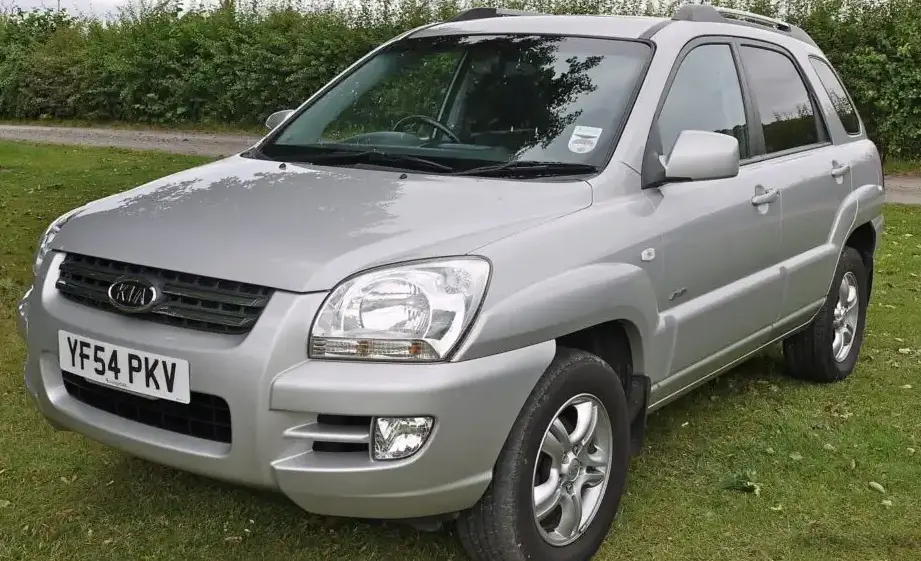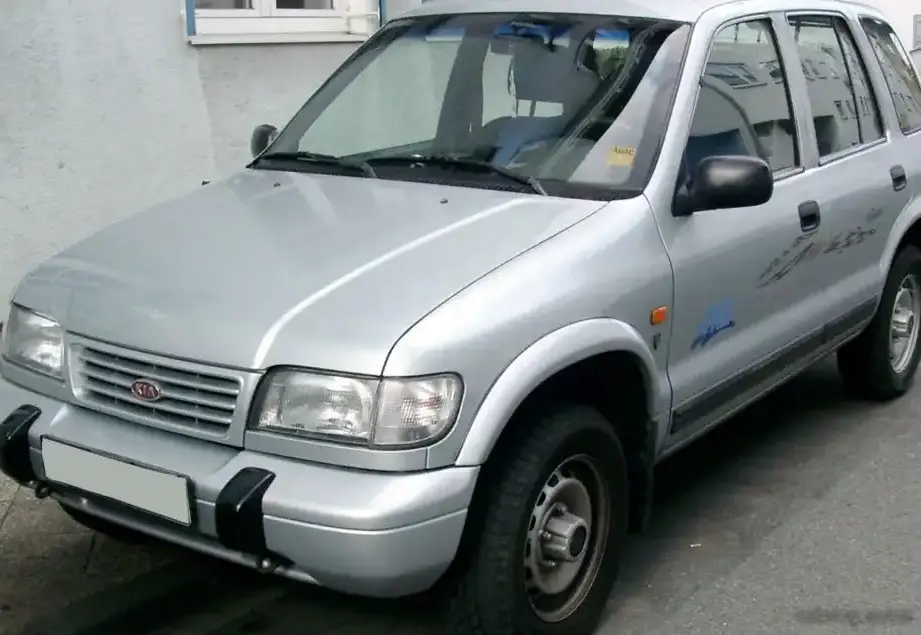
The Kia Sportage first generation, produced from 1997 to 2006, represented a pivotal moment for the South Korean automaker. It was Kia’s first dedicated sport utility vehicle (SUV), designed to appeal to a growing market segment seeking affordable and capable all-wheel drive vehicles. The 2.0i variant, equipped with a 95 horsepower engine and a five-speed manual transmission, served as the entry point into the Sportage lineup, particularly in European and Asian markets. This model aimed to provide a practical and economical option for buyers needing a versatile vehicle for both urban commuting and light off-road adventures. It was built upon a body-on-frame construction, a design choice common for SUVs of that era, prioritizing durability and off-road capability over on-road refinement.
Technical Specifications
| Brand | Kia |
| Model | Sportage |
| Generation | Sportage I |
| Type (Engine) | 2.0 i (95 Hp) |
| Start of production | 1997 |
| End of production | 2006 |
| Powertrain Architecture | Internal Combustion engine |
| Body type | SUV |
| Seats | 5 |
| Doors | 5 |
| Fuel consumption (urban) | 15.8 l/100 km (14.9 US mpg, 17.9 UK mpg, 6.3 km/l) |
| Fuel consumption (extra urban) | 9.5 l/100 km (24.8 US mpg, 29.7 UK mpg, 10.5 km/l) |
| Fuel Type | Petrol (Gasoline) |
| Acceleration 0 – 100 km/h | 18.4 sec |
| Acceleration 0 – 62 mph | 18.4 sec |
| Acceleration 0 – 60 mph | 17.5 sec |
| Maximum speed | 160 km/h (99.42 mph) |
| Weight-to-power ratio | 14.9 kg/Hp (66.9 Hp/tonne) |
| Weight-to-torque ratio | 9 kg/Nm (110.6 Nm/tonne) |
| Power | 95 Hp @ 5000 rpm |
| Power per litre | 47.5 Hp/l |
| Torque | 157 Nm @ 2500 rpm (115.8 lb.-ft. @ 2500 rpm) |
| Engine layout | Front, Longitudinal |
| Engine Model/Code | FE |
| Engine displacement | 1998 cm3 (121.93 cu. in.) |
| Number of cylinders | 4 |
| Engine configuration | Inline |
| Cylinder Bore | 86 mm (3.39 in.) |
| Piston Stroke | 86 mm (3.39 in.) |
| Compression ratio | 8.6:1 |
| Number of valves per cylinder | 2 |
| Fuel injection system | Multi-port manifold injection |
| Engine aspiration | Naturally aspirated engine |
| Engine oil capacity | 4.3 l (4.54 US qt | 3.78 UK qt) |
| Coolant | 7.5 l (7.93 US qt | 6.6 UK qt) |
| Kerb Weight | 1420 kg (3130.56 lbs.) |
| Max. weight | 1930 kg (4254.92 lbs.) |
| Max load | 510 kg (1124.36 lbs.) |
| Trunk (boot) space – minimum | 373 l (13.17 cu. ft.) |
| Trunk (boot) space – maximum | 1570 l (55.44 cu. ft.) |
| Fuel tank capacity | 66 l (17.44 US gal | 14.52 UK gal) |
| Length | 4315 mm (169.88 in.) |
| Width | 1764 mm (69.45 in.) |
| Height | 1650 mm (64.96 in.) |
| Wheelbase | 2650 mm (104.33 in.) |
| Front track | 1440 mm (56.69 in.) |
| Rear (Back) track | 1440 mm (56.69 in.) |
| Drive wheel | All wheel drive (4×4) |
| Number of gears and type of gearbox | 5 gears, manual transmission |
| Front suspension | Double wishbone |
| Rear suspension | Spring Strut |
| Front brakes | Ventilated discs |
| Rear brakes | Drum |
| Steering type | Steering rack and pinion |
| Power steering | Hydraulic Steering |
| Tires size | 205/70 R15 |
Powertrain & Engine Architecture
The heart of the Sportage 2.0i was the Kia FE engine, a 1.998-liter inline-four cylinder gasoline engine. This engine, while not particularly powerful, was known for its relative simplicity and durability. It utilized a multi-port fuel injection system, delivering fuel directly into the intake ports, and a single overhead camshaft (SOHC) valvetrain with two valves per cylinder. The FE engine produced 95 horsepower at 5000 rpm and 157 Nm (115.8 lb-ft) of torque at 2500 rpm. The five-speed manual transmission was the standard offering, providing a relatively direct connection between the engine and the wheels. The engine’s longitudinal mounting allowed for a traditional front-engine, all-wheel-drive layout, enhancing its off-road capabilities.
Driving Characteristics
The 95 hp engine and manual transmission combination in the Sportage 2.0i resulted in modest performance. Acceleration was leisurely, taking approximately 18.4 seconds to reach 62 mph (100 km/h). The engine felt strained when climbing hills or carrying a full load. However, the manual transmission allowed drivers to maintain control and utilize the available power effectively. The gear ratios were tuned for practicality rather than outright speed, prioritizing fuel economy and low-end torque. Compared to later, more powerful Sportage variants (like those with the 2.0L DOHC engine), the 2.0i felt significantly underpowered. The manual transmission offered a more engaging driving experience than the optional automatic, providing better control and responsiveness.
Equipment & Trim Levels
The 2.0i Sportage typically came with a basic level of equipment. Standard features included power steering, central locking, and air conditioning. Interior upholstery was typically cloth, and the dashboard featured a functional, if somewhat spartan, design. Optional extras included power windows, a sunroof, and upgraded audio systems. The trim level was generally considered the base model, aimed at budget-conscious buyers. It lacked the luxury features found in higher-spec Sportage models.
Chassis & Braking
The Sportage’s chassis was a traditional body-on-frame construction, providing a robust and durable platform. Front suspension utilized a double wishbone setup, while the rear employed a spring strut arrangement. Braking consisted of ventilated discs at the front and drum brakes at the rear. The braking system was adequate for normal driving conditions, but lacked the stopping power of more modern vehicles. The all-wheel-drive system was typically part-time, engaging automatically when wheel slippage was detected. Stabilizer bars were present, but relatively thin, contributing to a noticeable degree of body roll during cornering.
Market Reception & Comparison
The Sportage 2.0i was generally well-received as an affordable and capable SUV, particularly in markets where fuel economy and practicality were prioritized. Critics noted its rugged construction and all-wheel-drive capability, but also pointed out its lack of refinement and modest performance. Compared to other SUVs in its class, such as the Suzuki Vitara or the Honda CR-V, the Sportage offered a more affordable price point but lacked the same level of sophistication. Fuel economy was average for the time, and reliability was generally good, although maintenance costs could be higher due to the vehicle’s age and the availability of parts.
Legacy
The first-generation Kia Sportage, including the 2.0i variant, played a crucial role in establishing Kia as a viable player in the global automotive market. The FE engine proved to be a reliable unit, and many examples are still on the road today. However, due to its age, finding well-maintained examples can be challenging. The 2.0i model is often sought after by enthusiasts looking for a simple, affordable, and capable off-road vehicle. Its relatively low purchase price and straightforward mechanical design make it an attractive option for those seeking a classic SUV experience. While not a performance leader, the Sportage 2.0i remains a testament to Kia’s early efforts to compete in the increasingly popular SUV segment.