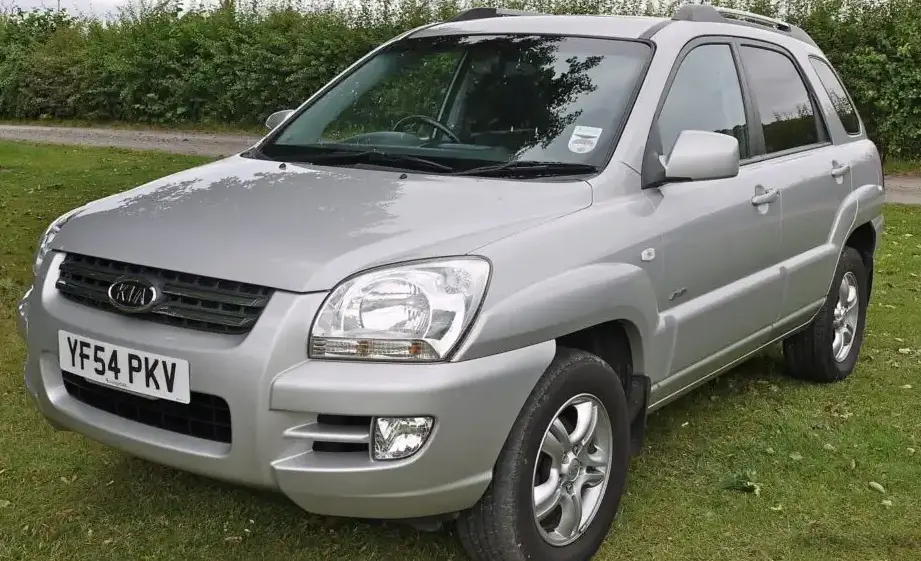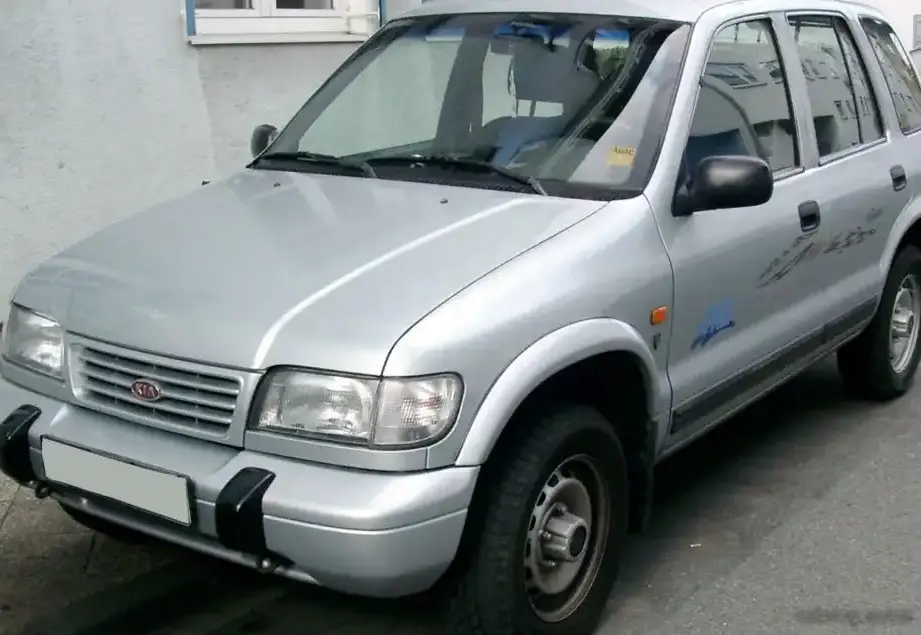
The Kia Sportage first generation (codenamed K01), launched in 1997, represented a pivotal moment for the South Korean automaker. It was Kia’s first dedicated SUV, designed to appeal to a growing market segment seeking affordable, rugged, and versatile vehicles. Produced until 2006, the Sportage aimed to establish Kia as a serious contender in the global automotive landscape, particularly in Europe and emerging markets. The 2.0 TD variant, powered by a turbocharged diesel engine producing 83 horsepower, occupied the lower end of the Sportage lineup, offering a budget-friendly entry point into SUV ownership. This model was particularly popular in regions where diesel fuel was more readily available and cost-effective, and where all-wheel drive was valued for its all-weather capability.
Technical Specifications
| Brand | Kia |
| Model | Sportage |
| Generation | Sportage I |
| Type (Engine) | 2.0 TD (83 Hp) |
| Start of production | 1997 |
| End of production | 2006 |
| Powertrain Architecture | Internal Combustion engine |
| Body type | SUV |
| Seats | 5 |
| Doors | 5 |
| Fuel consumption (urban) | 11.6 l/100 km (20.3 US mpg) |
| Fuel consumption (extra urban) | 7.7 l/100 km (30.5 US mpg) |
| Fuel Type | Diesel |
| Acceleration 0 – 100 km/h | 20.5 sec |
| Acceleration 0 – 62 mph | 20.5 sec |
| Acceleration 0 – 60 mph | 19.5 sec |
| Maximum speed | 145 km/h (90.1 mph) |
| Weight-to-power ratio | 17.7 kg/Hp |
| Weight-to-torque ratio | 7.5 kg/Nm |
| Power | 83 Hp @ 4000 rpm |
| Torque | 195 Nm @ 2000 rpm (143.82 lb.-ft. @ 2000 rpm) |
| Engine layout | Front, Longitudinal |
| Engine Model/Code | RF |
| Engine displacement | 1998 cm3 (121.93 cu. in.) |
| Number of cylinders | 4 |
| Engine configuration | Inline |
| Cylinder Bore | 86 mm (3.39 in.) |
| Piston Stroke | 86 mm (3.39 in.) |
| Compression ratio | 21:1 |
| Number of valves per cylinder | 2 |
| Fuel injection system | Precombustion chamber injection |
| Engine aspiration | Turbocharger |
| Engine oil capacity | 6.4 l (6.76 US qt | 5.63 UK qt) |
| Kerb Weight | 1470 kg (3240.8 lbs.) |
| Max. weight | 1930 kg (4254.92 lbs.) |
| Max load | 460 kg (1014.13 lbs.) |
| Trunk (boot) space – minimum | 373 l (13.17 cu. ft.) |
| Trunk (boot) space – maximum | 1570 l (55.44 cu. ft.) |
| Fuel tank capacity | 60 l (15.85 US gal | 13.2 UK gal) |
| Length | 4435 mm (174.61 in.) |
| Width | 1764 mm (69.45 in.) |
| Height | 1695 mm (66.73 in.) |
| Wheelbase | 2650 mm (104.33 in.) |
| Front track | 1440 mm (56.69 in.) |
| Rear (Back) track | 1440 mm (56.69 in.) |
| Drive wheel | All wheel drive (4×4) |
| Number of gears and type of gearbox | 5 gears, manual transmission |
| Front suspension | Double wishbone |
| Rear suspension | Coil spring |
| Front brakes | Ventilated discs |
| Rear brakes | Drum |
| Power steering | Hydraulic Steering |
| Tires size | 205/70 R15 |
Powertrain & Engine Architecture
The heart of the Sportage 2.0 TD was the RF engine, a 1.998-liter inline-four cylinder diesel. This engine utilized precombustion chamber injection, a system common in European diesel engines of the era. This system involved injecting fuel into a pre-chamber, where it partially combusted before being ignited in the main cylinder, promoting more complete combustion and reducing noise. The engine was turbocharged, which helped to boost power output despite its relatively small displacement. The turbocharger provided increased air intake, allowing for a higher fuel-air mixture and thus more power. The 83 horsepower and 195 Nm (144 lb-ft) of torque were respectable for the time, but positioned this variant as the entry-level option. The engine was mounted longitudinally in the chassis, a configuration that facilitated the implementation of the all-wheel-drive system. The 5-speed manual transmission was the only gearbox option available with this engine, offering a direct connection between the engine and the wheels.
Driving Characteristics
The 2.0 TD Sportage, with its 83 horsepower, wasn’t designed for outright speed. Acceleration was leisurely, taking over 20 seconds to reach 60 mph. However, the engine’s torque characteristics made it reasonably capable for everyday driving and light off-road work. The turbocharger provided a noticeable boost in power at lower RPMs, making it suitable for navigating city streets and climbing moderate inclines. Compared to the later, more powerful 2.0L gasoline engine options, the diesel offered significantly better fuel economy but lacked the responsiveness and refinement. The manual transmission, while providing driver control, had relatively long throws and wasn’t particularly sporty. The all-wheel-drive system, selectable via a dashboard switch, provided enhanced traction on slippery surfaces, making it a practical choice for regions with inclement weather.
Equipment & Trim Levels
The 2.0 TD Sportage typically came with a fairly basic level of equipment, reflecting its position as the entry-level model. Standard features generally included power steering, central locking, and basic instrumentation. Interior upholstery was typically cloth, and the dashboard featured a functional but utilitarian design. Air conditioning was often an optional extra, as were power windows and upgraded audio systems. The trim level was often simply designated as “base” or “LX,” with limited opportunities for customization. The focus was on providing a durable and practical vehicle at an affordable price point.
Chassis & Braking
The Sportage’s chassis was a body-on-frame construction, providing robustness and off-road capability. The front suspension utilized a double wishbone setup, while the rear employed a coil spring arrangement. This suspension configuration offered a reasonable balance between ride comfort and handling. Braking duties were handled by ventilated discs at the front and drum brakes at the rear. While adequate for the vehicle’s weight and performance, the drum brakes on the rear were a cost-saving measure and didn’t offer the same stopping power as disc brakes. The hydraulic power steering provided reasonable assistance, making it easy to maneuver at low speeds.
Market Reception & Comparison
The 2.0 TD Sportage was generally well-received as a value-for-money SUV, particularly in Europe and other markets where diesel engines were popular. Critics praised its ruggedness, all-wheel-drive capability, and fuel efficiency. However, it was often criticized for its lack of refinement, slow acceleration, and basic interior. Compared to competitors like the Suzuki Vitara and the Nissan Terrano, the Sportage offered a similar level of practicality and affordability, but often lagged behind in terms of driving dynamics and interior quality. The diesel engine provided significantly better fuel economy than the gasoline alternatives, making it a popular choice for drivers who covered long distances.
Legacy
The Kia Sportage 2.0 TD, while not the most powerful or refined SUV of its era, played a crucial role in establishing Kia as a viable automotive manufacturer. The RF diesel engine, while relatively simple in design, proved to be reasonably reliable, and many examples are still on the road today. In the used car market, these models are often sought after by those looking for an affordable and capable all-wheel-drive vehicle. While maintenance costs can be higher due to the age of the vehicle and the diesel engine, the Sportage 2.0 TD remains a testament to Kia’s early efforts to break into the global automotive market.