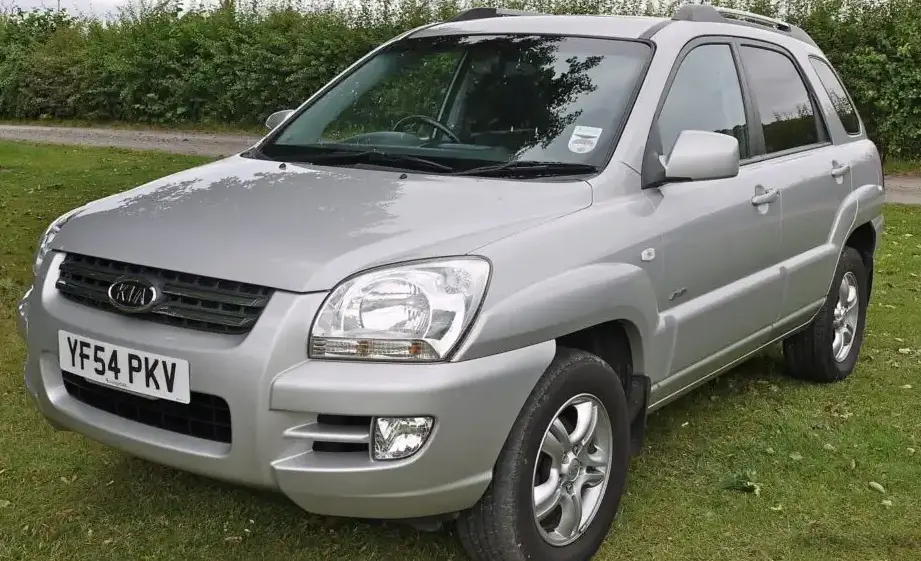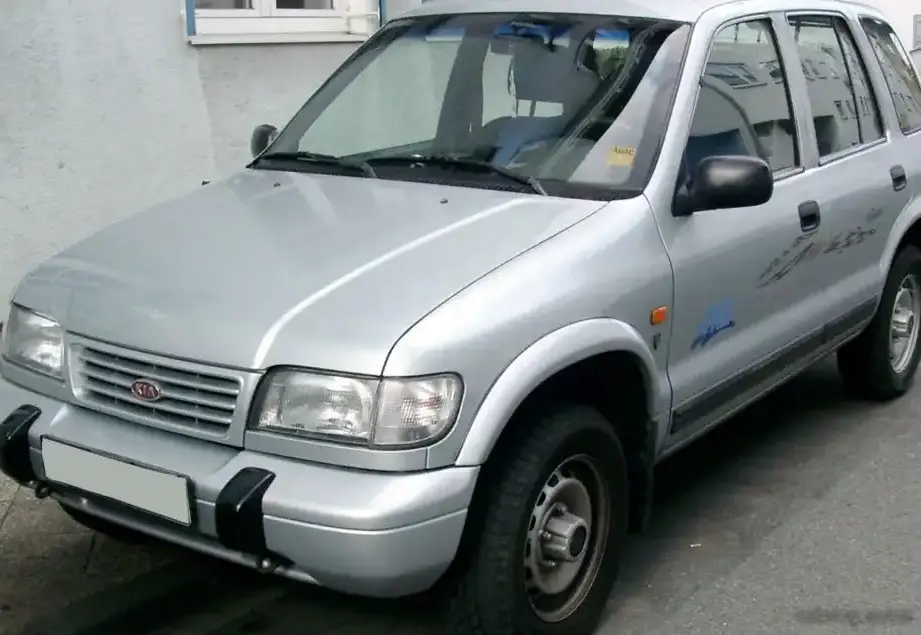
The Kia Sportage I 2.0 TD Wagon, producing 83 horsepower, was a significant model for Kia, representing their entry into the increasingly popular compact SUV segment. Produced from 1997 to 2006, this first-generation Sportage (internally designated as the KN series) aimed to offer a rugged, affordable, and capable vehicle, particularly in European and Asian markets. It was based on the Mazda Bongo platform, a result of Kia’s partnership with Mazda at the time. This variant, with its 2.0-liter turbocharged diesel engine and five-speed manual transmission, occupied a middle ground in the Sportage lineup, offering a balance between fuel economy and reasonable performance. It sat below the more powerful gasoline engine options and above any base-level, lower-trim diesel offerings.
Technical Specifications
| Brand | Kia |
| Model | Sportage |
| Generation | Sportage I |
| Type (Engine) | 2.0 TD Wagon (83 Hp) |
| Start of production | 1997 |
| End of production | 2006 |
| Powertrain Architecture | Internal Combustion engine |
| Body type | SUV |
| Seats | 5 |
| Doors | 5 |
| Fuel consumption (urban) | 11.6 l/100 km (20.3 US mpg) |
| Fuel consumption (extra urban) | 7.7 l/100 km (30.5 US mpg) |
| Fuel Type | Diesel |
| Maximum speed | 145 km/h (90.1 mph) |
| Weight-to-power ratio | 18.6 kg/Hp |
| Weight-to-torque ratio | 7.9 kg/Nm |
| Power | 83 Hp @ 4000 rpm |
| Power per litre | 41.5 Hp/l |
| Torque | 195 Nm @ 2000 rpm (143.82 lb.-ft. @ 2000 rpm) |
| Engine layout | Front, Longitudinal |
| Engine Model/Code | RF |
| Engine displacement | 1998 cm3 (121.93 cu. in.) |
| Number of cylinders | 4 |
| Engine configuration | Inline |
| Cylinder Bore | 86 mm (3.39 in.) |
| Piston Stroke | 86 mm (3.39 in.) |
| Compression ratio | 21:1 |
| Number of valves per cylinder | 2 |
| Fuel injection system | Precombustion chamber injection |
| Engine aspiration | Turbocharger |
| Engine oil capacity | 6.4 l (6.76 US qt | 5.63 UK qt) |
| Kerb Weight | 1540 kg (3395.12 lbs.) |
| Max. weight | 2090 kg (4607.66 lbs.) |
| Max load | 550 kg (1212.54 lbs.) |
| Trunk (boot) space – minimum | 640 l (22.6 cu. ft.) |
| Trunk (boot) space – maximum | 2220 l (78.4 cu. ft.) |
| Fuel tank capacity | 65 l (17.17 US gal | 14.3 UK gal) |
| Length | 4435 mm (174.61 in.) |
| Width | 1764 mm (69.45 in.) |
| Height | 1695 mm (66.73 in.) |
| Wheelbase | 2650 mm (104.33 in.) |
| Front track | 1440 mm (56.69 in.) |
| Rear (Back) track | 1440 mm (56.69 in.) |
| Drive wheel | All wheel drive (4×4) |
| Number of gears and type of gearbox | 5 gears, manual transmission |
| Front suspension | Double wishbone |
| Rear suspension | Spring Strut |
| Front brakes | Ventilated discs |
| Rear brakes | Drum |
| Power steering | Hydraulic Steering |
| Tires size | 205/70 R15 |
Powertrain & Engine Architecture
The heart of this Sportage variant is the RF engine, a 1.998-liter inline-four cylinder diesel engine. This engine utilized a precombustion chamber injection system, a common technology for diesel engines of the era, designed to improve combustion efficiency and reduce noise. The addition of a turbocharger significantly boosted power output for its displacement. The RF engine produced 83 horsepower at 4000 rpm and 195 Nm (143.82 lb-ft) of torque at 2000 rpm. The five-speed manual transmission was the standard offering for this engine, providing a relatively direct connection between the engine and the wheels. The transmission’s gear ratios were tuned for a balance of fuel economy and usability, prioritizing low-end torque for everyday driving situations.
Driving Characteristics
The 2.0 TD with the manual transmission offered a practical driving experience. Acceleration was adequate, but not particularly brisk. The turbocharger provided a noticeable boost in power, but the engine lacked the outright punch of larger displacement or more modern diesel engines. The five-speed manual transmission allowed for good control over the engine’s powerband, and the all-wheel-drive system provided enhanced traction in slippery conditions. Compared to the gasoline engine options, the diesel offered significantly better fuel economy, but at the cost of refinement and overall performance. The manual transmission also provided a more engaging driving experience than the available automatic transmission, which was often criticized for its sluggish shifts.
Equipment & Trim Levels
The 2.0 TD Wagon typically came with a fairly basic level of equipment, reflecting its position as a mid-range offering. Standard features generally included power steering, central locking, and basic instrumentation. Interior upholstery was typically cloth, and the dashboard featured a functional, if somewhat utilitarian, design. Optional extras could include air conditioning, power windows, and an upgraded audio system. Higher trim levels added features like alloy wheels, a sunroof, and more luxurious interior appointments.
Chassis & Braking
The Sportage I utilized a body-on-frame construction, contributing to its rugged character. The front suspension featured a double wishbone setup, while the rear suspension employed a spring strut design. This suspension configuration provided a comfortable ride, but handling was not particularly sharp. The braking system consisted of ventilated discs at the front and drum brakes at the rear. Hydraulic power steering was standard, providing reasonable assistance at low speeds. The all-wheel-drive system was typically a part-time system, allowing the driver to select between two-wheel drive and four-wheel drive depending on road conditions.
Market Reception & Comparison
The Kia Sportage I 2.0 TD Wagon was generally well-received as a value-for-money SUV. Critics praised its affordability, ruggedness, and fuel efficiency. However, it was also criticized for its relatively basic interior, unrefined engine, and somewhat dated design. Compared to competitors like the Suzuki Vitara and the Hyundai Santa Fe, the Sportage offered a similar level of practicality and affordability, but often lagged behind in terms of refinement and features. The diesel engine, while economical, was noticeably louder and less smooth than the gasoline alternatives.
Legacy
The Kia Sportage I played a crucial role in establishing Kia as a credible player in the global automotive market. While the RF diesel engine isn’t known for exceptional longevity, it proved to be reasonably reliable with proper maintenance. Today, the 2.0 TD Wagon is a relatively affordable and practical classic SUV. Finding well-maintained examples can be challenging, and potential buyers should be aware of the typical wear and tear associated with older diesel engines. However, its rugged construction and all-wheel-drive capability make it a capable and appealing option for those seeking a simple, affordable, and versatile SUV.