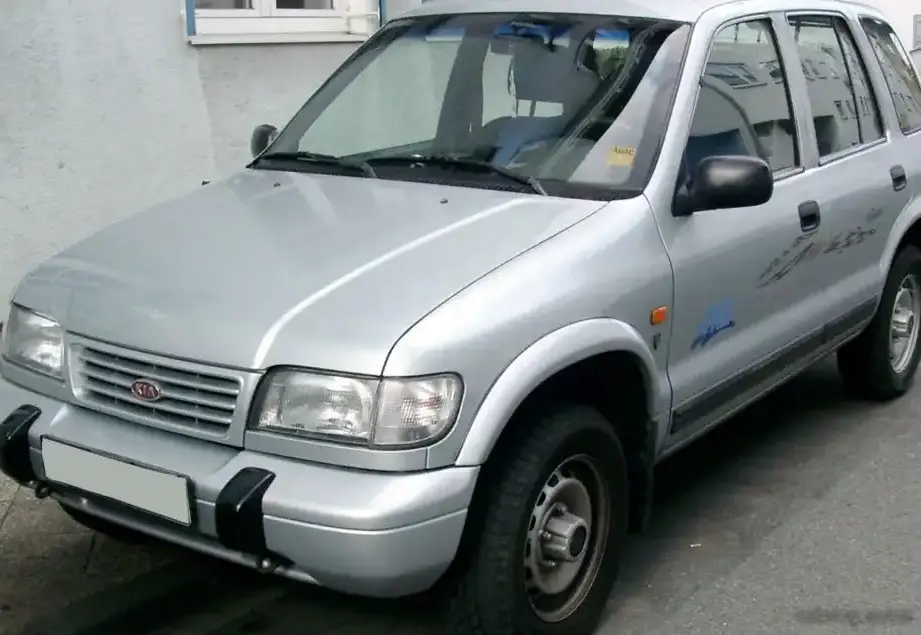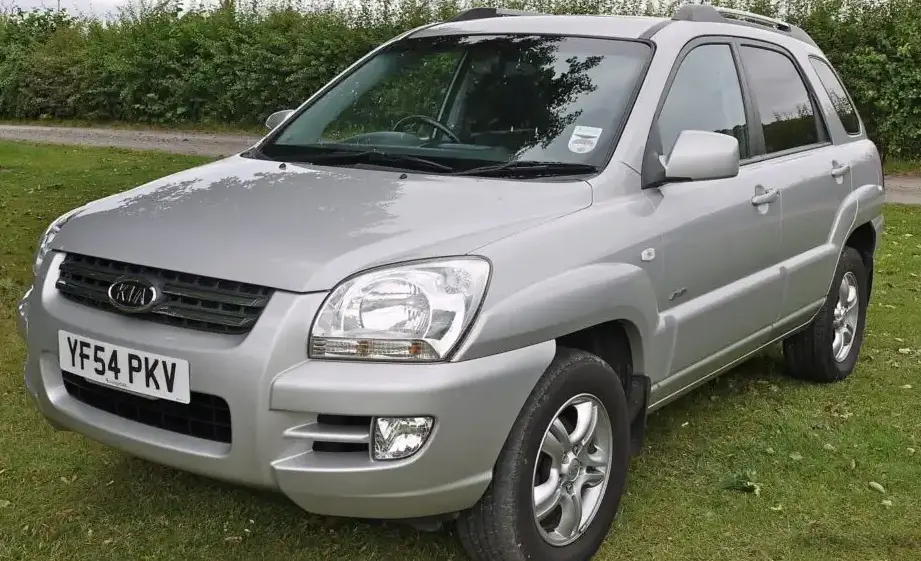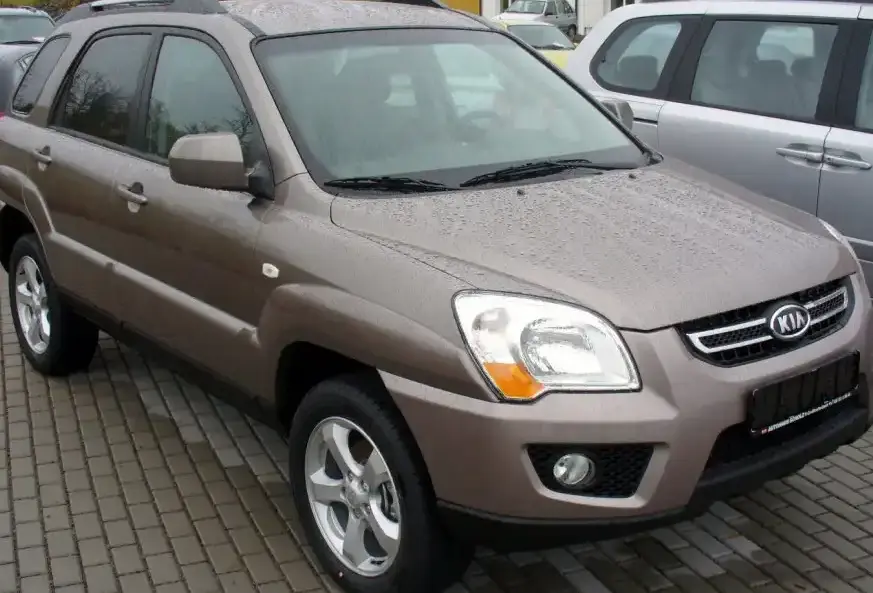
The Kia Sportage II (facelift, 2008) 2.0 CRDi with a 150 horsepower engine and automatic transmission represents a significant iteration of Kia’s popular compact SUV. Produced from 2008 to 2010, this variant was positioned as a mid-range offering within the Sportage II lineup, bridging the gap between the base gasoline engines and the more powerful, though less commonly available, higher-output diesel options. It was primarily aimed at the European and Asian markets, where diesel engines were – and continue to be – favored for their fuel efficiency and torque characteristics. This facelift brought styling updates and refinements to the original Sportage II, enhancing its appeal in a competitive segment.
Technical Specifications
| Brand | Kia |
| Model | Sportage |
| Generation | Sportage II (facelift, 2008) |
| Type (Engine) | 2.0 CRDi (150 Hp) Automatic |
| Start of production | 2008 |
| End of production | 2010 |
| Powertrain Architecture | Internal Combustion engine |
| Body type | SUV |
| Seats | 5 |
| Doors | 5 |
| Fuel consumption (urban) | 10.3 l/100 km (22.8 US mpg, 27.4 UK mpg, 9.7 km/l) |
| Fuel consumption (extra urban) | 6.6 l/100 km (35.6 US mpg, 42.8 UK mpg, 15.2 km/l) |
| Fuel consumption (combined) | 8 l/100 km (29.4 US mpg, 35.3 UK mpg, 12.5 km/l) |
| CO2 emissions | 210 g/km |
| Fuel Type | Diesel |
| Acceleration 0 – 100 km/h | 12.8 sec |
| Acceleration 0 – 62 mph | 12.8 sec |
| Acceleration 0 – 60 mph | 12.2 sec |
| Maximum speed | 175 km/h (108.74 mph) |
| Emission standard | Euro 4 |
| Weight-to-power ratio | 10.6 kg/Hp, 94.5 Hp/tonne |
| Weight-to-torque ratio | 5.2 kg/Nm, 191.6 Nm/tonne |
| Power | 150 Hp @ 3800 rpm |
| Torque | 304 Nm @ 1800-2500 rpm (224.22 lb.-ft. @ 1800-2500 rpm) |
| Engine layout | Front, Transverse |
| Engine Model/Code | D4EA |
| Engine displacement | 1991 cm3 (121.5 cu. in.) |
| Number of cylinders | 4 |
| Engine configuration | Inline |
| Number of valves per cylinder | 4 |
| Fuel injection system | Diesel Commonrail |
| Engine aspiration | Turbocharger, Intercooler |
| Engine oil capacity | 5.9 l (6.23 US qt | 5.19 UK qt) |
| Coolant capacity | 8.7 l (9.19 US qt | 7.65 UK qt) |
| Kerb Weight | 1587 kg (3498.74 lbs.) |
| Max. weight | 2190 kg (4828.12 lbs.) |
| Max load | 603 kg (1329.39 lbs.) |
| Trunk (boot) space – minimum | 391 l (13.81 cu. ft.) |
| Length | 4351 mm (171.3 in.) |
| Width | 1801 mm (70.91 in.) |
| Height | 1694 mm (66.69 in.) |
| Wheelbase | 2629 mm (103.5 in.) |
| Front track | 1539 mm (60.59 in.) |
| Rear (Back) track | 1539 mm (60.59 in.) |
| Ride height (ground clearance) | 196 mm (7.72 in.) |
| Drag coefficient (Cd) | 0.40 |
| Minimum turning circle | 10.8 m (35.43 ft.) |
| Drivetrain Architecture | Front wheel drive |
| Number of gears | 4 |
| Gearbox type | Automatic transmission |
| Front brakes | Ventilated discs |
| Rear brakes | Disc |
| Assisting systems | ABS (Anti-lock braking system) |
| Steering type | Steering rack and pinion |
| Tires size | 215/65 R16 |
| Wheel rims size | 16 |
INTRODUCTION
The 2008 facelift of the Kia Sportage II brought a refreshed look and continued the model’s success as a practical and affordable compact SUV. Built on the 1HX0/A3 platform, the Sportage II aimed to offer a compelling alternative to established Japanese and European competitors. The 2.0 CRDi Automatic variant was a key component of this strategy, providing a balance of fuel efficiency, reasonable performance, and the convenience of an automatic transmission. It was designed to appeal to families and individuals seeking a versatile vehicle for daily commuting and weekend adventures.
Powertrain & Engine Architecture
At the heart of the Sportage II 2.0 CRDi Automatic lies the D4EA engine, a 1991cc inline-four cylinder diesel engine. This engine utilizes a second-generation common rail direct injection system, delivering fuel directly into the combustion chamber at extremely high pressure. This technology, coupled with a turbocharger and intercooler, allows for increased power output and improved fuel efficiency. The engine produces 150 horsepower at 3800 rpm and a substantial 304 Nm (224.22 lb.-ft.) of torque between 1800 and 2500 rpm. The four-speed automatic transmission was sourced from Kia’s own development, offering smooth shifts but lacking the efficiency of more modern transmissions with a greater number of gears. The engine’s valvetrain features four valves per cylinder, contributing to its breathing efficiency and overall performance.
Driving Characteristics
The 2.0 CRDi Automatic Sportage offered a comfortable, if not particularly sporty, driving experience. The automatic transmission, while convenient, did detract somewhat from the engine’s potential. Acceleration from 0-60 mph took around 12.2 seconds, and top speed was limited to 175 km/h (108.74 mph). The relatively long gear ratios prioritized fuel economy over outright performance. Compared to the manual transmission version of the same engine, the automatic suffered a slight performance penalty. The torque delivery was strong at lower and mid-range RPMs, making it suitable for everyday driving and towing light loads. However, overtaking maneuvers required careful planning, as the transmission could be slow to downshift.
Equipment & Trim Levels
The 2.0 CRDi Automatic trim typically included standard features such as air conditioning, power windows, central locking, and an integrated audio system. Higher trim levels offered options like leather upholstery, sunroof, alloy wheels, and upgraded audio systems. Safety features included ABS (Anti-lock Braking System) and dual front airbags. The interior design was functional and straightforward, with a focus on practicality rather than luxury. Dashboard materials were durable but not particularly refined. The overall equipment level was competitive for its price point, offering good value for money.
Chassis & Braking
The Sportage II utilized a conventional front-wheel-drive layout with independent suspension at the front and a multi-link suspension at the rear. The front suspension featured coil springs and stabilizer bar, while the rear suspension also employed coil springs. Braking duties were handled by ventilated discs at the front and solid discs at the rear. The braking system provided adequate stopping power for everyday driving, but lacked the sophistication of more advanced systems found in higher-end vehicles. The chassis was tuned for comfort, prioritizing ride quality over sharp handling.
Market Reception & Comparison
The Kia Sportage II 2.0 CRDi Automatic was generally well-received by automotive critics as a practical and affordable SUV. Its fuel economy was a major selling point, particularly in Europe where diesel fuel was significantly cheaper than gasoline. Compared to the gasoline-powered Sportage models, the 2.0 CRDi offered superior torque and fuel efficiency. However, it was often criticized for its somewhat sluggish performance and the dated feel of the four-speed automatic transmission. Competitors like the Hyundai Tucson and Nissan Qashqai offered similar features and performance, but the Sportage often undercut them on price.
Legacy
The Kia Sportage II 2.0 CRDi Automatic has proven to be a relatively reliable vehicle, with many examples still on the road today. The D4EA engine is known for its durability, provided it receives regular maintenance. Common issues include wear and tear on the turbocharger and potential problems with the fuel injection system. The automatic transmission, while generally reliable, can be prone to occasional issues with solenoid valves. In the used car market, these Sportages represent a budget-friendly option for those seeking a practical and spacious SUV. Their affordability and relatively low running costs make them an attractive choice for first-time buyers and those on a tight budget.