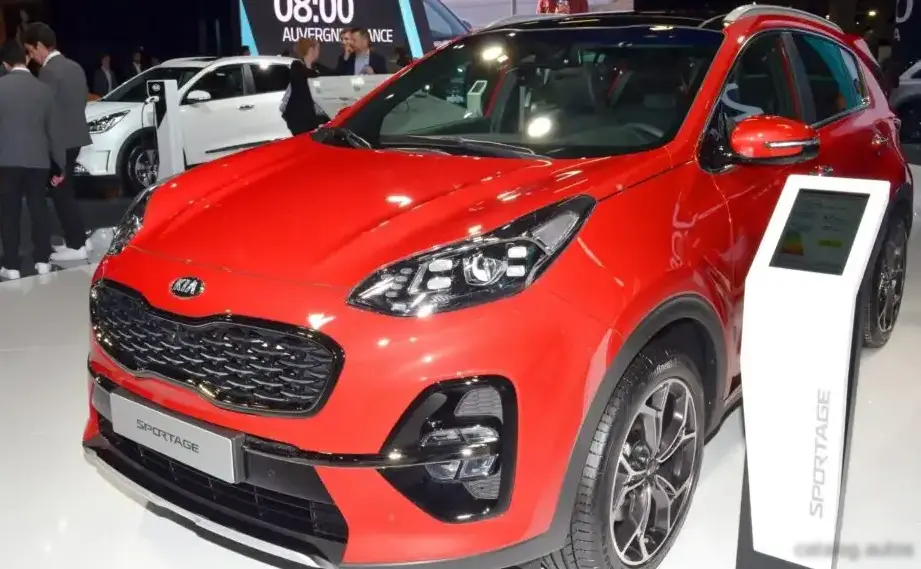
The Kia Sportage IV, specifically the facelifted version introduced in 2018, represented a significant step forward for the South Korean automaker in the highly competitive compact SUV segment. This variant, powered by a 2.0-liter naturally aspirated MPI (Multi-Point Injection) engine producing 150 horsepower, paired with a 6-speed automatic transmission, was a mainstay of the Sportage lineup from 2018 through July 2021. It aimed to provide a balance of affordability, practicality, and reasonable performance for families and individuals seeking a versatile vehicle. The facelift brought updated styling, improved interior materials, and enhanced safety features, solidifying the Sportage’s position as a strong contender against established rivals like the Honda CR-V and Toyota RAV4 in global markets, including a growing presence in the United States.
Technical Specifications
| Brand | Kia |
| Model | Sportage |
| Generation | Sportage IV (facelift 2018) |
| Type (Engine) | 2.0 MPI (150 Hp) Automatic |
| Start of production | 2018 |
| End of production | July, 2021 |
| Powertrain Architecture | Internal Combustion engine |
| Body type | SUV |
| Seats | 5 |
| Doors | 5 |
| Fuel consumption (urban) | 10.9 l/100 km (21.6 US mpg) |
| Fuel consumption (extra urban) | 6.1 l/100 km (38.6 US mpg) |
| Fuel consumption (combined) | 7.9 l/100 km (29.8 US mpg) |
| Fuel Type | Petrol (Gasoline) |
| Acceleration 0 – 100 km/h | 11.1 sec |
| Acceleration 0 – 62 mph | 11.1 sec |
| Acceleration 0 – 60 mph | 10.5 sec |
| Maximum speed | 181 km/h (112.47 mph) |
| Weight-to-power ratio | 10 kg/Hp |
| Weight-to-torque ratio | 7.8 kg/Nm |
| Power | 150 Hp @ 6200 rpm |
| Torque | 192 Nm @ 4000 rpm (141.61 lb.-ft. @ 4000 rpm) |
| Engine layout | Front, Transverse |
| Engine Model/Code | Nu / G4NA |
| Engine displacement | 1999 cm3 (121.99 cu. in.) |
| Number of cylinders | 4 |
| Engine configuration | Inline |
| Cylinder Bore | 81 mm (3.19 in.) |
| Piston Stroke | 97 mm (3.82 in.) |
| Compression ratio | 10.3:1 |
| Number of valves per cylinder | 4 |
| Fuel injection system | Multi-port manifold injection |
| Engine aspiration | Naturally aspirated engine |
| Engine oil capacity | 4 l (4.23 US qt | 3.52 UK qt) |
| Coolant capacity | 6.9 l (7.29 US qt | 6.07 UK qt) |
| Kerb Weight | 1501 kg (3309.14 lbs.) |
| Max. weight | 2060 kg (4541.52 lbs.) |
| Max load | 559 kg (1232.38 lbs.) |
| Trunk (boot) space – minimum | 466 l (16.46 cu. ft.) |
| Fuel tank capacity | 62 l (16.38 US gal | 13.64 UK gal) |
| Length | 4485 mm (176.57 in.) |
| Width | 1855 mm (73.03 in.) |
| Height | 1645-1655 mm (64.76 – 65.16 in.) |
| Wheelbase | 2670 mm (105.12 in.) |
| Front track | 1609-1625 mm (63.35 – 63.98 in.) |
| Rear (Back) track | 1620-1636 mm (63.78 – 64.41 in.) |
| Front overhang | 905 mm (35.63 in.) |
| Rear overhang | 910 mm (35.83 in.) |
| Ride height (ground clearance) | 182 mm (7.17 in.) |
| Minimum turning circle | 10.6 m (34.78 ft.) |
| Drivetrain Architecture | Front wheel drive |
| Number of gears | 6 |
| Gearbox type | Automatic transmission |
| Front suspension | Independent type McPherson |
| Rear suspension | Independent multi-link suspension |
| Front brakes | Ventilated discs |
| Rear brakes | Disc |
| Assisting systems | ABS (Anti-lock braking system) |
| Steering type | Steering rack and pinion |
| Power steering | Electric Steering |
Powertrain & Engine Architecture
At the heart of this Sportage variant lies the Kia/Hyundai Nu family of engines, specifically the G4NA 2.0-liter inline-four cylinder. This engine utilizes a naturally aspirated configuration with multi-point fuel injection, delivering a relatively smooth and predictable power delivery. The engine’s aluminum-alloy cylinder head features dual overhead camshafts (DOHC) and four valves per cylinder, contributing to its efficiency and responsiveness. The 6-speed automatic transmission, a common unit within the Hyundai-Kia group, was chosen for its balance of fuel economy and drivability. It features a torque converter and electronically controlled shifting, offering a comfortable driving experience. While not a particularly advanced transmission by modern standards, it proved to be reliable and well-suited to the engine’s power characteristics.
Driving Characteristics
The 150-horsepower output and 192 Nm (141.61 lb-ft) of torque, combined with the automatic transmission, resulted in a 0-60 mph time of around 10.5 seconds. This wasn’t a particularly quick acceleration, especially when compared to turbocharged alternatives or even some competitors with larger displacement engines. However, the engine provided adequate power for everyday driving situations, including highway merging and passing maneuvers. The automatic transmission, while smooth, sometimes felt hesitant during quick acceleration, requiring a deliberate push of the throttle. The gear ratios were tuned for fuel efficiency rather than outright performance. Compared to the more powerful 2.4-liter engine option available in some markets, or the diesel variants popular in Europe, this 2.0-liter automatic felt less energetic but offered better fuel economy.
Equipment & Trim Levels
The 2.0 MPI Automatic Sportage typically came standard with features like air conditioning, power windows and locks, a touchscreen infotainment system with Bluetooth connectivity, and a rearview camera. Higher trim levels added features such as leather upholstery, heated front seats, a panoramic sunroof, and advanced driver-assistance systems like lane departure warning and automatic emergency braking. Interior materials were generally durable and well-assembled, though not as luxurious as some premium competitors. Optional extras included a premium sound system, navigation, and various cosmetic enhancements.
Chassis & Braking
The Sportage IV utilized a front-wheel-drive platform with independent suspension at all four corners – McPherson struts in the front and a multi-link setup in the rear. This suspension configuration provided a comfortable ride quality, absorbing bumps and imperfections in the road effectively. Braking duties were handled by ventilated discs up front and solid discs in the rear, equipped with an Anti-lock Braking System (ABS). The braking performance was adequate for everyday driving, but not particularly sporty. Stabilizer bars were fitted both front and rear to reduce body roll during cornering.
Market Reception & Comparison
Critics generally praised the 2018 Sportage facelift for its improved styling, comfortable ride, and spacious interior. However, the 2.0-liter engine and automatic transmission combination received mixed reviews. Some found it adequate for daily commuting, while others criticized its lack of power and responsiveness. Fuel economy was considered a strong point, with the combined fuel consumption of 7.9 l/100 km (29.8 US mpg) being competitive within its class. Compared to the more powerful engine options, the 2.0 MPI Automatic offered a more affordable entry point into the Sportage lineup, appealing to budget-conscious buyers.
Legacy
The Kia Sportage IV, including the 2.0 MPI Automatic variant, has proven to be a reliable and durable vehicle. The Nu engine family, while not without its minor issues (such as potential oil consumption in some cases), is generally considered to be robust and long-lasting. The 6-speed automatic transmission has also demonstrated good reliability. In the used car market, these Sportages represent a good value proposition, offering a well-equipped and practical SUV at a reasonable price. Maintenance costs are generally moderate, and parts availability is good. The Sportage IV helped to establish Kia as a major player in the global SUV market, paving the way for the continued success of the brand.