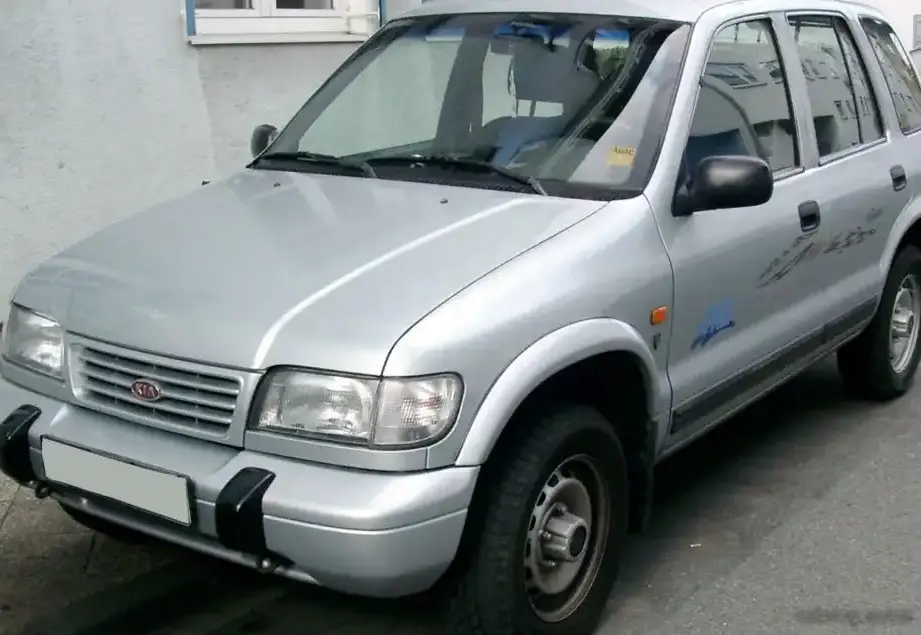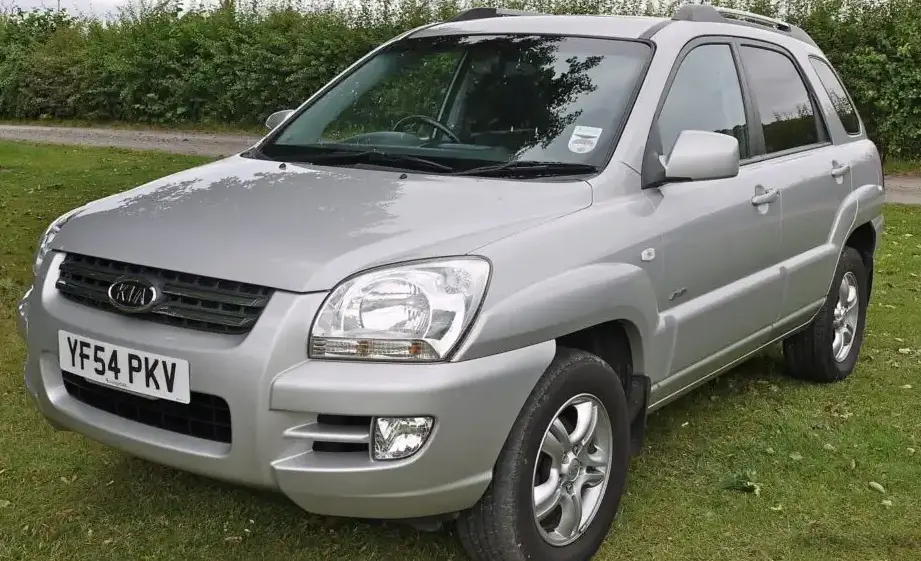
The Kia Sportage Soft Top I 2.0 TD (83 hp) was a unique offering from Kia, produced between 1997 and 2006. This variant, distinguished by its convertible soft-top roof, was primarily aimed at the European market, offering a more recreational and open-air experience compared to the standard hardtop Sportage. It was built on the first generation Sportage platform (known internally as the JA), a compact SUV designed to offer affordability and ruggedness. The 2.0 TD variant represented an entry-level diesel option within the Sportage range, positioned below the more powerful gasoline engines and later, more refined diesel iterations.
Technical Specifications
| Brand | Kia |
| Model | Sportage |
| Generation | Sportage Soft Top I |
| Type (Engine) | 2.0 TD (83 Hp) |
| Start of production | 1997 |
| End of production | 2006 |
| Powertrain Architecture | Internal Combustion engine |
| Body type | SUV |
| Seats | 5 |
| Doors | 3 |
| Fuel consumption (urban) | 11.5 l/100 km (20.5 US mpg) |
| Fuel consumption (extra urban) | 7.7 l/100 km (30.5 US mpg) |
| Fuel consumption (combined) | 9.1 l/100 km (25.8 US mpg) |
| Fuel Type | Diesel |
| Acceleration 0 – 100 km/h | 20.5 sec |
| Acceleration 0 – 62 mph | 20.5 sec |
| Acceleration 0 – 60 mph | 19.5 sec |
| Maximum speed | 145 km/h (90.1 mph) |
| Weight-to-power ratio | 16.8 kg/Hp |
| Weight-to-torque ratio | 7.2 kg/Nm |
| Power | 83 Hp @ 4000 rpm |
| Power per litre | 41.5 Hp/l |
| Torque | 195 Nm @ 2000 rpm (143.82 lb.-ft. @ 2000 rpm) |
| Engine layout | Front, Longitudinal |
| Engine Model/Code | RF |
| Engine displacement | 1998 cm3 (121.93 cu. in.) |
| Number of cylinders | 4 |
| Engine configuration | Inline |
| Cylinder Bore | 86 mm (3.39 in.) |
| Piston Stroke | 86 mm (3.39 in.) |
| Compression ratio | 21:1 |
| Number of valves per cylinder | 2 |
| Fuel injection system | Precombustion chamber injection |
| Engine aspiration | Turbocharger |
| Engine oil capacity | 6.4 l (6.76 US qt | 5.63 UK qt) |
| Kerb Weight | 1395 kg (3075.45 lbs.) |
| Max. weight | 1930 kg (4254.92 lbs.) |
| Max load | 535 kg (1179.47 lbs.) |
| Trunk (boot) space – minimum | 247 l (8.72 cu. ft.) |
| Trunk (boot) space – maximum | 1032 l (36.44 cu. ft.) |
| Fuel tank capacity | 53 l (14 US gal | 11.66 UK gal) |
| Length | 4025 mm (158.46 in.) |
| Width | 1764 mm (69.45 in.) |
| Height | 1650 mm (64.96 in.) |
| Wheelbase | 2360 mm (92.91 in.) |
| Front track | 1440 mm (56.69 in.) |
| Rear (Back) track | 1440 mm (56.69 in.) |
| Drive wheel | All wheel drive (4×4) |
| Number of gears | 5 |
| Gearbox type | Manual transmission |
| Front suspension | Double wishbone |
| Rear suspension | Spring Strut |
| Front brakes | Ventilated discs |
| Rear brakes | Drum |
| Power steering | Hydraulic Steering |
| Tires size | 205/70 R15 |
Powertrain & Engine Architecture
The heart of the Sportage Soft Top I 2.0 TD was the RF engine, a 1.998-liter inline-four cylinder diesel. This engine utilized precombustion chamber injection, a system common in diesel engines of the era. This system involved injecting fuel into a pre-chamber, where it partially combusted before being ignited in the main cylinder, promoting more complete combustion and reducing noise. The engine was turbocharged, which helped to boost power output to 83 horsepower at 4000 rpm and 195 Nm (143.82 lb-ft) of torque at 2000 rpm. The five-speed manual transmission was the only gearbox option available with this engine. The longitudinal engine layout was typical for four-wheel-drive vehicles of this period, allowing for a more efficient drivetrain configuration.
Driving Characteristics
The 83 hp output and the relatively heavy weight of the Sportage (1395 kg / 3075.45 lbs) resulted in modest performance. Acceleration from 0 to 100 km/h (0-62 mph) took around 20.5 seconds, making it far from a sporty vehicle. However, the turbocharger provided a reasonable amount of low-end torque, making it adequate for everyday driving and moderate off-road conditions. The manual transmission offered a degree of driver control, but the gear ratios were geared towards fuel economy rather than outright acceleration. Compared to the gasoline versions of the Sportage, the 2.0 TD offered significantly better fuel economy, but at the expense of performance. It also provided more torque, making it better suited for towing or navigating challenging terrain.
Equipment & Trim Levels
The 2.0 TD Soft Top typically came with a fairly basic level of equipment. Standard features generally included power steering, central locking, and a basic audio system. The interior was typically trimmed with durable cloth upholstery. The soft-top roof was manually operated, adding to the vehicle’s simplicity. Optional extras could include alloy wheels, upgraded audio systems, and air conditioning, though these were not commonly fitted to the base 2.0 TD model. The dashboard layout was functional and straightforward, prioritizing usability over aesthetics.
Chassis & Braking
The Sportage Soft Top I utilized a body-on-frame construction, providing a robust and durable chassis. The front suspension consisted of a double wishbone setup, while the rear employed a spring strut arrangement. This suspension configuration aimed to balance ride comfort with off-road capability. The braking system featured ventilated discs on the front wheels and drum brakes on the rear. This configuration was common for vehicles in this price range during the late 1990s and early 2000s. Hydraulic power steering was standard, providing reasonable assistance at low speeds.
Market Reception & Comparison
The Kia Sportage Soft Top I 2.0 TD was generally well-received as an affordable and practical SUV, particularly in Europe. Critics praised its ruggedness and off-road capability, but noted its modest performance and basic interior. Compared to other diesel-powered SUVs of the time, such as the Suzuki Vitara or the Nissan Terrano, the Sportage offered a competitive price point and a unique convertible roof option. However, its fuel economy was not class-leading, and its reliability record was somewhat mixed. The 2.0 TD variant was often seen as a sensible choice for buyers prioritizing fuel efficiency and practicality over outright performance.
Legacy
The Kia Sportage Soft Top I 2.0 TD, while not a high-performance vehicle, holds a unique place in Kia’s history. It represented the brand’s early foray into the compact SUV market and demonstrated its willingness to offer unconventional designs. Today, these vehicles are relatively rare and are sought after by enthusiasts and collectors. The RF diesel engine, while not known for its longevity, is generally reliable if properly maintained. Parts availability can be a challenge, but many components are still available through specialist suppliers. The Sportage Soft Top I 2.0 TD remains a testament to a simpler era of automotive design, offering a unique blend of practicality, affordability, and open-air enjoyment.