
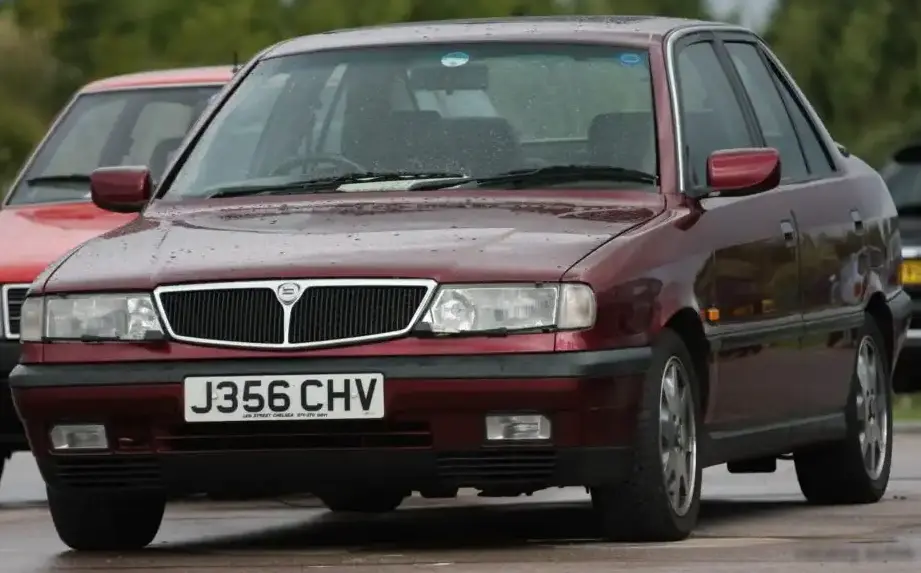
The Lancia Dedra (835) 1.8 GT 16V, produced between 1996 and 1999, represented a refined offering within the Dedra range. Positioned as a sporty, mid-range variant, it aimed to bridge the gap between the more economical base models and the flagship 2.0-liter versions. The Dedra itself was Lancia’s replacement for the aging Prisma, built upon the shared Tipo/Tempra/Dedra platform (Type Three), also known as the 835 project. This front-wheel-drive sedan was intended to offer a more sophisticated and stylish alternative to mainstream family cars, continuing Lancia’s tradition of engineering innovation and distinctive design.
Technical Specifications
| Brand | Lancia |
| Model | Dedra |
| Generation | Dedra (835) |
| Type (Engine) | 1.8 GT 16V (131 Hp) |
| Start of production | 1996 |
| End of production | 1999 |
| Powertrain Architecture | Internal Combustion engine |
| Body type | Sedan |
| Seats | 5 |
| Doors | 4 |
| Fuel consumption (combined) | 8.4 l/100 km (28 US mpg, 33.6 UK mpg, 11.9 km/l) |
| Fuel Type | Petrol (Gasoline) |
| Acceleration 0 – 100 km/h | 10 sec |
| Acceleration 0 – 62 mph | 10 sec |
| Acceleration 0 – 60 mph | 9.5 sec |
| Maximum speed | 203 km/h (126.14 mph) |
| Weight-to-power ratio | 10 kg/Hp, 100 Hp/tonne |
| Weight-to-torque ratio | 8 kg/Nm, 125.2 Nm/tonne |
| Power | 131 Hp @ 6300 rpm |
| Power per litre | 75 Hp/l |
| Torque | 164 Nm @ 4000 rpm (120.96 lb.-ft. @ 4000 rpm) |
| Engine layout | Front, Transverse |
| Engine Model/Code | 183 A1.000 |
| Engine displacement | 1747 cm3 (106.61 cu. in.) |
| Number of cylinders | 4 |
| Engine configuration | Inline |
| Cylinder Bore | 82 mm (3.23 in.) |
| Piston Stroke | 82.7 mm (3.26 in.) |
| Compression ratio | 10.3:1 |
| Number of valves per cylinder | 4 |
| Fuel injection system | Multi-port manifold injection |
| Engine aspiration | Naturally aspirated engine |
| Valvetrain | DOHC |
| Engine oil capacity | 4.4 l (4.65 US qt | 3.87 UK qt) |
| Coolant | 7 l (7.4 US qt | 6.16 UK qt) |
| Kerb Weight | 1310 kg (2888.06 lbs.) |
| Max. weight | 1735 kg (3825.02 lbs.) |
| Max load | 425 kg (936.96 lbs.) |
| Trunk (boot) space – minimum | 480 l (16.95 cu. ft.) |
| Fuel tank capacity | 63 l (16.64 US gal | 13.86 UK gal) |
| Length | 4343 mm (170.98 in.) |
| Width | 1700 mm (66.93 in.) |
| Height | 1430 mm (56.3 in.) |
| Wheelbase | 2540 mm (100 in.) |
| Front track | 1436 mm (56.54 in.) |
| Rear (Back) track | 1415 mm (55.71 in.) |
| Drivetrain Architecture | The Internal combustion engine (ICE) drives the front wheels of the vehicle. |
| Drive wheel | Front wheel drive |
| Number of gears and type of gearbox | 5 gears, manual transmission |
| Front suspension | Spring Strut |
| Rear suspension | Trailing arm |
| Front brakes | Ventilated discs |
| Rear brakes | Disc |
| Assisting systems | ABS (Anti-lock braking system) |
| Steering type | Steering rack and pinion |
| Power steering | Hydraulic Steering |
| Tires size | 185/60 R14 |
Powertrain & Engine Architecture
The 1.8 GT 16V variant was powered by the Fiat-derived 183A1.000 engine, a 1747cc inline-four cylinder unit. This engine featured a 10.3:1 compression ratio and utilized multi-port fuel injection. The “16V” designation indicates a four-valve-per-cylinder configuration, enhancing breathing and contributing to the engine’s higher output. The double overhead camshaft (DOHC) design further optimized valve control. This engine was known for its relatively smooth operation and willingness to rev, though it lacked the outright punch of the larger 2.0-liter engines available in the Dedra lineup. The five-speed manual transmission was standard, providing a reasonably direct connection between the engine and the front wheels. Gear ratios were tuned for a balance of acceleration and fuel efficiency, prioritizing usability over outright performance.
Driving Characteristics
The 1.8 GT 16V Dedra offered a competent, if not exhilarating, driving experience. With 131 horsepower, acceleration to 60 mph took around 9.5 seconds, and it could reach a top speed of 126 mph. While not a sports car, the 16V engine provided sufficient power for comfortable highway cruising and overtaking. Compared to the base 1.6-liter Dedra, the 1.8 GT 16V offered a noticeable improvement in performance, particularly at higher engine speeds. However, it fell short of the more potent 2.0-liter models in terms of raw acceleration. The front-wheel-drive configuration, while common for its class, could exhibit some torque steer under hard acceleration. The suspension, tuned for comfort, provided a reasonably compliant ride, though it wasn’t as sporty as some of its rivals.
Equipment & Trim Levels
The 1.8 GT 16V typically came equipped with features such as power steering, ABS brakes, central locking, and electric windows. Interior appointments included cloth upholstery, although leather was often available as an option. The dashboard layout was functional and well-designed, with clear instrumentation. Optional extras could include air conditioning, a sunroof, and upgraded audio systems. The GT trim level generally signified a step up in terms of interior finish and standard equipment compared to the base Dedra models.
Chassis & Braking
The Dedra’s chassis utilized a MacPherson strut front suspension and a trailing arm rear suspension. This setup provided a good balance of ride comfort and handling. The 1.8 GT 16V was equipped with ventilated disc brakes at the front and solid discs at the rear, providing adequate stopping power for its weight and performance. The hydraulic power steering offered a reasonable level of assistance, making the car easy to maneuver in urban environments.
Market Reception & Comparison
The Lancia Dedra 1.8 GT 16V was generally well-received by automotive critics as a stylish and comfortable family sedan. It was praised for its refined engine, comfortable ride, and well-equipped interior. However, some critics noted that it lacked the dynamic flair of some of its rivals, such as the Ford Mondeo or Opel Vectra. Fuel economy was respectable for its class, averaging around 28 US mpg in combined driving. Compared to the 1.6-liter Dedra, the 1.8 GT 16V offered a worthwhile performance upgrade, while remaining more affordable than the 2.0-liter models. Reliability was generally good, although Lancias of this era were sometimes perceived as being less durable than some of their competitors.
Legacy
The Lancia Dedra, while not a massive sales success, remains a fondly remembered car among enthusiasts. The 1.8 GT 16V powertrain, while not particularly groundbreaking, proved to be relatively reliable and is still found in running condition today. In the used car market, Dedras in good condition are becoming increasingly collectible, particularly those with low mileage and a complete service history. The Dedra represents a high point in Lancia’s engineering and design heritage, offering a unique blend of Italian style and practicality.
