
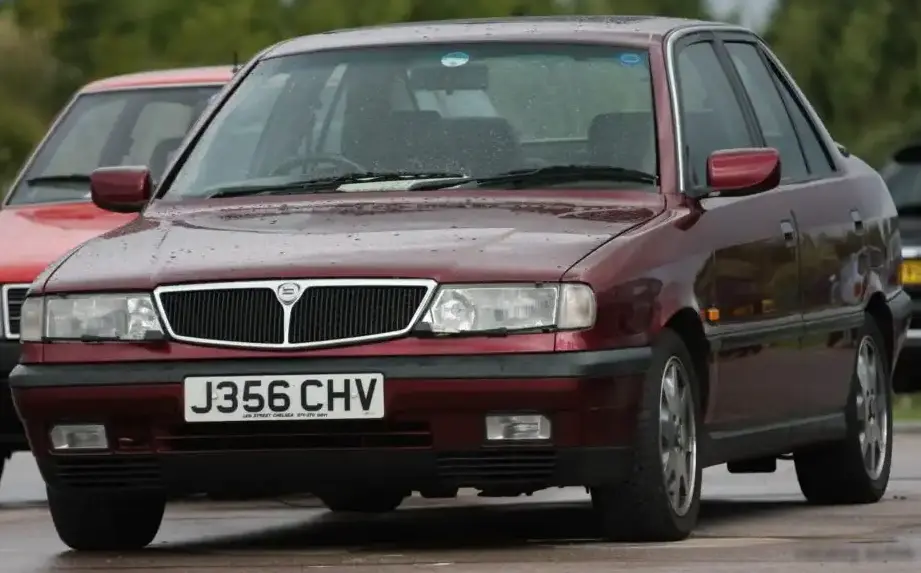
The Lancia Dedra 1.8 i.e., produced between 1994 and 1999, represents a significant iteration of the 835 series, Lancia’s large family sedan. Positioned as a mid-range offering within the Dedra lineup, it aimed to balance performance and economy for the discerning European driver. The Dedra itself was a replacement for the aging Lancia Prisma, and shared its underpinnings with the Fiat Croma, both vehicles being built on the Tipo-derived ‘Type 835’ platform. This platform was notable for its relatively spacious interior and comfortable ride, characteristics Lancia sought to emphasize in the Dedra.
Technical Specifications
| Brand | Lancia |
| Model | Dedra |
| Generation | Dedra (835) |
| Type (Engine) | 1.8 i.e. (101 Hp) |
| Start of production | 1994 |
| End of production | 1999 |
| Powertrain Architecture | Internal Combustion engine |
| Body type | Sedan |
| Seats | 5 |
| Doors | 4 |
| Fuel consumption (combined) | 7.9 l/100 km |
| Fuel consumption (US mpg) | 29.8 US mpg |
| Fuel consumption (UK mpg) | 35.8 UK mpg |
| Fuel consumption (km/l) | 12.7 km/l |
| Fuel Type | Petrol (Gasoline) |
| Acceleration 0 – 100 km/h | 12.5 sec |
| Acceleration 0 – 62 mph | 12.5 sec |
| Acceleration 0 – 60 mph | 11.9 sec |
| Maximum speed | 185 km/h (114.95 mph) |
| Weight-to-power ratio | 12 kg/Hp, 83.1 Hp/tonne |
| Weight-to-torque ratio | 8.6 kg/Nm, 116.9 Nm/tonne |
| Power | 101 Hp @ 6000 rpm |
| Power per litre | 57.5 Hp/l |
| Torque | 142 Nm @ 2500 rpm (104.73 lb.-ft. @ 2500 rpm) |
| Engine layout | Front, Transverse |
| Engine Model/Code | 836 A5.000 |
| Engine displacement | 1756 cm3 (107.16 cu. in.) |
| Number of cylinders | 4 |
| Engine configuration | Inline |
| Cylinder Bore | 84 mm (3.31 in.) |
| Piston Stroke | 79.2 mm (3.12 in.) |
| Compression ratio | 9.5:1 |
| Number of valves per cylinder | 2 |
| Fuel injection system | Multi-port manifold injection |
| Engine aspiration | Naturally aspirated engine |
| Valvetrain | DOHC |
| Engine oil capacity | 5.2 l (5.49 US qt | 4.58 UK qt) |
| Kerb Weight | 1215 kg (2678.62 lbs.) |
| Trunk (boot) space – minimum | 480 l (16.95 cu. ft.) |
| Fuel tank capacity | 60 l (15.85 US gal | 13.2 UK gal) |
| Length | 4343 mm (170.98 in.) |
| Width | 1700 mm (66.93 in.) |
| Height | 1430 mm (56.3 in.) |
| Wheelbase | 2540 mm (100 in.) |
| Front track | 1436 mm (56.54 in.) |
| Rear (Back) track | 1415 mm (55.71 in.) |
| Drivetrain Architecture | The Internal combustion engine (ICE) drives the front wheels of the vehicle. |
| Drive wheel | Front wheel drive |
| Number of gears and type of gearbox | 5 gears, manual transmission |
| Front suspension | Spring Strut |
| Rear suspension | Trailing arm |
| Front brakes | Disc |
| Rear brakes | Disc |
| Assisting systems | ABS (Anti-lock braking system) |
| Steering type | Steering rack and pinion |
| Power steering | Hydraulic Steering |
| Tires size | 185/60 R14 |
Powertrain & Engine Architecture
The heart of the Dedra 1.8 i.e. is the 836 A5.000 engine, an inline four-cylinder unit displacing 1756cc. This engine is a naturally aspirated design featuring multi-port fuel injection and a double overhead camshaft (DOHC) valvetrain. The 9.5:1 compression ratio contributed to its respectable, for the time, output of 101 horsepower at 6000 rpm and 142 Nm (104.73 lb-ft) of torque at 2500 rpm. The engine’s design prioritized smooth operation and reasonable fuel efficiency over outright performance. The five-speed manual transmission was the standard offering, providing a balance between driver control and ease of use. While an automatic transmission was available, it was less common and often criticized for diminishing the car’s already modest acceleration.
Driving Characteristics
The Dedra 1.8 i.e. offered a comfortable, if not particularly exciting, driving experience. Acceleration from 0-60 mph took around 11.9 seconds, and top speed was limited to 185 km/h (114.95 mph). Compared to the more powerful Dedra models, such as those equipped with the 2.0-liter engine, the 1.8 i.e. felt noticeably slower, especially when fully loaded or tackling inclines. The five-speed manual transmission allowed drivers to make the most of the available power, but the relatively long gearing emphasized fuel economy over spirited driving. The automatic transmission, while convenient, further dulled performance and increased fuel consumption. The car’s suspension, tuned for comfort, provided a smooth ride over most road surfaces, but didn’t offer the same level of handling precision as some of its rivals.
Equipment & Trim Levels
The Dedra 1.8 i.e. typically came equipped with features considered standard for a mid-range family sedan in the 1990s. These included central locking, power windows, and a basic audio system. Interior upholstery was typically cloth, with options for upgraded materials available. Air conditioning was a popular option, as were power steering and anti-lock brakes (ABS). Higher trim levels offered additional features such as alloy wheels, a sunroof, and more sophisticated audio systems. The dashboard layout was functional and straightforward, prioritizing ease of use over stylistic flair.
Chassis & Braking
The Dedra 835 utilized a front-engine, front-wheel-drive layout. Suspension consisted of a MacPherson strut setup at the front and a trailing arm arrangement at the rear. Braking was initially disc all around, but some earlier models featured rear drum brakes. The inclusion of ABS was a significant safety feature for the time, providing improved stopping power and control in emergency situations. Steering was rack and pinion, assisted by hydraulic power steering for ease of maneuverability. The car rode on 185/60 R14 tires, which provided a good balance between comfort and grip.
Market Reception & Comparison
The Dedra 1.8 i.e. was generally well-received by automotive critics as a practical and comfortable family car. However, its performance was often criticized as being underwhelming, particularly when compared to rivals from German manufacturers. Fuel economy was considered reasonable, averaging around 7.9 l/100 km (29.8 US mpg). In terms of reliability, the Dedra 1.8 i.e. proved to be generally dependable, although some owners reported issues with electrical components and corrosion. Compared to the higher-output Dedra models, the 1.8 i.e. appealed to drivers who prioritized economy and comfort over performance. The 2.0-liter version offered a noticeable performance boost, while the diesel models provided even better fuel economy but at the expense of refinement.
Legacy
Today, the Lancia Dedra 1.8 i.e. is a relatively rare sight on the roads. While not a particularly sought-after classic, well-maintained examples are gaining recognition among enthusiasts of Italian cars. The 836 A5.000 engine is known for its durability, and with proper maintenance, can provide many years of reliable service. However, finding replacement parts can be challenging, as Lancia has long since withdrawn from many markets. The Dedra 1.8 i.e. represents a unique blend of Italian style, comfort, and practicality, and serves as a reminder of Lancia’s once-prominent position in the European automotive landscape.
