
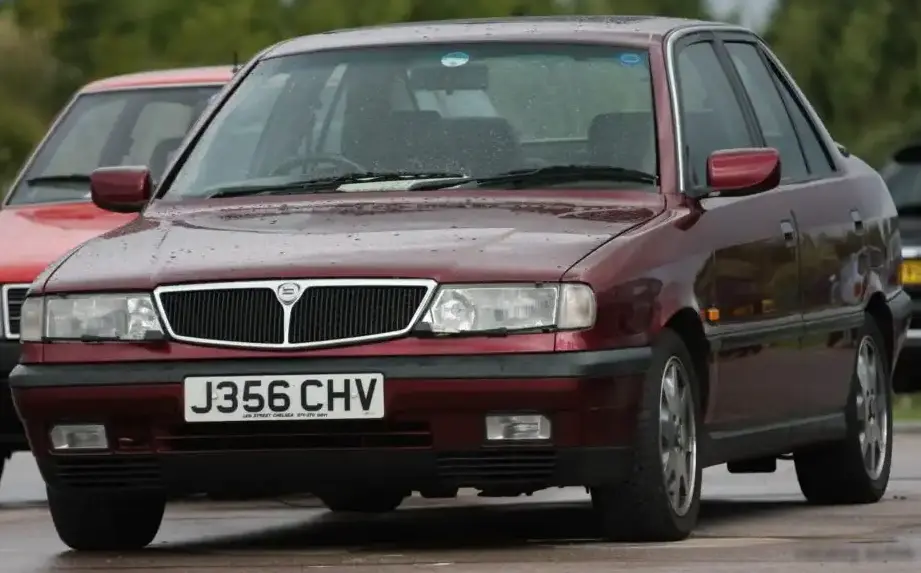
The Lancia Dedra 1.8 LE (113 Hp), produced between 1996 and 1999, represents a mid-range offering within the 835 series of the Dedra model. Positioned as a comfortable and well-equipped family sedan, it aimed to bridge the gap between the more basic versions and the higher-performance models. The Dedra itself was Lancia’s replacement for the aging Prisma, built upon the shared Tipo/Tempra/Croma platform – internally designated as the Type Three project. The 835 series, specifically, denotes the facelifted version of the Dedra, introducing revised styling and updated features. This 1.8 LE variant was primarily marketed towards buyers seeking a balance of practicality, refinement, and reasonable performance, particularly in European markets where Lancia maintained a stronger presence.
Technical Specifications
| Brand | Lancia |
| Model | Dedra |
| Generation | Dedra (835) |
| Type (Engine) | 1.8 LE (113 Hp) |
| Start of production | 1996 |
| End of production | 1999 |
| Powertrain Architecture | Internal Combustion engine |
| Body type | Sedan |
| Seats | 5 |
| Doors | 4 |
| Fuel consumption (combined) | 7.6 l/100 km |
| Fuel consumption (US mpg) | 30.9 US mpg |
| Fuel consumption (UK mpg) | 37.2 UK mpg |
| Fuel consumption (km/l) | 13.2 km/l |
| Fuel Type | Petrol (Gasoline) |
| Acceleration 0 – 100 km/h | 10.3 sec |
| Acceleration 0 – 62 mph | 10.3 sec |
| Acceleration 0 – 60 mph | 9.8 sec |
| Maximum speed | 191 km/h (118.68 mph) |
| Weight-to-power ratio | 11.6 kg/Hp |
| Weight-to-torque ratio | 8.5 kg/Nm |
| Power | 113 Hp @ 5800 rpm |
| Power per litre | 64.7 Hp/l |
| Torque | 154 Nm @ 4400 rpm (113.58 lb.-ft. @ 4400 rpm) |
| Engine layout | Front, Transverse |
| Engine Model/Code | 182 A2.000 |
| Engine displacement | 1747 cm3 (106.61 cu. in.) |
| Number of cylinders | 4 |
| Engine configuration | Inline |
| Cylinder Bore | 82 mm (3.23 in.) |
| Piston Stroke | 82.7 mm (3.26 in.) |
| Compression ratio | 10.3:1 |
| Number of valves per cylinder | 2 |
| Fuel injection system | Multi-port manifold injection |
| Engine aspiration | Naturally aspirated engine |
| Valvetrain | DOHC |
| Engine oil capacity | 5.2 l (5.49 US qt | 4.58 UK qt) |
| Coolant capacity | 7 l (7.4 US qt | 6.16 UK qt) |
| Kerb Weight | 1310 kg (2888.06 lbs.) |
| Max. weight | 1735 kg (3825.02 lbs.) |
| Max load | 425 kg (936.96 lbs.) |
| Trunk (boot) space – minimum | 480 l (16.95 cu. ft.) |
| Fuel tank capacity | 63 l (16.64 US gal | 13.86 UK gal) |
| Length | 4343 mm (170.98 in.) |
| Width | 1700 mm (66.93 in.) |
| Height | 1430 mm (56.3 in.) |
| Wheelbase | 2540 mm (100 in.) |
| Front track | 1436 mm (56.54 in.) |
| Rear track | 1415 mm (55.71 in.) |
| Drivetrain Architecture | Front wheel drive |
| Number of gears | 5 |
| Gearbox type | Manual transmission |
| Front suspension | Spring Strut |
| Rear suspension | Trailing arm |
| Front brakes | Disc |
| Rear brakes | Disc |
| Assisting systems | ABS (Anti-lock braking system) |
| Steering type | Steering rack and pinion |
| Power steering | Hydraulic Steering |
| Tires size | 185/60 R14 |
Powertrain & Engine Architecture
The heart of the Dedra 1.8 LE is the 182 A2.000 engine, a 1.8-liter (1747 cc) inline-four cylinder gasoline engine. This engine is a naturally aspirated unit featuring a double overhead camshaft (DOHC) valvetrain with two valves per cylinder. It utilizes a multi-port fuel injection system, delivering fuel directly into the intake ports for improved combustion efficiency. The engine produces 113 horsepower at 5800 rpm and 154 Nm (113.58 lb-ft) of torque at 4400 rpm. The 182 series engine was a common powerplant across several Fiat Group vehicles of the era, known for its relative reliability and ease of maintenance. The engine is transversely mounted, driving the front wheels. The five-speed manual transmission was the standard offering for this variant, providing a balance between fuel economy and performance. The gear ratios were fairly conventional for the time, prioritizing comfortable cruising over outright acceleration.
Driving Characteristics
The Dedra 1.8 LE, with its 113 hp and manual transmission, offered a respectable, if not exhilarating, driving experience. Acceleration from 0 to 60 mph took approximately 9.8 seconds, and it could reach a top speed of around 118.68 mph. Compared to the more powerful 2.0-liter versions, the 1.8 LE felt noticeably less responsive, particularly during overtaking maneuvers. However, the engine was smooth and refined, and the manual gearbox provided precise shifts. The suspension, tuned for comfort, absorbed bumps and imperfections in the road well, making it a pleasant car for long journeys. The steering was light and easy to use, although it lacked the feedback of some competitors. The 1.8 LE’s power delivery was linear, making it predictable and easy to control, especially for less experienced drivers.
Equipment & Trim Levels
The “LE” designation indicated a relatively well-equipped trim level. Standard features typically included central locking, electric front windows, power steering, and an anti-lock braking system (ABS). Interior upholstery was usually cloth, with a focus on durability and comfort. The dashboard layout was functional and straightforward, with clearly labeled controls. Optional extras available for the 1.8 LE included air conditioning, a sunroof, and upgraded audio systems. The Dedra generally offered a more luxurious interior than its contemporary, the Fiat Tipo, with higher-quality materials and a more refined ambiance.
Chassis & Braking
The Dedra 835 utilized a front-engine, front-wheel-drive layout. The front suspension employed a MacPherson strut design, while the rear suspension featured a trailing arm setup. This configuration provided a good balance between ride comfort and handling. The braking system consisted of disc brakes on all four wheels, providing adequate stopping power for the vehicle’s weight and performance. The ABS system enhanced safety by preventing wheel lockup during hard braking. The chassis was relatively lightweight, contributing to the car’s overall agility. Stabilizer bars were fitted to both the front and rear axles to reduce body roll during cornering.
Market Reception & Comparison
The Lancia Dedra 1.8 LE was generally well-received by automotive critics as a comfortable and practical family sedan. It was praised for its refined engine, comfortable ride, and well-equipped interior. However, some critics noted that its performance was not as exciting as some of its rivals, such as the Ford Mondeo or Opel Vectra. In terms of fuel economy, the 1.8 LE offered a reasonable 30.9 US mpg, which was competitive for its class. Reliability was generally good, although some owners reported minor electrical issues. Compared to the higher-output 2.0-liter Dedra, the 1.8 LE was more affordable to purchase and insure, making it an attractive option for budget-conscious buyers.
Legacy
The Lancia Dedra, and specifically the 1.8 LE variant, has become a relatively sought-after classic car among enthusiasts. The 182 A2.000 engine is known for its durability and relatively simple maintenance requirements. While finding parts can be challenging due to the car’s age and limited production numbers, a dedicated community of Lancia owners exists to provide support and assistance. Today, well-maintained examples of the Dedra 1.8 LE are appreciated for their classic Italian styling, comfortable ride, and unique character. They represent a bygone era of automotive design, offering a refreshing alternative to more modern vehicles.
