
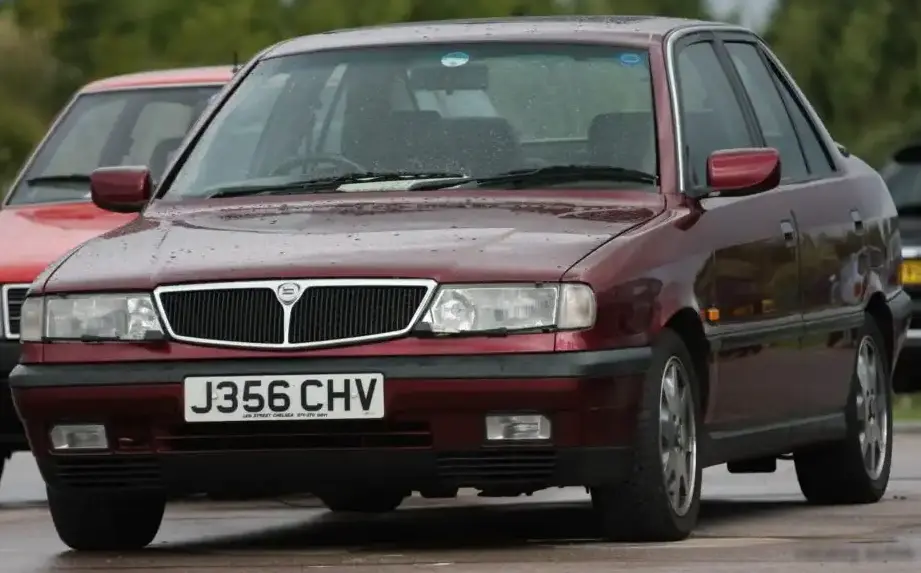
The Lancia Dedra (835) 1.9 TDS, produced from 1989 to 1999, represented a significant offering in the mid-size sedan segment, particularly within the Italian and European markets. Positioned as a more practical and spacious alternative to the smaller Lancia Delta, the Dedra aimed to provide comfort, refinement, and a degree of sporting character. The 1.9 TDS variant, equipped with a turbocharged diesel engine producing 90 horsepower, occupied a middle ground in the Dedra lineup, offering a balance between fuel economy and acceptable performance. It served as a popular choice for drivers prioritizing efficiency and long-distance cruising over outright speed, competing with similar diesel-powered sedans from manufacturers like Fiat, Alfa Romeo, and Volkswagen.
Technical Specifications
| Brand | Lancia |
| Model | Dedra |
| Generation | Dedra (835) |
| Type (Engine) | 1.9 TDS (90 Hp) |
| Start of production | 1989 year |
| End of production | 1999 year |
| Powertrain Architecture | Internal Combustion engine |
| Body type | Sedan |
| Seats | 5 |
| Doors | 4 |
| Fuel consumption (economy) – combined | 6.1 l/100 km |
| Fuel consumption (economy) – combined | 38.6 US mpg |
| Fuel consumption (economy) – combined | 46.3 UK mpg |
| Fuel consumption (economy) – combined | 16.4 km/l |
| Fuel Type | Diesel |
| Acceleration 0 – 100 km/h | 12.9 sec |
| Acceleration 0 – 62 mph | 12.9 sec |
| Acceleration 0 – 60 mph | 12.3 sec |
| Maximum speed | 180 km/h |
| Maximum speed | 111.85 mph |
| Weight-to-power ratio | 13.6 kg/Hp |
| Weight-to-power ratio | 73.5 Hp/tonne |
| Weight-to-torque ratio | 6.6 kg/Nm |
| Weight-to-torque ratio | 151.8 Nm/tonne |
| Power | 90 Hp @ 4200 rpm |
| Power per litre | 46.7 Hp/l |
| Torque | 186 Nm @ 2500 rpm |
| Torque | 137.19 lb.-ft. @ 2500 rpm |
| Engine layout | Front, Transverse |
| Engine Model/Code | 835 A4.000 |
| Engine displacement | 1929 cm3 |
| Engine displacement | 117.71 cu. in. |
| Number of cylinders | 4 |
| Engine configuration | Inline |
| Cylinder Bore | 82.6 mm |
| Cylinder Bore | 3.25 in. |
| Piston Stroke | 90 mm |
| Piston Stroke | 3.54 in. |
| Compression ratio | 19.2:1 |
| Number of valves per cylinder | 2 |
| Fuel injection system | Precombustion chamber injection |
| Engine aspiration | Turbocharger |
| Valvetrain | DOHC |
| Engine oil capacity | 6 l |
| Engine oil capacity | 6.34 US qt | 5.28 UK qt |
| Coolant | 8.9 l |
| Coolant | 9.4 US qt | 7.83 UK qt |
| Kerb Weight | 1225 kg |
| Kerb Weight | 2700.66 lbs. |
| Trunk (boot) space – minimum | 480 l |
| Trunk (boot) space – minimum | 16.95 cu. ft. |
| Fuel tank capacity | 60 l |
| Fuel tank capacity | 15.85 US gal | 13.2 UK gal |
| Length | 4345 mm |
| Length | 171.06 in. |
| Width | 1700 mm |
| Width | 66.93 in. |
| Height | 1430 mm |
| Height | 56.3 in. |
| Wheelbase | 2540 mm |
| Wheelbase | 100 in. |
| Front track | 1436 mm |
| Front track | 56.54 in. |
| Rear (Back) track | 1415 mm |
| Rear (Back) track | 55.71 in. |
| Drivetrain Architecture | The Internal combustion engine (ICE) drives the front wheels of the vehicle. |
| Drive wheel | Front wheel drive |
| Number of gears and type of gearbox | 5 gears, manual transmission |
| Front suspension | Spring Strut |
| Rear suspension | Trailing arm |
| Front brakes | Disc |
| Rear brakes | Disc |
| Assisting systems | ABS (Anti-lock braking system) |
| Steering type | Steering rack and pinion |
| Power steering | Hydraulic Steering |
| Tires size | 175/65 R14 |
Powertrain & Engine Architecture
The heart of the Dedra 1.9 TDS is the 835 A4.000 engine, a 1.9-liter inline-four cylinder diesel. This engine utilizes a precombustion chamber injection system, a common technology for diesel engines of the era, designed to improve combustion efficiency and reduce noise. A turbocharger is employed to boost power output, bringing it to 90 horsepower at 4200 rpm and 186 Nm (137.19 lb-ft) of torque at 2500 rpm. The engine features a double overhead camshaft (DOHC) valvetrain, contributing to improved breathing and overall performance. The engine’s relatively high compression ratio of 19.2:1 is typical for a turbocharged diesel, maximizing energy extraction from the fuel. The 1.9 TDS was typically paired with a five-speed manual transmission, although an automatic transmission was also available, albeit less common. The automatic gearbox, while offering convenience, generally resulted in slightly reduced fuel economy and acceleration compared to the manual version.
Driving Characteristics
The Dedra 1.9 TDS, particularly with the manual transmission, offered a reasonably refined driving experience. While not a performance car, the turbocharger provided a useful boost of power for overtaking and highway cruising. Acceleration from 0 to 60 mph took around 12.3 seconds, and the car could reach a top speed of 180 km/h (111.85 mph). The automatic transmission, while smooth, noticeably dulled acceleration, extending the 0-60 mph time to approximately 12.9 seconds. The suspension, featuring a spring strut front setup and a trailing arm rear, provided a comfortable ride, absorbing bumps and imperfections in the road well. Steering was via a hydraulic rack and pinion system, offering reasonable precision and feedback. Compared to the more powerful Dedra models, such as those equipped with the 2.0-liter inline-four gasoline engine, the 1.9 TDS prioritized fuel efficiency and low-end torque over outright speed.
Equipment & Trim Levels
The Dedra 1.9 TDS typically came equipped with a respectable level of standard features for its time. These included central locking, power windows, and a basic audio system. Interior upholstery was generally cloth, with options for upgraded materials available. Trim levels varied depending on the market, but generally included base, LX, and SE variants. Higher trim levels offered features such as alloy wheels, air conditioning, and a more comprehensive audio system. Optional extras included a sunroof, leather upholstery, and upgraded sound systems. The dashboard layout was functional and straightforward, with clearly labeled controls and a relatively uncluttered design.
Chassis & Braking
The Dedra 835 chassis utilized a front-wheel-drive layout. The front suspension employed a MacPherson strut design, while the rear featured a trailing arm setup. Braking was initially provided by disc brakes on all four wheels, although some earlier models may have featured drum brakes on the rear. Anti-lock braking system (ABS) was available as an option, and became increasingly common on later models. The steering system was a hydraulic power-assisted rack and pinion, providing a reasonable balance between ease of use and road feel. Tire size was typically 175/65 R14.
Market Reception & Comparison
The Lancia Dedra 1.9 TDS was generally well-received by automotive critics as a comfortable and practical family sedan. Its fuel efficiency was a major selling point, particularly in Europe where diesel fuel was often cheaper than gasoline. Compared to other diesel-powered sedans of the era, the Dedra offered a good balance of performance, comfort, and refinement. However, some critics noted that the interior styling was somewhat dated compared to competitors from German manufacturers. Reliability was generally considered to be average, with some reports of issues with the fuel injection system and turbocharger. Fuel economy was a strong point, achieving around 6.1 l/100 km (38.6 US mpg).
Legacy
The Lancia Dedra, while not a massive sales success, remains a fondly remembered car among enthusiasts. The 1.9 TDS powertrain, when properly maintained, proved to be relatively durable. Today, well-maintained examples are becoming increasingly rare and sought after by collectors and classic car enthusiasts. The engine’s robust construction and relatively simple design make it easier to repair and maintain compared to more modern diesel engines. While finding parts can be challenging, a dedicated community of Lancia enthusiasts continues to support the preservation of these vehicles. The Dedra 1.9 TDS represents a unique blend of Italian style, practicality, and diesel efficiency, making it a distinctive and appealing classic car.
