
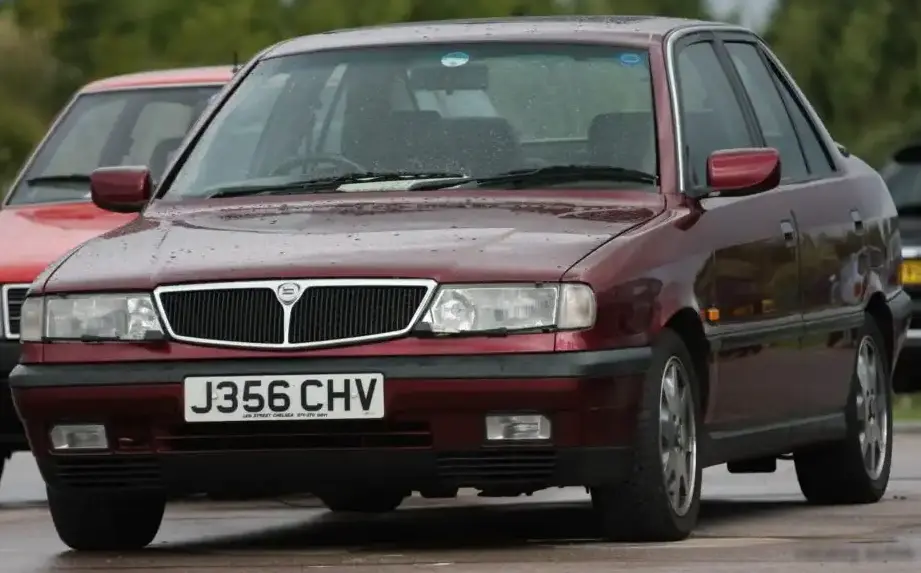
The Lancia Dedra 2.0 i.e., produced between 1989 and 1999, represented a significant step forward for the Italian automaker in the mid-size sedan segment. Part of the 835 series, the Dedra was Lancia’s replacement for the aging Prisma, and shared its Tipo-derived underpinnings with the Fiat Croma and Alfa Romeo 164, all built on the ‘Type Four’ platform. The 2.0 i.e. variant, equipped with a 113 horsepower engine, occupied a middle ground in the Dedra lineup, offering a balance between performance and economy. It was positioned above the base 1.6-liter models and below the more powerful 2.0L Turbo and 2.0L integrale versions.
Technical Specifications
| Brand | Lancia |
| Model | Dedra |
| Generation | Dedra (835) |
| Type (Engine) | 2.0 i.e. (113 Hp) |
| Start of production | 1989 |
| End of production | 1999 |
| Powertrain Architecture | Internal Combustion engine |
| Body type | Sedan |
| Seats | 5 |
| Doors | 4 |
| Fuel consumption (combined) | 8.9 l/100 km |
| Fuel consumption (US mpg) | 26.4 US mpg |
| Fuel consumption (UK mpg) | 31.7 UK mpg |
| Fuel consumption (km/l) | 11.2 km/l |
| Fuel Type | Petrol (Gasoline) |
| Acceleration 0 – 100 km/h | 10.8 sec |
| Acceleration 0 – 62 mph | 10.8 sec |
| Acceleration 0 – 60 mph | 10.3 sec |
| Maximum speed | 195 km/h (121.17 mph) |
| Weight-to-power ratio | 10.8 kg/Hp |
| Weight-to-torque ratio | 7.8 kg/Nm |
| Power | 113 Hp @ 5750 rpm |
| Power per litre | 56.6 Hp/l |
| Torque | 156 Nm @ 3300 rpm (115.06 lb.-ft. @ 3300 rpm) |
| Engine layout | Front, Transverse |
| Engine Model/Code | 835 A5.046 |
| Engine displacement | 1995 cm3 (121.74 cu. in.) |
| Number of cylinders | 4 |
| Engine configuration | Inline |
| Cylinder Bore | 84 mm (3.31 in.) |
| Piston Stroke | 90 mm (3.54 in.) |
| Compression ratio | 9.5:1 |
| Number of valves per cylinder | 2 |
| Fuel injection system | Multi-port manifold injection |
| Engine aspiration | Naturally aspirated engine |
| Valvetrain | DOHC |
| Engine oil capacity | 5.2 l (5.49 US qt | 4.58 UK qt) |
| Coolant capacity | 7 l (7.4 US qt | 6.16 UK qt) |
| Kerb Weight | 1218 kg (2685.23 lbs.) |
| Max. weight | 1710 kg (3769.9 lbs.) |
| Max load | 492 kg (1084.67 lbs.) |
| Trunk (boot) space – minimum | 480 l (16.95 cu. ft.) |
| Fuel tank capacity | 63 l (16.64 US gal | 13.86 UK gal) |
| Length | 4340 mm (170.87 in.) |
| Width | 1700 mm (66.93 in.) |
| Height | 1417 mm (55.79 in.) |
| Wheelbase | 2540 mm (100 in.) |
| Front track | 1436 mm (56.54 in.) |
| Rear (Back) track | 1417 mm (55.79 in.) |
| Drivetrain Architecture | The Internal combustion engine (ICE) drives the front wheels of the vehicle. |
| Drive wheel | Front wheel drive |
| Number of gears and type of gearbox | 5 gears, manual transmission |
| Front suspension | Spring Strut |
| Rear suspension | Trailing arm |
| Front brakes | Ventilated discs |
| Rear brakes | Disc |
| Assisting systems | ABS (Anti-lock braking system) |
| Steering type | Steering rack and pinion |
| Power steering | Hydraulic Steering |
| Tires size | 185/60 R14 |
| Wheel rims size | 14 |
Powertrain & Engine Architecture
The Dedra 2.0 i.e. was powered by the Fiat-developed 1.995-liter (2.0L) inline-four cylinder engine, designated the 835 A5.046. This engine featured a dual overhead camshaft (DOHC) valvetrain with two valves per cylinder. Fuel delivery was handled by a Bosch multi-port fuel injection system, providing precise fuel metering for improved efficiency and performance. The engine produced 113 horsepower at 5750 rpm and 156 Nm (115 lb-ft) of torque at 3300 rpm. The engine’s design emphasized smooth operation and reasonable power output, rather than outright performance. The 5-speed manual transmission was standard, offering a relatively conventional gear ratio spread designed for comfortable cruising and everyday driving.
Driving Characteristics
The Dedra 2.0 i.e. offered a comfortable and refined driving experience. While not a sports sedan, the 113 hp engine provided adequate power for most driving situations. Acceleration from 0 to 60 mph took around 10.3 seconds, and the car could reach a top speed of 195 km/h (121 mph). The manual transmission allowed for driver control, but the gear ratios were geared towards fuel efficiency and relaxed cruising. Compared to the higher-performance 2.0L Turbo or the all-wheel-drive Integrale, the 2.0 i.e. felt less urgent in its acceleration. However, it offered a more forgiving and accessible driving experience, particularly for drivers less interested in outright speed. The suspension provided a comfortable ride, absorbing bumps and imperfections in the road effectively.
Equipment & Trim Levels
The Dedra 2.0 i.e. typically came equipped with features such as power steering, central locking, electric windows, and an adjustable steering column. Interior upholstery was generally cloth, with options for upgraded materials available. Depending on the market and optional packages, features like air conditioning, a sunroof, and alloy wheels could be added. The dashboard layout was functional and straightforward, typical of Italian designs of the era. Higher trim levels offered more luxurious appointments, including upgraded sound systems and leather upholstery.
Chassis & Braking
The Dedra 2.0 i.e. utilized a front-wheel-drive layout with independent front suspension using MacPherson struts and a trailing arm rear suspension. This setup provided a good balance between ride comfort and handling. Braking duties were handled by ventilated disc brakes at the front and solid disc brakes at the rear. An anti-lock braking system (ABS) was standard, enhancing safety and control during hard braking. The steering was a rack-and-pinion system with hydraulic power assistance, providing light and precise steering feel.
Market Reception & Comparison
The Lancia Dedra 2.0 i.e. was generally well-received by automotive critics as a comfortable and practical family sedan. It was praised for its ride quality, spacious interior, and relatively fuel-efficient engine. However, some critics noted that its styling was somewhat conservative compared to its rivals. Compared to the more powerful Dedra variants, the 2.0 i.e. offered a more affordable entry point into the Dedra range, appealing to buyers who prioritized comfort and economy over outright performance. Fuel economy was respectable for its time, averaging around 26.4 US mpg in combined driving. Reliability was generally good, although some owners reported issues with electrical components.
Legacy
The Lancia Dedra, while not a massive sales success, remains a fondly remembered car among enthusiasts. The 2.0 i.e. variant, in particular, is appreciated for its reliability and affordability. Today, well-maintained examples are becoming increasingly rare and sought after by collectors. The engine, while not particularly powerful by modern standards, is known for its durability and relatively simple maintenance requirements. The Dedra represents a unique chapter in Lancia’s history, showcasing the brand’s commitment to comfort, style, and engineering excellence.
