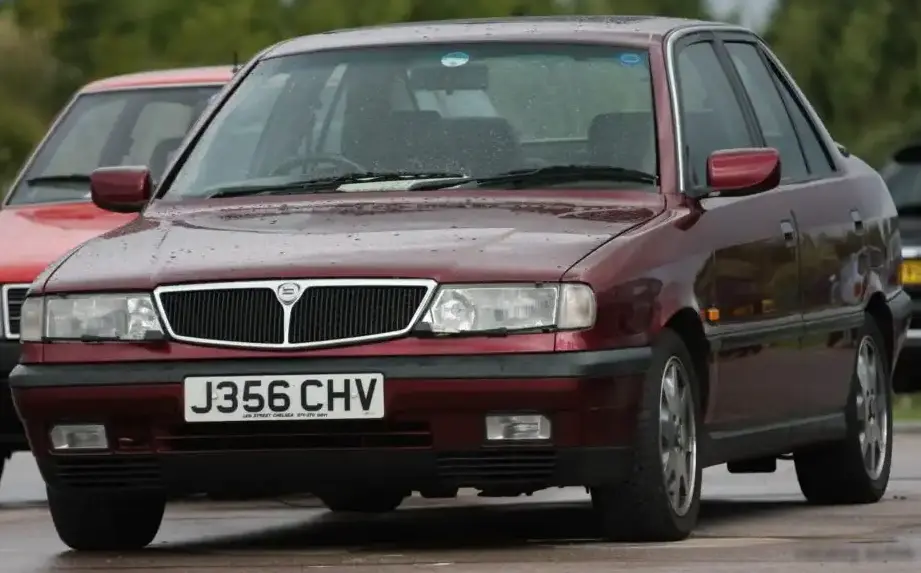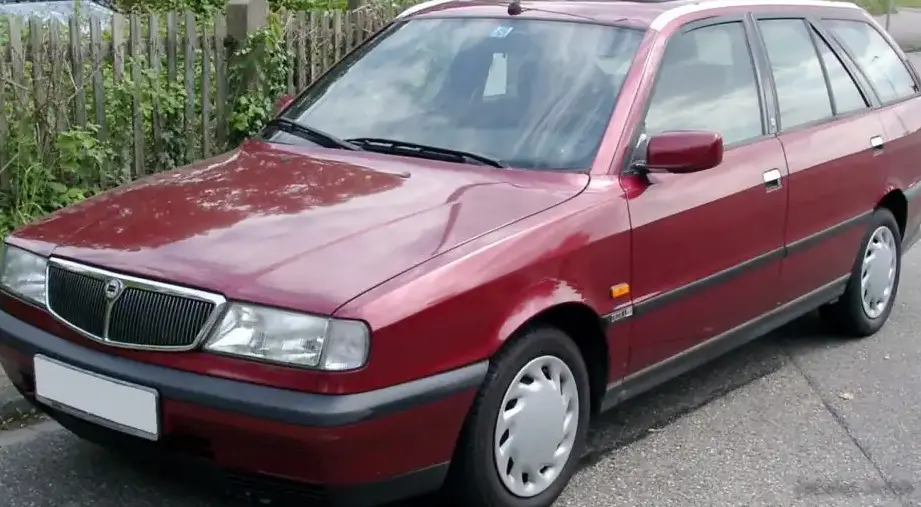
The Lancia Dedra Station Wagon (835) 1.8, produced between 1994 and 1999, represented a practical and somewhat upscale offering in the European station wagon market. Positioned within the Dedra range – itself a successor to the Giardiniera – the 1.8-liter variant aimed to provide a balance between affordability, reasonable performance, and the spaciousness expected of a family vehicle. It was built on the Tipo/Tempra platform (835 series), sharing its underpinnings with other Fiat Group vehicles of the era. This particular engine and transmission combination occupied a mid-range position in the Dedra lineup, slotting below the more powerful 2.0-liter and turbocharged variants, but above the base 1.6-liter models.
Technical Specifications
| Brand | Lancia |
| Model | Dedra |
| Generation | Dedra Station Wagon (835) |
| Type (Engine) | 1.8 (101 Hp) |
| Start of production | 1994 |
| End of production | 1999 |
| Powertrain Architecture | Internal Combustion engine |
| Body type | Station wagon (estate) |
| Seats | 5 |
| Doors | 5 |
| Fuel consumption (combined) | 8 l/100 km (29.4 US mpg, 35.3 UK mpg, 12.5 km/l) |
| Fuel Type | Petrol (Gasoline) |
| Acceleration 0 – 100 km/h | 8 sec |
| Acceleration 0 – 62 mph | 8 sec |
| Acceleration 0 – 60 mph | 7.6 sec |
| Maximum speed | 180 km/h (111.85 mph) |
| Weight-to-power ratio | 12.4 kg/Hp, 80.5 Hp/tonne |
| Weight-to-torque ratio | 8.8 kg/Nm, 113.1 Nm/tonne |
| Power | 101 Hp @ 6000 rpm |
| Power per litre | 57.5 Hp/l |
| Torque | 142 Nm @ 2500 rpm (104.73 lb.-ft. @ 2500 rpm) |
| Engine layout | Front, Transverse |
| Engine Model/Code | 836 A5.000 |
| Engine displacement | 1756 cm3 (107.16 cu. in.) |
| Number of cylinders | 4 |
| Engine configuration | Inline |
| Cylinder Bore | 84 mm (3.31 in.) |
| Piston Stroke | 79.2 mm (3.12 in.) |
| Compression ratio | 9.5:1 |
| Number of valves per cylinder | 2 |
| Fuel injection system | Multi-port manifold injection |
| Engine aspiration | Naturally aspirated engine |
| Valvetrain | DOHC |
| Engine oil capacity | 5.2 l (5.49 US qt | 4.58 UK qt) |
| Kerb Weight | 1255 kg (2766.8 lbs.) |
| Trunk (boot) space – minimum | 448 l (15.82 cu. ft.) |
| Trunk (boot) space – maximum | 1338 l (47.25 cu. ft.) |
| Fuel tank capacity | 60 l (15.85 US gal | 13.2 UK gal) |
| Length | 4343 mm (170.98 in.) |
| Width | 1703 mm (67.05 in.) |
| Height | 1449 mm (57.05 in.) |
| Wheelbase | 2540 mm (100 in.) |
| Front track | 1436 mm (56.54 in.) |
| Rear (Back) track | 1415 mm (55.71 in.) |
| Drivetrain Architecture | The Internal combustion engine (ICE) drives the front wheels of the vehicle. |
| Drive wheel | Front wheel drive |
| Number of gears and type of gearbox | 5 gears, manual transmission |
| Front suspension | Spring Strut |
| Rear suspension | Trailing arm |
| Front brakes | Disc |
| Rear brakes | Disc |
| Assisting systems | ABS (Anti-lock braking system) |
| Steering type | Steering rack and pinion |
| Power steering | Hydraulic Steering |
| Tires size | 185/65 R14 |
Powertrain & Engine Architecture
The Dedra 1.8 utilized the Fiat 836 A5.000 engine, a 1756 cc inline-four cylinder unit. This engine was a common sight in various Fiat, Lancia, and Alfa Romeo models of the period. It featured a dual overhead camshaft (DOHC) valvetrain with two valves per cylinder, and a multi-port fuel injection system. The 9.5:1 compression ratio was typical for the era, balancing performance and fuel efficiency. The engine’s design prioritized smooth operation and reasonable torque delivery over outright horsepower. The five-speed manual transmission was the standard offering, providing a relatively conventional gear ratio spread. While an automatic transmission was available in some Dedra models, it wasn’t commonly paired with the 1.8L engine, making the manual version the more prevalent configuration.
Driving Characteristics
The 101 horsepower and 142 Nm (104.73 lb-ft) of torque produced by the 1.8-liter engine provided adequate, but not exhilarating, performance. Acceleration to 60 mph took around 7.6 seconds, and top speed was approximately 112 mph. Compared to the higher-output 2.0-liter versions, the 1.8 felt noticeably less responsive, particularly during overtaking maneuvers. However, the lower engine weight contributed to a more balanced feel in corners. The five-speed manual transmission allowed drivers to keep the engine in its optimal power band, but the gear ratios weren’t particularly sporty. The overall driving experience was comfortable and refined, prioritizing ease of use over dynamic thrills. The 1.8L engine was known for its relatively quiet operation and smooth power delivery.
Equipment & Trim Levels
The Dedra 1.8 Station Wagon typically came equipped with features considered standard for a mid-range European family car in the 1990s. This included central locking, power windows, and a basic stereo system. Interior upholstery was usually cloth, with options for upgraded materials available. Trim levels varied depending on the market, but generally included options for alloy wheels, air conditioning, and a sunroof. The dashboard layout was functional and straightforward, with clearly labeled controls. Safety features were relatively basic by modern standards, consisting primarily of ABS brakes and seatbelts.
Chassis & Braking
The Dedra Station Wagon utilized a front-wheel-drive layout with independent front suspension employing spring struts and a trailing arm rear suspension. This setup provided a comfortable ride quality, although it wasn’t particularly sporty. Brakes were disc brakes all around, offering adequate stopping power for the vehicle’s weight and performance. The ABS system helped to maintain steering control during emergency braking situations. Stabilizer bars were fitted to both the front and rear axles to reduce body roll during cornering.
Market Reception & Comparison
The Lancia Dedra 1.8 Station Wagon was generally well-received by automotive critics as a practical and comfortable family vehicle. However, it wasn’t considered a particularly exciting or dynamic car. Compared to the more powerful Dedra variants, the 1.8 offered better fuel economy, but at the expense of performance. It also tended to be more affordable to purchase and maintain. Competitors in the European market included the Ford Mondeo Estate, Vauxhall/Opel Vectra Estate, and Peugeot 406 Estate. The Dedra distinguished itself with its Italian styling and a reputation for build quality, although reliability issues were sometimes reported.
Legacy
The Lancia Dedra, and specifically the 1.8-liter variant, has become a relatively sought-after classic car among enthusiasts. The 836 A5.000 engine is generally considered reliable, although regular maintenance is essential. Parts availability can be a challenge, as the Dedra is no longer in production. Well-maintained examples of the Dedra 1.8 Station Wagon are increasingly rare and command a premium in the used car market. Its blend of practicality, comfort, and Italian flair continues to appeal to collectors and drivers alike.