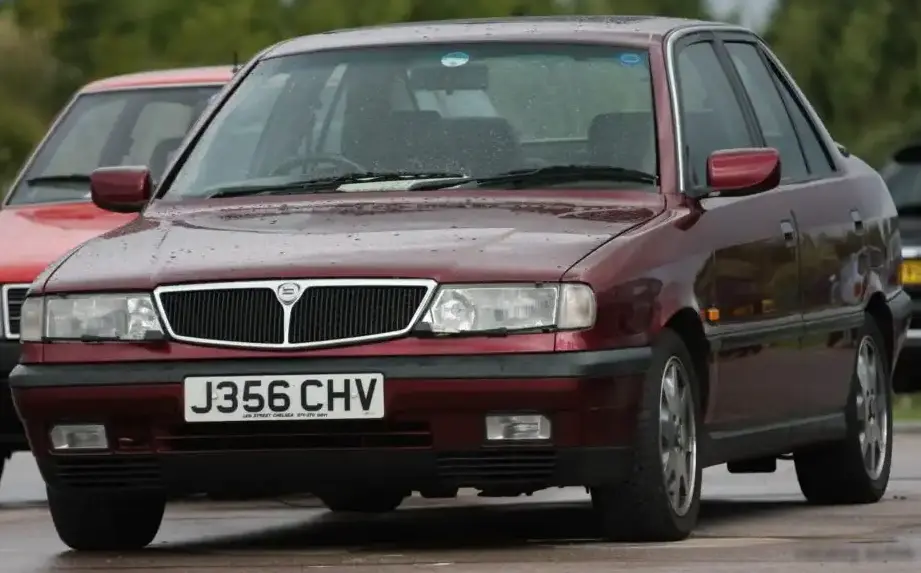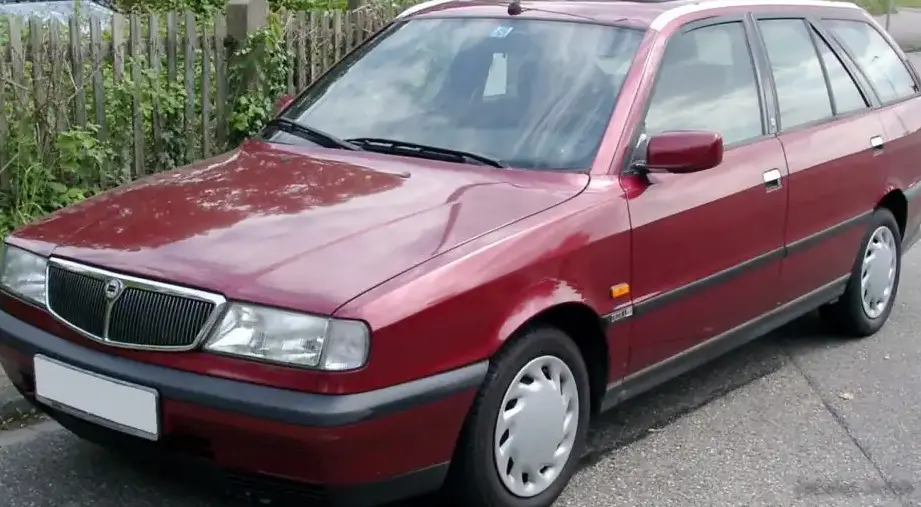
The Lancia Dedra Station Wagon (835) 1.8 LE, produced between 1996 and 1999, represented a refined offering within the Dedra range. Positioned as a mid-range trim, it aimed to balance practicality with a degree of comfort and performance. The Dedra itself was Lancia’s replacement for the aging Delta, built upon the Fiat Tipo platform (project 835), and shared many components with its sister cars, the Fiat Tempra and Alfa Romeo 155. The station wagon body style, or “estate” as it was often called in Europe, provided increased cargo capacity, making it a popular choice for families. This 1.8 LE variant, with its 113 horsepower engine, offered a step up from the base models while remaining more accessible than the higher-performance versions.
Technical Specifications
| Brand | Lancia |
| Model | Dedra |
| Generation | Dedra Station Wagon (835) |
| Type (Engine) | 1.8 LE (113 Hp) |
| Start of production | 1996 |
| End of production | 1999 |
| Powertrain Architecture | Internal Combustion engine |
| Body type | Station wagon (estate) |
| Seats | 5 |
| Doors | 5 |
| Fuel consumption (combined) | 7.8 l/100 km (30.2 US mpg, 36.2 UK mpg, 12.8 km/l) |
| Fuel Type | Petrol (Gasoline) |
| Acceleration 0 – 100 km/h | 10.6 sec |
| Acceleration 0 – 62 mph | 10.6 sec |
| Acceleration 0 – 60 mph | 10.1 sec |
| Maximum speed | 186 km/h (115.58 mph) |
| Weight-to-power ratio | 11.9 kg/Hp, 83.7 Hp/tonne |
| Weight-to-torque ratio | 8.8 kg/Nm, 114.1 Nm/tonne |
| Power | 113 Hp @ 5800 rpm |
| Power per litre | 64.7 Hp/l |
| Torque | 154 Nm @ 4400 rpm (113.58 lb.-ft. @ 4400 rpm) |
| Engine layout | Front, Transverse |
| Engine Model/Code | 182 A2.000 |
| Engine displacement | 1747 cm3 (106.61 cu. in.) |
| Number of cylinders | 4 |
| Engine configuration | Inline |
| Cylinder Bore | 82 mm (3.23 in.) |
| Piston Stroke | 82.7 mm (3.26 in.) |
| Compression ratio | 10.3:1 |
| Number of valves per cylinder | 2 |
| Fuel injection system | Multi-port manifold injection |
| Engine aspiration | Naturally aspirated engine |
| Valvetrain | DOHC |
| Engine oil capacity | 5.2 l (5.49 US qt | 4.58 UK qt) |
| Coolant capacity | 7 l (7.4 US qt | 6.16 UK qt) |
| Kerb Weight | 1350 kg (2976.24 lbs.) |
| Max. weight | 1775 kg (3913.21 lbs.) |
| Max load | 425 kg (936.96 lbs.) |
| Trunk (boot) space – minimum | 448 l (15.82 cu. ft.) |
| Trunk (boot) space – maximum | 1338 l (47.25 cu. ft.) |
| Fuel tank capacity | 63 l (16.64 US gal | 13.86 UK gal) |
| Length | 4343 mm (170.98 in.) |
| Width | 1700 mm (66.93 in.) |
| Height | 1446 mm (56.93 in.) |
| Wheelbase | 2540 mm (100 in.) |
| Front track | 1436 mm (56.54 in.) |
| Rear track | 1415 mm (55.71 in.) |
| Drivetrain Architecture | Front wheel drive |
| Number of gears | 5 gears, manual transmission |
| Front suspension | Spring Strut |
| Rear suspension | Trailing arm |
| Front brakes | Disc |
| Rear brakes | Disc |
| Assisting systems | ABS (Anti-lock braking system) |
| Steering type | Steering rack and pinion |
| Power steering | Hydraulic Steering |
| Tires size | 185/60 R14 |
Powertrain & Engine Architecture
The 1.8 LE variant of the Dedra Station Wagon utilized the Fiat-developed 182 A2.000 engine, a 1747cc inline-four cylinder unit. This engine featured a dual overhead camshaft (DOHC) valvetrain with two valves per cylinder. Fuel delivery was handled by a multi-port fuel injection system, contributing to improved efficiency and smoother operation compared to earlier carbureted designs. The engine produced 113 horsepower at 5800 rpm and 154 Nm (113.58 lb-ft) of torque at 4400 rpm. The engine’s relatively high compression ratio of 10.3:1 helped to maximize power output. The engine was transversely mounted, driving the front wheels. The transmission was a five-speed manual gearbox, offering a balance between fuel economy and driver control. While an automatic transmission was available on some Dedra models, it wasn’t typically paired with the 1.8 LE engine.
Driving Characteristics
The 1.8 LE Dedra Station Wagon offered a comfortable and practical driving experience. Acceleration from 0-60 mph took around 10.1 seconds, and it had a top speed of 115.58 mph. While not a particularly sporty vehicle, the 1.8-liter engine provided adequate power for everyday driving and highway cruising. The five-speed manual transmission allowed drivers to keep the engine in its optimal power band. Compared to the more powerful 2.0-liter versions, the 1.8 LE felt less strained during acceleration, but lacked the outright performance of its larger-engined siblings. The suspension, tuned for comfort, absorbed bumps and imperfections in the road well, making it a pleasant long-distance cruiser. The steering, while hydraulic, wasn’t particularly communicative, but was light and easy to use.
Equipment & Trim Levels
The 1.8 LE trim level offered a reasonable level of equipment for its time. Standard features typically included central locking, power windows, and a basic audio system. Interior upholstery was usually cloth, with a relatively simple dashboard layout. Optional extras could include air conditioning, alloy wheels, and a more advanced stereo system. The LE designation indicated a slightly higher level of trim compared to the base models, with some additional comfort and convenience features. The interior was designed with practicality in mind, offering ample space for passengers and luggage.
Chassis & Braking
The Dedra Station Wagon utilized a front-engine, front-wheel-drive layout. The front suspension employed a MacPherson strut design, while the rear suspension featured a trailing arm setup. This configuration provided a good balance between ride comfort and handling. Braking was handled by disc brakes on all four wheels, supplemented by an Anti-lock Braking System (ABS) to enhance safety. The ABS system helped to prevent wheel lockup during hard braking, improving steering control. The steering system was a rack and pinion type with hydraulic power assistance, making it relatively easy to maneuver at low speeds.
Market Reception & Comparison
The Lancia Dedra Station Wagon 1.8 LE was generally well-received by automotive critics as a practical and comfortable family car. It offered a good compromise between performance, fuel economy, and price. Compared to the higher-output 2.0-liter versions, the 1.8 LE was more affordable to purchase and operate, but lacked the same level of performance. The 1.9 TDI diesel version offered superior fuel economy, but at the expense of refinement and power. The Dedra faced competition from other European station wagons, such as the Ford Mondeo Estate and the Vauxhall/Opel Vectra Estate.
Legacy
The Lancia Dedra, while not a huge sales success, remains a fondly remembered car among enthusiasts. The 1.8 LE powertrain, while not particularly groundbreaking, proved to be relatively reliable. The engine is known for its durability, and with regular maintenance, can provide many years of service. Today, the Dedra Station Wagon 1.8 LE is a relatively rare sight on the roads, but well-maintained examples are sought after by collectors and enthusiasts who appreciate its classic Italian styling and practicality. Parts availability can be a challenge, but many components are shared with other Fiat Group vehicles, making them easier to source.