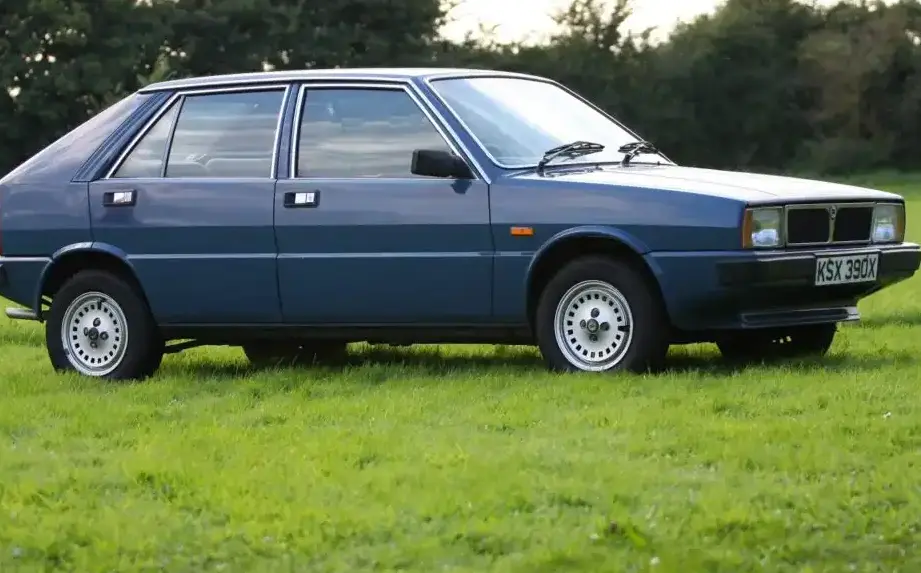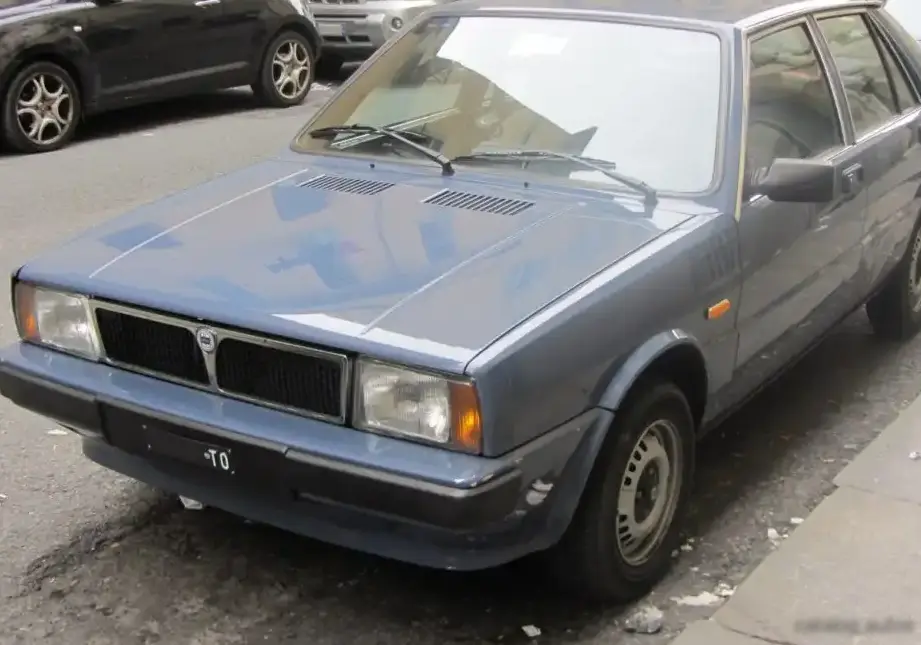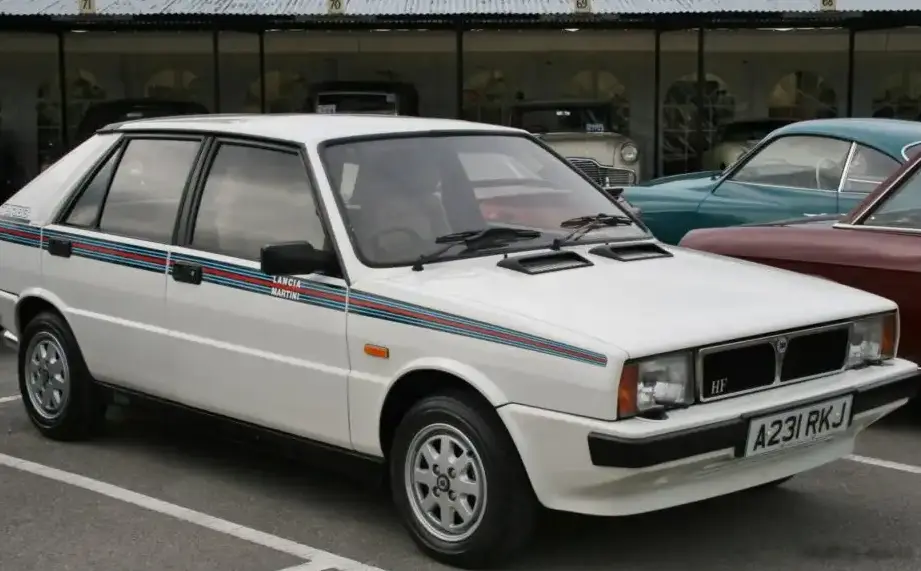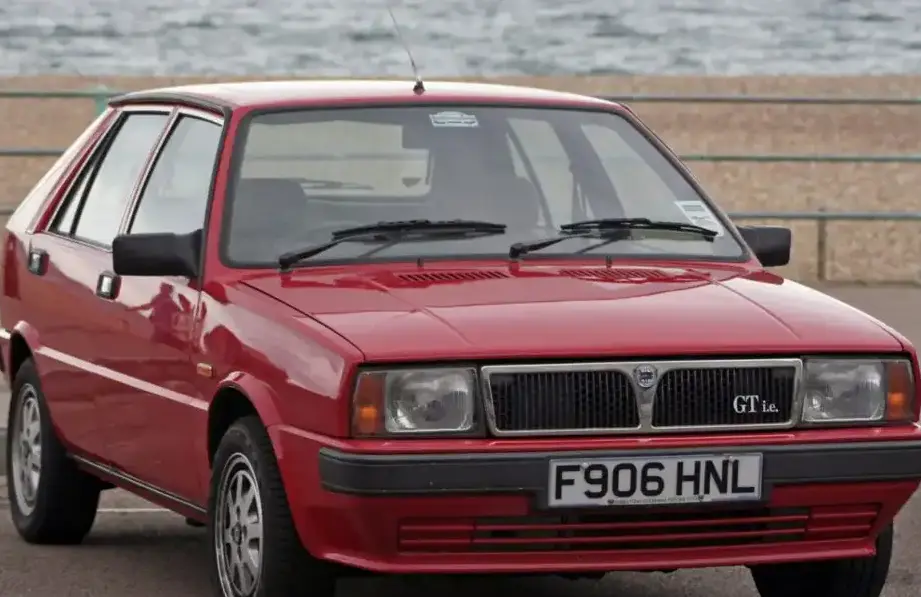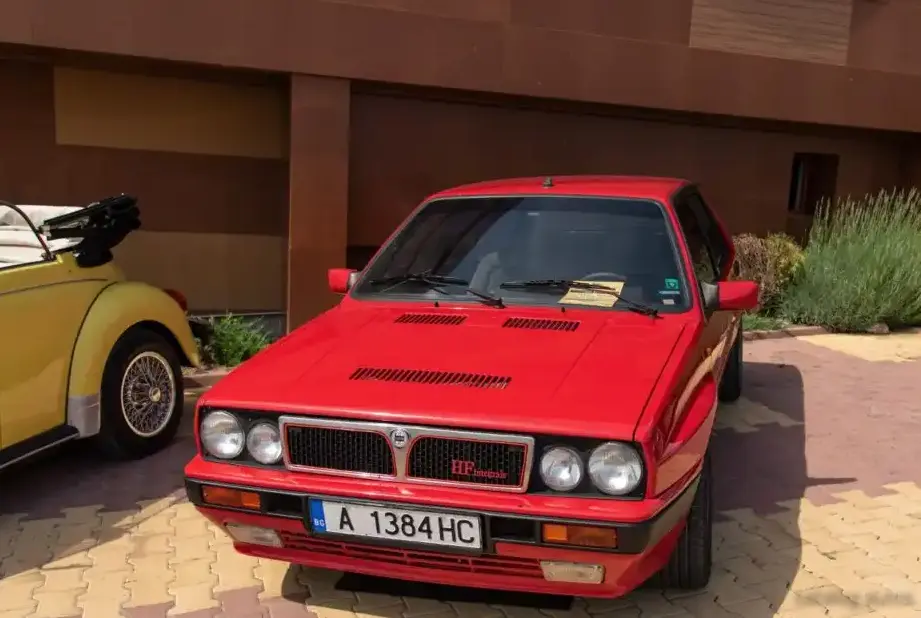
The Lancia Delta HF Integrale 2.0 16V, produced from 1989 to 1991, represents the pinnacle of the first-generation Delta (831 series, post-1986 facelift) and cemented the model’s legendary status in rallying. This high-performance variant was designed to homologate the Delta for Group A rallying, and quickly became a desirable road car for enthusiasts seeking a potent and capable all-wheel-drive hatchback. It built upon the success of earlier Integrale models, offering increased power and refined handling. The HF Integrale 2.0 16V occupied the top tier of the Delta lineup, positioned as the ultimate performance version, significantly more expensive and exclusive than the base models and even the earlier 8-valve Integrale.
Technical Specifications
| Brand | Lancia |
| Model | Delta |
| Generation | Delta I (831, facelift 1986) |
| Type | HF Integrale 2.0 16V (200 Hp) 4WD |
| Start of production | 1989 |
| End of production | 1991 |
| Powertrain Architecture | Internal Combustion engine |
| Body type | Hatchback |
| Seats | 5 |
| Doors | 5 |
| Fuel consumption (urban) | 11.2 l/100 km (21 US mpg, 25.2 UK mpg, 8.9 km/l) |
| Fuel consumption (extra urban) | 7.9 l/100 km (29.8 US mpg, 35.8 UK mpg, 12.7 km/l) |
| Fuel Type | Petrol (Gasoline) |
| Acceleration 0 – 100 km/h | 5.7 sec |
| Acceleration 0 – 62 mph | 5.7 sec |
| Acceleration 0 – 60 mph | 5.4 sec |
| Maximum speed | 220 km/h (136.7 mph) |
| Weight-to-power ratio | 6.3 kg/Hp, 160 Hp/tonne |
| Weight-to-torque ratio | 4.2 kg/Nm, 238.4 Nm/tonne |
| Power | 200 Hp @ 5500 rpm |
| Power per litre | 100.3 Hp/l |
| Torque | 298 Nm @ 3000 rpm (219.79 lb.-ft. @ 3000 rpm) |
| Engine layout | Front, Transverse |
| Engine Model/Code | 831D5000 |
| Engine displacement | 1995 cm3 (121.74 cu. in.) |
| Number of cylinders | 4 |
| Engine configuration | Inline |
| Cylinder Bore | 84 mm (3.31 in.) |
| Piston Stroke | 90 mm (3.54 in.) |
| Compression ratio | 8:1 |
| Number of valves per cylinder | 4 |
| Fuel injection system | Multi-port manifold injection |
| Engine aspiration | Turbocharger, Intercooler |
| Valvetrain | DOHC |
| Engine oil capacity | 5.3 l (5.6 US qt, 4.66 UK qt) |
| Coolant capacity | 6.2 l (6.55 US qt, 5.46 UK qt) |
| Kerb Weight | 1250 kg (2755.78 lbs.) |
| Max. weight | 1670 kg (3681.72 lbs.) |
| Max load | 420 kg (925.94 lbs.) |
| Trunk (boot) space – minimum | 200 l (7.06 cu. ft.) |
| Trunk (boot) space – maximum | 940 l (33.2 cu. ft.) |
| Fuel tank capacity | 57 l (15.06 US gal, 12.54 UK gal) |
| Length | 3900 mm (153.54 in.) |
| Width | 1700 mm (66.93 in.) |
| Height | 1365 mm (53.74 in.) |
| Wheelbase | 2480 mm (97.64 in.) |
| Front track | 1426 mm (56.14 in.) |
| Rear track | 1406 mm (55.35 in.) |
| Minimum turning circle | 10.4 m (34.12 ft.) |
| Drivetrain Architecture | All wheel drive (4×4) |
| Number of gears | 5 gears, manual transmission |
| Front suspension | Independent, type McPherson with coil spring and anti-roll bar |
| Rear suspension | McPherson, Transverse stabilizer |
| Front brakes | Ventilated discs, 284 mm |
| Rear brakes | Disc, 227 mm |
| Steering type | Steering rack and pinion |
| Power steering | Hydraulic |
| Tires size | 205/50 R15 |
| Wheel rims size | 7J x 15 |
INTRODUCTION
The Lancia Delta HF Integrale 2.0 16V, launched in 1989, was a significant evolution of the already successful Delta Integrale. It represented a further refinement of the formula that had dominated the World Rally Championship (WRC) for years. The 16V designation refers to the four-valve-per-cylinder cylinder head, a key upgrade over the earlier 8-valve Integrale. This engine modification, combined with improvements to the turbocharging system and other components, resulted in a substantial power increase. The Delta Integrale 16V was produced until 1991, marking the end of the first generation of this iconic model. It remains highly sought after by collectors and enthusiasts.
Powertrain & Engine Architecture
At the heart of the HF Integrale 16V lies the 831D5000 engine, a 1,995 cc turbocharged and intercooled inline-four cylinder. The key upgrade from the 8-valve version was the adoption of a 16-valve cylinder head, allowing for improved airflow and combustion efficiency. This engine utilized Bosch Motronic fuel injection and a Garrett T25 turbocharger. The turbocharger provided significant boost, delivering 200 horsepower at 5,500 rpm and 298 Nm (219.79 lb-ft) of torque at 3,000 rpm. The engine featured a relatively low 8:1 compression ratio, necessary to cope with the stresses of turbocharging. The transmission was a robust, fully synchronized five-speed manual gearbox, chosen for its durability and ability to handle the engine’s output. The drivetrain was a permanent all-wheel-drive system, utilizing a Torsen differential to distribute power between the front and rear axles, providing excellent traction in all conditions.
Driving Characteristics
The Delta Integrale 16V offered a thrilling driving experience. The turbocharged engine delivered a noticeable surge of power, particularly in the mid-range, making it responsive and engaging. While not as peaky as some contemporary sports cars, the 16V required careful throttle control to maximize traction, especially on slippery surfaces. The all-wheel-drive system provided exceptional grip, allowing for confident cornering and acceleration. The five-speed gearbox was well-matched to the engine’s characteristics, offering precise shifts and a good spread of ratios. Compared to the 8-valve Integrale, the 16V felt noticeably more refined and powerful, with improved acceleration and a higher top speed. The suspension, while firm, provided a good balance between comfort and handling, absorbing bumps reasonably well while maintaining body control.
Equipment & Trim Levels
The HF Integrale 16V was generously equipped, reflecting its premium positioning within the Delta range. Standard features included power windows, central locking, and a high-quality stereo system. The interior was typically trimmed with Recaro sports seats upholstered in Alcantara and leather. The dashboard featured a distinctive layout with a comprehensive instrument cluster, including gauges for oil pressure and turbo boost. Optional extras included air conditioning, a sunroof, and upgraded audio systems. The exterior was distinguished by its wider wheel arches, unique alloy wheels, and a rear spoiler. The color palette was typically vibrant, with Rosso Corsa (red) and Bianco Perlato (pearl white) being popular choices.
Chassis & Braking
The Delta Integrale 16V featured a robust chassis designed to handle the increased power and stresses of high-performance driving. The suspension utilized independent McPherson struts at the front and rear, with coil springs and anti-roll bars. The front suspension incorporated a transverse stabilizer bar to reduce body roll. The braking system consisted of ventilated discs at the front and solid discs at the rear, providing ample stopping power. Hydraulic power steering was standard, offering precise and responsive steering feel. The car rode on 15-inch alloy wheels, typically fitted with 205/50 R15 tires, providing a good balance between grip and ride comfort.
Market Reception & Comparison
The Lancia Delta HF Integrale 16V was widely praised by automotive journalists for its performance, handling, and all-weather capability. It was often compared favorably to rivals such as the Ford Sierra RS Cosworth and the Subaru Impreza WRX. While the Cosworth offered a more raw and visceral driving experience, the Integrale was lauded for its refinement and all-around competence. Compared to the earlier 8-valve Integrale, the 16V offered a significant performance upgrade, but at a higher price point. Fuel economy was reasonable for a high-performance car of its era, averaging around 21 mpg in urban driving and 30 mpg on the highway. Reliability was generally good, although the turbocharger and associated components required regular maintenance.
Legacy
The Lancia Delta HF Integrale 16V remains a highly collectible and sought-after classic car. Its success in rallying, combined with its impressive performance and distinctive styling, has cemented its place in automotive history. The 831D5000 engine, while requiring careful maintenance, is generally considered to be a durable and reliable unit. Today, well-maintained examples of the Integrale 16V command high prices in the used car market, reflecting their rarity and desirability. The Delta Integrale 16V is often regarded as one of the greatest rally-bred road cars ever produced, and a testament to Lancia’s engineering prowess.