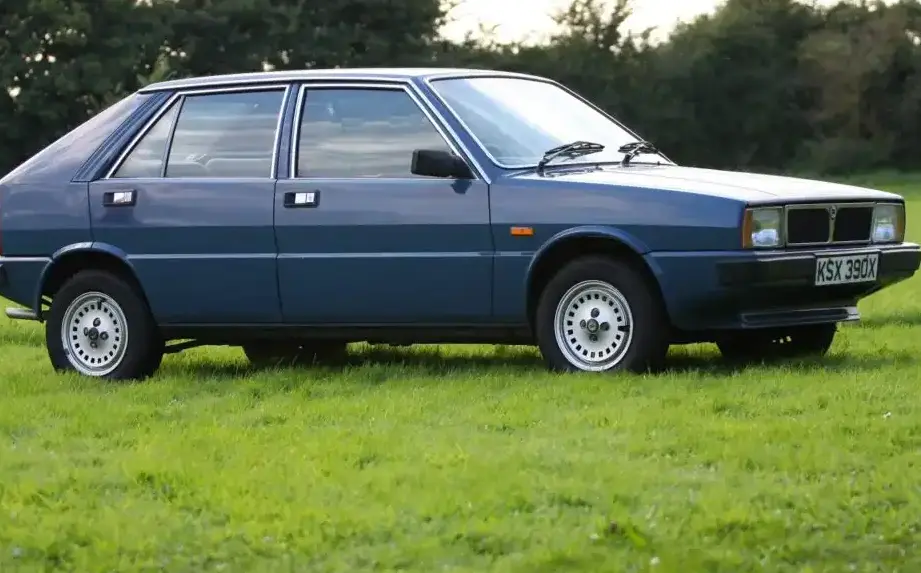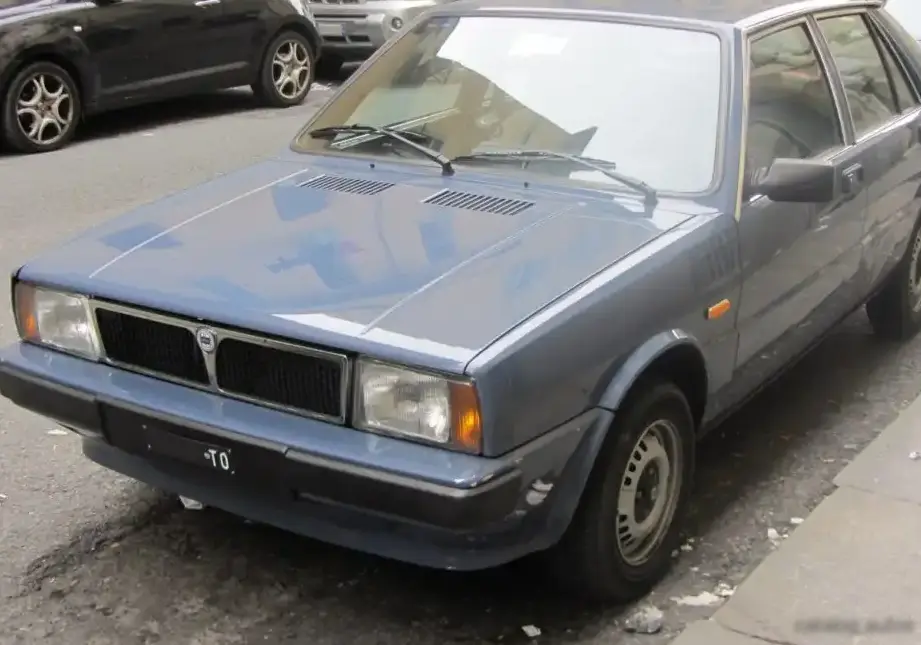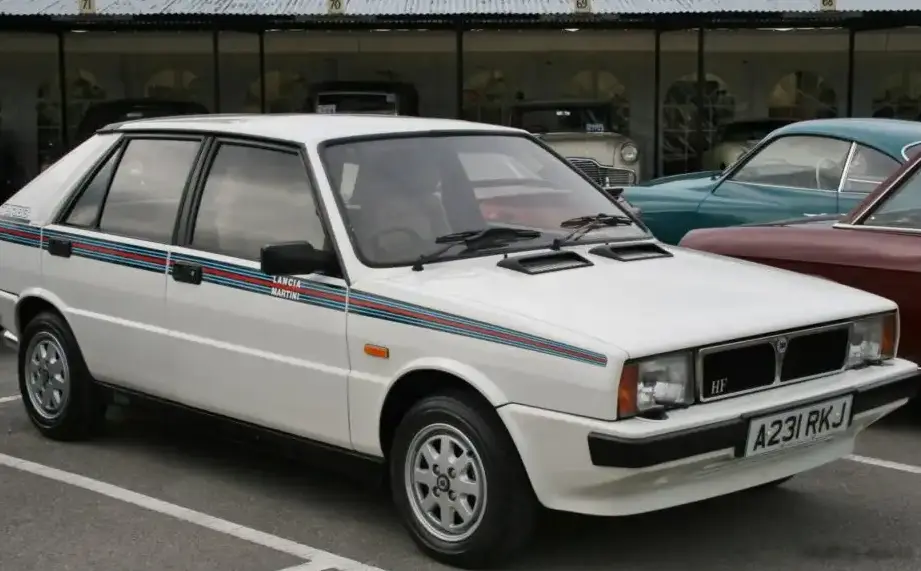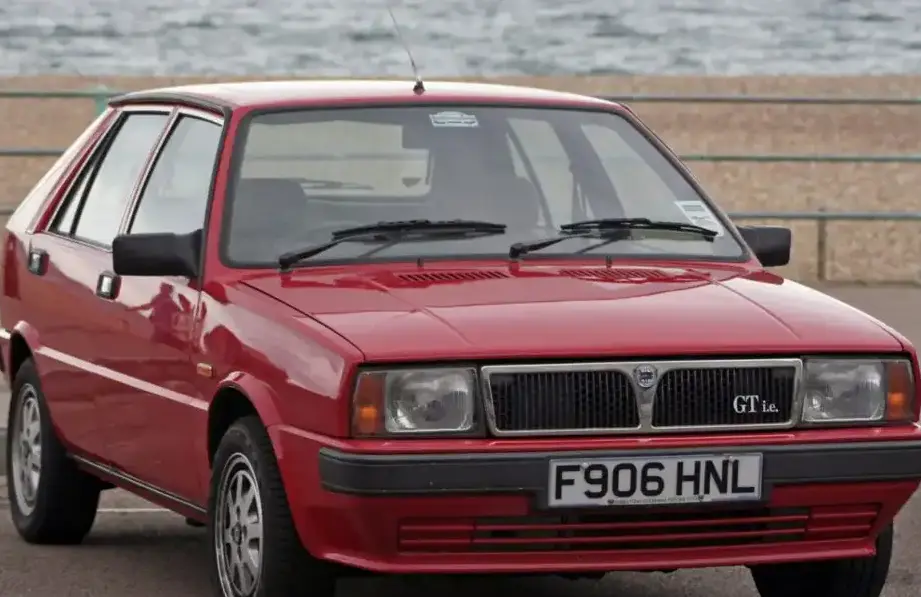
The Lancia Delta III (844) 1.4 T-Jet 16V, produced from August 2008 to July 2010, represented a significant attempt to revive the iconic Delta nameplate. Positioned as a mid-range offering within the Delta III lineup, this variant aimed to balance performance and fuel efficiency, appealing to buyers seeking a more engaging driving experience than the base models but without the higher price tag of the more powerful versions. It was built on the Fiat/Chrysler C-segment platform, known internally as the 1HX0/A3 platform, shared with models like the Fiat Bravo and Alfa Romeo Giulietta. The Delta III marked Lancia’s return to the compact hatchback segment after a considerable hiatus, hoping to recapture some of the original Delta’s rally-bred spirit, albeit in a more modern and refined package.
Technical Specifications
| Brand | Lancia |
| Model | Delta |
| Generation | Delta III (844) |
| Type (Engine) | 1.4 T-Jet 16V (150 Hp) |
| Start of production | August, 2008 |
| End of production | July, 2010 |
| Powertrain Architecture | Internal Combustion engine |
| Body type | Hatchback |
| Seats | 5 |
| Doors | 5 |
| Fuel consumption (urban) | 8.7 l/100 km (27 US mpg, 32.5 UK mpg, 11.5 km/l) |
| Fuel consumption (extra urban) | 5.7 l/100 km (41.3 US mpg, 49.6 UK mpg, 17.5 km/l) |
| Fuel consumption (combined) | 7 l/100 km (33.6 US mpg, 40.4 UK mpg, 14.3 km/l) |
| Fuel Type | Petrol (Gasoline) |
| Acceleration 0 – 100 km/h | 8.7 sec |
| Acceleration 0 – 62 mph | 8.7 sec |
| Acceleration 0 – 60 mph | 8.3 sec |
| Maximum speed | 210 km/h (130.49 mph) |
| Emission standard | Euro 4 |
| Weight-to-power ratio | 9.3 kg/Hp, 107.5 Hp/tonne |
| Weight-to-torque ratio | 6.8 kg/Nm, 147.7 Nm/tonne |
| Power | 150 Hp @ 5500 rpm |
| Power per litre | 109.6 Hp/l |
| Torque | 206 Nm @ 2250 rpm (151.94 lb.-ft. @ 2250 rpm) |
| Engine layout | Front, Transverse |
| Engine Model/Code | 198 A1.000 |
| Engine displacement | 1368 cm3 (83.48 cu. in.) |
| Number of cylinders | 4 |
| Engine configuration | Inline |
| Cylinder Bore | 72 mm (2.83 in.) |
| Piston Stroke | 84 mm (3.31 in.) |
| Number of valves per cylinder | 4 |
| Fuel injection system | Multi-port manifold injection |
| Engine aspiration | Turbocharger, Intercooler |
| Valvetrain | DOHC |
| Engine oil capacity | 2.9 l (3.06 US qt | 2.55 UK qt) |
| Coolant | 5.9 l (6.23 US qt | 5.19 UK qt) |
| Kerb Weight | 1395 kg (3075.45 lbs.) |
| Max. weight | 1800 kg (3968.32 lbs.) |
| Max load | 405 kg (892.87 lbs.) |
| Trunk (boot) space – minimum | 380 l (13.42 cu. ft.) |
| Trunk (boot) space – maximum | 1190 l (42.02 cu. ft.) |
| Fuel tank capacity | 57 l (15.06 US gal | 12.54 UK gal) |
| Length | 4510 mm (177.56 in.) |
| Width | 1797 mm (70.75 in.) |
| Height | 1497 mm (58.94 in.) |
| Wheelbase | 2700 mm (106.3 in.) |
| Front track | 1538 mm (60.55 in.) |
| Rear (Back) track | 1531 mm (60.28 in.) |
| Minimum turning circle | 10.8 m (35.43 ft.) |
| Drivetrain Architecture | The Internal combustion engine (ICE) drives the front wheels of the vehicle. |
| Drive wheel | Front wheel drive |
| Number of gears and type of gearbox | 6 gears, manual transmission |
| Front suspension | Independent type McPherson |
| Rear suspension | Semi-independent, coil spring |
| Front brakes | Ventilated discs |
| Rear brakes | Disc |
| Assisting systems | ABS (Anti-lock braking system), Power steering (Electric) |
| Tires size | 195/55R16 |
Powertrain & Engine Architecture
The heart of the Delta 1.4 T-Jet 16V is the 198 A1.000 engine, a 1.4-liter inline-four cylinder gasoline engine. This engine utilizes a turbocharger with an intercooler to boost power output. The engine employs multi-point fuel injection and a double overhead camshaft (DOHC) valvetrain, contributing to its relatively efficient operation. The 1.4 T-Jet engine is known for its responsiveness and willingness to rev, offering a more spirited driving experience than the naturally aspirated engines available in other Delta trims. The six-speed manual transmission was standard, providing precise gear changes and allowing drivers to fully exploit the engine’s powerband. The engine’s design prioritized a balance between performance and fuel economy, making it a popular choice for drivers who wanted a bit more excitement without sacrificing practicality.
Driving Characteristics
The 1.4 T-Jet 16V Delta offered a noticeable step up in performance compared to the lower-spec models. Acceleration from 0-60 mph took approximately 8.3 seconds, and the car felt lively and capable in everyday driving situations. The turbocharger provided a noticeable boost in power during acceleration, making overtaking maneuvers easier. While not as quick as the more powerful Delta versions, the 1.4 T-Jet offered a satisfying driving experience, particularly for those accustomed to naturally aspirated engines. The six-speed manual transmission allowed for precise control over the engine’s power, and the gear ratios were well-suited to both city and highway driving. The suspension provided a comfortable ride, while still offering decent handling characteristics.
Equipment & Trim Levels
The 1.4 T-Jet 16V typically came equipped with a reasonable level of standard features. These included air conditioning, power windows, central locking, and a basic audio system. Higher trim levels offered options such as alloy wheels, a more advanced audio system with steering wheel-mounted controls, and upgraded interior trim materials. Safety features included ABS brakes, electronic stability control, and multiple airbags. The interior design was modern and functional, with a focus on ergonomics and ease of use. The Delta aimed for a premium feel, with attention paid to material quality and overall build quality.
Chassis & Braking
The Delta III utilized an independent McPherson strut suspension setup at the front, providing good handling and ride comfort. The rear suspension employed a semi-independent coil spring arrangement. The braking system consisted of ventilated discs at the front and solid discs at the rear, providing adequate stopping power for the vehicle’s weight and performance. Electric power steering was standard, offering a light and precise steering feel. The chassis was designed to provide a balance between comfort and handling, making the Delta a pleasant car to drive on a variety of road surfaces.
Market Reception & Comparison
The Lancia Delta 1.4 T-Jet 16V was generally well-received by automotive critics. It was praised for its responsive engine, comfortable ride, and stylish design. However, some critics noted that the interior quality could be improved, and that the Delta was not as engaging to drive as some of its rivals. Compared to the 1.8 Di turbo-diesel variant, the 1.4 T-Jet offered a more spirited driving experience but suffered from slightly lower fuel economy. Against the more powerful Delta versions, it represented a more affordable option, sacrificing some performance for a lower price point.
Legacy
The Lancia Delta III, despite its relatively short production run, remains a significant vehicle in Lancia’s history. The 1.4 T-Jet 16V powertrain has proven to be reasonably reliable, although regular maintenance is essential. On the used car market, these Deltas are often sought after by enthusiasts who appreciate their unique styling and engaging driving experience. While not without its flaws, the Delta 1.4 T-Jet 16V represents a commendable effort to revive a legendary nameplate and offer a compelling alternative in the competitive compact hatchback segment.