
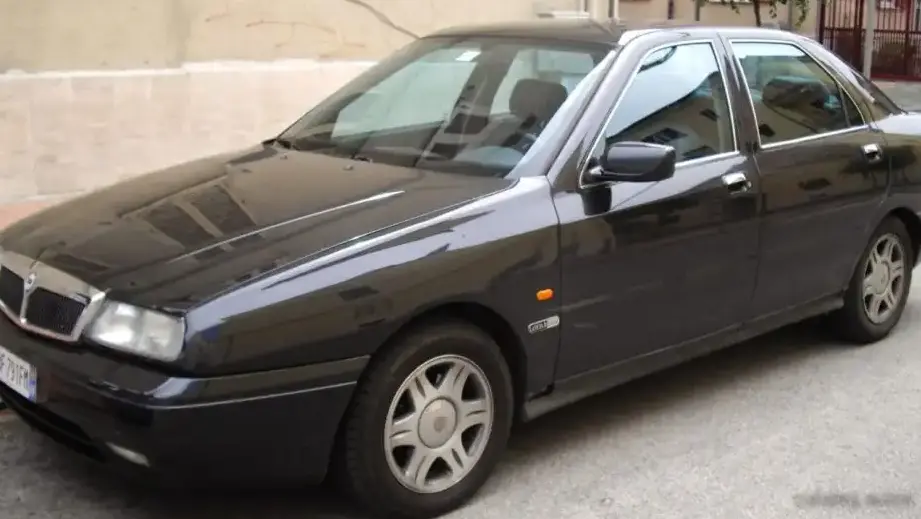
The Lancia Kappa 3.0 24V, produced between August 1994 and July 2000, represented the flagship engine option for Lancia’s executive sedan during the 838 series. Positioned as a premium offering within the Kappa range, it aimed to recapture Lancia’s historical reputation for innovative engineering and sophisticated design. The Kappa, as a whole, was intended to replace the aging Lancia Delta and Thema, offering a more modern and comfortable experience. The 3.0 24V variant, with its potent V6 engine, was the top-of-the-line model, appealing to buyers seeking performance alongside Italian luxury. It was built on the Tipo Tre platform, shared with other Fiat Group vehicles like the Alfa Romeo 166 and the Lancia Thesis.
Technical Specifications
| Brand | Lancia |
| Model | Kappa |
| Generation | Kappa (838) |
| Type (Engine) | 3.0 24V (204 Hp) |
| Start of production | August, 1994 |
| End of production | July, 2000 |
| Powertrain Architecture | Internal Combustion engine |
| Body type | Sedan |
| Seats | 5 |
| Doors | 4 |
| Fuel consumption (urban) | 17.5 l/100 km (13.4 US mpg) |
| Fuel consumption (extra urban) | 8.9 l/100 km (26.4 US mpg) |
| Fuel Type | Petrol (Gasoline) |
| Acceleration 0 – 100 km/h | 8 sec |
| Acceleration 0 – 62 mph | 8 sec |
| Acceleration 0 – 60 mph | 7.6 sec |
| Maximum speed | 225 km/h (139.81 mph) |
| Weight-to-power ratio | 7.5 kg/Hp |
| Weight-to-torque ratio | 5.6 kg/Nm |
| Power | 204 Hp @ 6300 rpm |
| Power per litre | 68.9 Hp/l |
| Torque | 270 Nm @ 4500 rpm (199.14 lb.-ft. @ 4500 rpm) |
| Engine layout | Front, Transverse |
| Engine Model/Code | 838 B.000 |
| Engine displacement | 2959 cm3 (180.57 cu. in.) |
| Number of cylinders | 6 |
| Engine configuration | V-engine |
| Cylinder Bore | 93 mm (3.66 in.) |
| Piston Stroke | 72.6 mm (2.86 in.) |
| Compression ratio | 10:1 |
| Number of valves per cylinder | 4 |
| Fuel injection system | Multi-port manifold injection |
| Engine aspiration | Naturally aspirated engine |
| Valvetrain | DOHC |
| Engine oil capacity | 5.9 l (6.23 US qt | 5.19 UK qt) |
| Coolant | 9 l (9.51 US qt | 7.92 UK qt) |
| Kerb Weight | 1520 kg (3351.03 lbs.) |
| Max. weight | 2030 kg (4475.38 lbs.) |
| Max load | 510 kg (1124.36 lbs.) |
| Trunk (boot) space – minimum | 525 l (18.54 cu. ft.) |
| Fuel tank capacity | 70 l (18.49 US gal | 15.4 UK gal) |
| Length | 4687 mm (184.53 in.) |
| Width | 1826 mm (71.89 in.) |
| Height | 1462 mm (57.56 in.) |
| Wheelbase | 2700 mm (106.3 in.) |
| Front track | 1547 mm (60.91 in.) |
| Rear (Back) track | 1535 mm (60.43 in.) |
| Drivetrain Architecture | The Internal combustion engine (ICE) drives the front wheels of the vehicle. |
| Drive wheel | Front wheel drive |
| Number of gears and type of gearbox | 5 gears, manual transmission |
| Front suspension | Wishbone |
| Rear suspension | Spring Strut |
| Front brakes | Ventilated discs |
| Rear brakes | Disc |
| Assisting systems | ABS (Anti-lock braking system) |
| Steering type | Steering rack and pinion |
| Power steering | Hydraulic Steering |
| Tires size | 215/55R16 |
Powertrain & Engine Architecture
The heart of the Kappa 3.0 24V is the 838 B.000 engine, a 2.959-liter (180.6 cubic inch) V6. This engine is notable for its all-aluminum construction, a relatively advanced feature for its time, contributing to weight savings and improved thermal management. The engine utilizes a 60-degree V-angle, providing a good balance between smoothness and compactness. It features a dual overhead camshaft (DOHC) design with four valves per cylinder, maximizing breathing efficiency. Fuel delivery is handled by a multi-port fuel injection system, precisely metering fuel into each intake port. The engine’s 204 horsepower at 6300 rpm and 270 Nm (199 lb-ft) of torque at 4500 rpm provided brisk acceleration for a vehicle of its size. The Kappa 3.0 24V was exclusively offered with a 5-speed manual transmission, designed to handle the engine’s output and provide a more engaging driving experience.
Driving Characteristics
The Kappa 3.0 24V offered a distinctly different driving experience compared to the lower-spec models. The V6 engine provided smooth, linear power delivery, making it well-suited for both relaxed cruising and spirited driving. The 5-speed manual transmission allowed drivers to fully exploit the engine’s capabilities, offering precise gear changes and a direct connection to the powertrain. While not a sports sedan in the truest sense, the Kappa 3.0 24V offered a level of performance that was uncommon in its class. The front-wheel-drive layout, while providing good traction in most conditions, could exhibit some torque steer under hard acceleration. The suspension, tuned for comfort, provided a compliant ride, but body roll was noticeable during aggressive cornering.
Equipment & Trim Levels
The 3.0 24V Kappa typically came well-equipped, reflecting its position as the range-topping model. Standard features included leather upholstery, power-adjustable front seats, automatic climate control, and a high-quality audio system. Alloy wheels were also standard, along with features like power windows, power mirrors, and central locking. Optional extras included a sunroof, upgraded audio systems, and metallic paint finishes. The interior design emphasized Italian style and craftsmanship, with a focus on creating a luxurious and comfortable environment for both driver and passengers.
Chassis & Braking
The Kappa 3.0 24V utilized an independent suspension setup at all four wheels, with a wishbone configuration at the front and a spring strut arrangement at the rear. This setup provided a good balance between ride comfort and handling. The braking system consisted of ventilated discs at the front and solid discs at the rear, providing adequate stopping power for the vehicle’s weight and performance. Anti-lock braking system (ABS) was standard, enhancing safety and control during emergency braking situations. The steering was a rack-and-pinion system with hydraulic power assistance, offering precise and responsive steering feel.
Market Reception & Comparison
The Lancia Kappa 3.0 24V was generally well-received by automotive critics, who praised its stylish design, luxurious interior, and smooth V6 engine. However, it faced competition from established German rivals like the BMW 5 Series and the Mercedes-Benz E-Class, which were often perceived as having superior build quality and brand prestige. Fuel economy was a concern for some reviewers, with the V6 engine consuming a significant amount of fuel, particularly in urban driving. Compared to the lower-spec Kappa models, the 3.0 24V offered a substantial performance upgrade, but at a higher price point. The 2.0-liter and 2.4-liter versions were more popular with buyers prioritizing fuel efficiency and affordability.
Legacy
The Lancia Kappa 3.0 24V, while not a commercial blockbuster, remains a fondly remembered example of Italian automotive engineering. The 838 B.000 V6 engine is generally considered to be a reliable unit, although regular maintenance is essential to prevent issues. Today, the Kappa 3.0 24V is becoming increasingly sought after by enthusiasts and collectors, who appreciate its unique blend of style, performance, and Italian flair. Parts availability can be a challenge, but a dedicated community of Lancia owners and specialists exists to provide support and assistance. The Kappa 3.0 24V represents a high point in Lancia’s history, showcasing the brand’s commitment to innovation and design excellence.
