
Technical Specifications
| Brand | Leapmotor |
| Model | C10 |
| Generation | C10 |
| Type (Engine) | 1.5L 28.4 kWh (231 Hp) EREV |
| Start of production | March, 2024 |
| Powertrain Architecture | PHEV (Plug-in Hybrid Electric Vehicle) |
| Body type | SUV |
| Seats | 5 |
| Doors | 5 |
| Fuel consumption (economy) – combined (CLTC) | 5.10 l/100 km (46.1 US mpg, 55.4 UK mpg, 19.6 km/l) |
| Fuel Type | Petrol / electricity |
| Acceleration 0 – 100 km/h | 7.68 sec |
| Acceleration 0 – 62 mph | 7.68 sec |
| Acceleration 0 – 60 mph | 7.3 sec (Calculated) |
| Maximum speed | 170 km/h (105.63 mph) |
| Emission standard | China VI-B |
| Weight-to-power ratio | 8.3 kg/Hp, 120 Hp/tonne |
| Weight-to-torque ratio | 6 kg/Nm, 166.2 Nm/tonne |
| Gross battery capacity | 28.4 kWh |
| Battery technology | Lithium iron phosphate (LiFePO4) |
| Battery location | Below the floor |
| All-electric range (CLTC) | 210 km (130.49 mi) |
| Electric motor power | 231 Hp |
| Electric motor Torque | 320 Nm (236.02 lb.-ft.) |
| Electric motor location | Rear axle, Transverse |
| Electric motor type | Synchronous |
| System power | 231 Hp |
| System torque | 320 Nm (236.02 lb.-ft.) |
| Power | 95 Hp |
| Power per litre | 63.4 Hp/l |
| Engine layout | Front, Transverse |
| Engine Model/Code | H15R |
| Engine displacement | 1499 cm3 (91.47 cu. in.) |
| Number of cylinders | 4 |
| Engine configuration | Inline |
| Number of valves per cylinder | 4 |
| Engine systems | Start & Stop System |
| Kerb Weight | 1925 kg (4243.9 lbs.) |
| Trunk (boot) space – minimum | 370 l (13.07 cu. ft.) |
| Trunk (boot) space – maximum | 835 l (29.49 cu. ft.) |
| Fuel tank capacity | 50 l (13.21 US gal | 11 UK gal) |
| Length | 4739 mm (186.57 in.) |
| Width | 1900 mm (74.8 in.) |
| Height | 1680 mm (66.14 in.) |
| Wheelbase | 2825 mm (111.22 in.) |
| Drivetrain Architecture | The Internal combustion engine (ICE) drives the generator only, with no mechanical connection to the drive. An electric motor drives the rear wheels. |
| Drive wheel | Rear wheel drive |
| Number of gears and type of gearbox | 1 gears, automatic transmission |
| Front suspension | Independent type McPherson |
| Rear suspension | Independent multi-link suspension |
| Front brakes | Ventilated discs |
| Rear brakes | Ventilated discs |
| Assisting systems | ABS (Anti-lock braking system) |
| Steering type | Steering rack and pinion |
| Power steering | Electric Steering |
| Tires size | 235/55 R18; 245/45 R20 |
| Wheel rims size | 18; 20 |
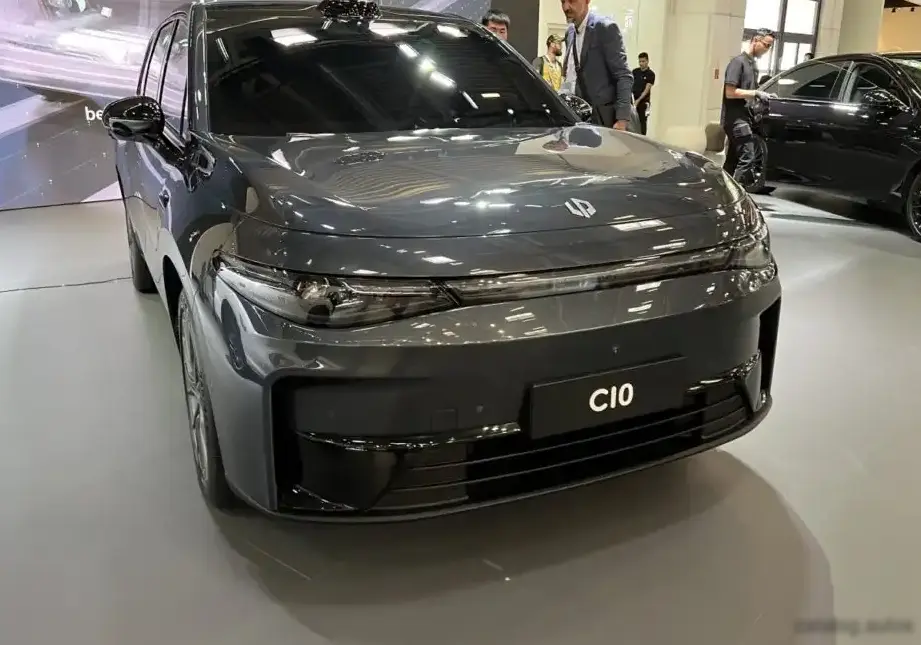
The Leapmotor C10 1.5L 28.4 kWh (231 Hp) EREV is a plug-in hybrid electric vehicle (PHEV) SUV introduced by the Chinese manufacturer Leapmotor in March 2024. Positioned as a technologically advanced and efficient option within the rapidly growing EV market, the C10 represents Leapmotor’s entry into the mid-size SUV segment. It utilizes an extended-range electric vehicle (EREV) configuration, prioritizing electric driving with a gasoline engine serving as a generator to extend range. The C10 is designed for the Chinese domestic market, but its technology and approach reflect global trends in electrification and sustainable transportation.
Powertrain & Engine Architecture
The Leapmotor C10 employs a series hybrid powertrain. The core of the system is a 1.5-liter inline-four cylinder gasoline engine, designated H15R, producing 95 horsepower. This engine doesn’t directly power the wheels; instead, it functions solely as a generator to recharge the 28.4 kWh lithium iron phosphate (LiFePO4) battery pack. The electric motor, a synchronous motor located on the rear axle, delivers 231 horsepower and 320 Nm (236 lb-ft) of torque. This configuration allows for a rear-wheel-drive layout. The single-speed automatic transmission simplifies the drivetrain, focusing on efficient power delivery from the electric motor. The use of LiFePO4 chemistry for the battery pack prioritizes safety and longevity over energy density, a common trade-off in EREV applications.
Driving Characteristics
The C10’s driving experience is heavily biased towards electric operation. Under normal driving conditions, the vehicle operates solely on electric power, providing near-silent acceleration and a responsive feel. The rear-wheel-drive configuration contributes to balanced handling. The single-speed transmission ensures smooth, linear acceleration, although it lacks the gear changes found in traditional automatic transmissions. When the battery depletes, the 1.5L engine seamlessly kicks in to generate electricity, extending the range. While the engine’s operation is noticeable, it’s relatively subdued. The 0-60 mph time of 7.3 seconds is respectable for a vehicle in this class, and the 7.68 second 0-100 km/h time reflects a similar level of performance. Compared to potential higher-output versions (if offered), this configuration prioritizes efficiency and a more relaxed driving experience.
Equipment & Trim Levels
Specific trim levels and standard equipment for the C10 vary depending on the market and optional packages. Generally, the C10 is well-equipped, featuring a large touchscreen infotainment system, digital instrument cluster, and a suite of advanced driver-assistance systems (ADAS). Interior upholstery typically consists of leatherette or fabric, with higher trims offering genuine leather options. Standard features include automatic climate control, power-adjustable seats, and a panoramic sunroof. Optional extras may include premium audio systems, ventilated seats, and enhanced ADAS features like adaptive cruise control and lane-keeping assist.
Chassis & Braking
The Leapmotor C10 utilizes an independent McPherson strut suspension in the front and an independent multi-link suspension in the rear, providing a comfortable ride and stable handling. Ventilated disc brakes are employed on all four wheels, ensuring adequate stopping power. The vehicle is equipped with an anti-lock braking system (ABS) as standard. The relatively heavy curb weight of 1925 kg (4243.9 lbs) necessitates a robust suspension and braking system. Steering is provided by an electric power steering rack and pinion system, offering precise and responsive control.
Market Reception & Comparison
As a relatively new entrant to the market, the Leapmotor C10’s reception is still developing. Early reviews highlight its competitive pricing, spacious interior, and advanced technology. The EREV configuration is seen as a practical solution for consumers concerned about range anxiety, offering the flexibility of electric driving with the reassurance of a gasoline engine backup. Compared to fully electric SUVs in the same price range, the C10 offers a longer overall range. However, it lacks the zero-emission benefits of a pure EV. Fuel economy is rated at 5.10 l/100 km (46.1 US mpg), which is competitive for a PHEV of its size. Reliability data is currently limited due to the vehicle’s recent launch.
Legacy
The long-term reliability of the Leapmotor C10’s powertrain remains to be seen. The combination of a relatively simple 1.5L engine acting as a generator and a robust LiFePO4 battery pack suggests a potentially durable system. The electric motor, being the primary source of propulsion, will be a key component to monitor. In the used car market, the C10’s value will likely depend on battery health and the overall condition of the vehicle. Its innovative EREV configuration and focus on technology position it as a significant step in Leapmotor’s development and a potential contender in the evolving landscape of electric vehicles.
