
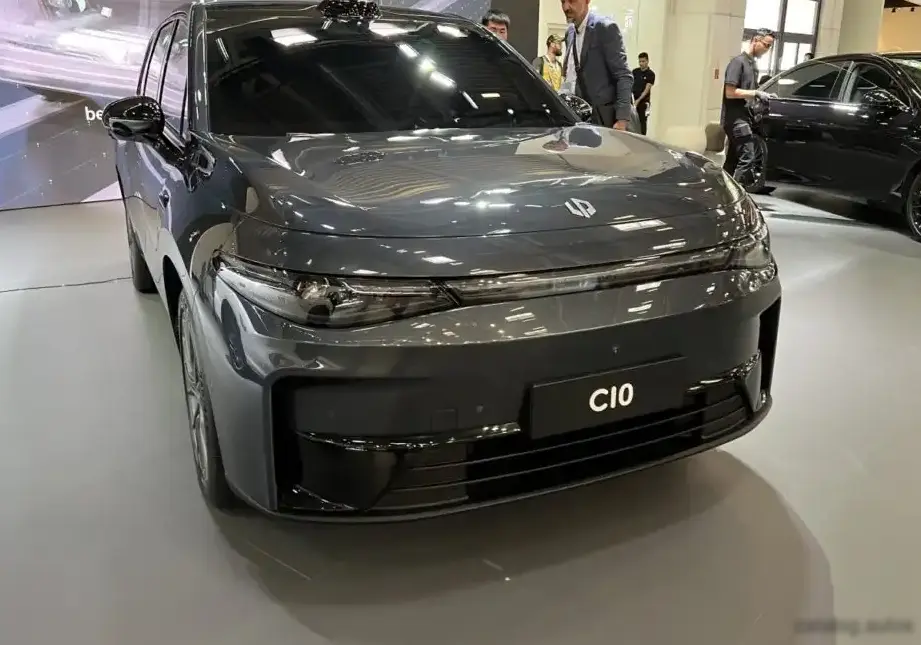
The Leapmotor C10, introduced in October 2024, represents a significant entry into the increasingly competitive all-electric SUV market. Positioned as a mid-range offering within Leapmotor’s expanding lineup, the C10 aims to deliver a balance of range, performance, and technology at a competitive price point. This specific variant features a 69.9 kWh battery pack paired with a single rear-mounted electric motor producing 218 horsepower. The C10 is designed to appeal to consumers seeking a practical and efficient electric vehicle for daily commuting and longer journeys.
Technical Specifications
| Brand | Leapmotor |
| Model | C10 |
| Generation | C10 |
| Type (Engine) | 69.9 kWh (218 Hp) BEV |
| Start of production | October, 2024 |
| Powertrain Architecture | BEV (Electric Vehicle) |
| Body type | SUV |
| Seats | 5 |
| Doors | 5 |
| Fuel Type | Electricity |
| Acceleration 0 – 100 km/h | 7.5 sec |
| Acceleration 0 – 62 mph | 7.5 sec |
| Acceleration 0 – 60 mph | 7.1 sec |
| Maximum speed | 170 km/h (105.63 mph) |
| Weight-to-power ratio | 9.1 kg/Hp, 110.1 Hp/tonne |
| Weight-to-torque ratio | 6.2 kg/Nm, 161.6 Nm/tonne |
| Gross battery capacity | 69.9 kWh |
| Battery technology | Lithium iron phosphate (LiFePO4) |
| Battery location | Below the floor |
| All-electric range (WLTP) | 424 km (263.46 mi) |
| Average Energy consumption (WLTP) | 18.8 kWh/100 km (30.26 kWh/100 mi) |
| MPGe | 111 |
| km/kWh | 5.3 |
| mi/kWh | 3.3 |
| Electric motor power | 218 Hp |
| Electric motor Torque | 320 Nm (236.02 lb.-ft.) |
| Electric motor location | Rear axle, Transverse |
| Electric motor type | Synchronous |
| System power | 218 Hp |
| System torque | 320 Nm (236.02 lb.-ft.) |
| Kerb Weight | 1980 kg (4365.15 lbs.) |
| Max. weight | 2460 kg (5423.37 lbs.) |
| Max load | 480 kg (1058.22 lbs.) |
| Trunk (boot) space – minimum | 435 l (15.36 cu. ft.) |
| Trunk (boot) space – maximum | 1410 l (49.79 cu. ft.) |
| Length | 4739 mm (186.57 in.) |
| Width | 1900 mm (74.8 in.) |
| Height | 1680 mm (66.14 in.) |
| Wheelbase | 2825 mm (111.22 in.) |
| Ride height (ground clearance) | 180 mm (7.09 in.) |
| Drivetrain Architecture | One electric motor drives the rear wheels. |
| Drive wheel | Rear wheel drive |
| Number of gears and type of gearbox | 1 gears, automatic transmission |
| Front suspension | Independent type McPherson |
| Rear suspension | Independent multi-link suspension |
| Front brakes | Ventilated discs |
| Rear brakes | Ventilated discs |
| Assisting systems | ABS (Anti-lock braking system) |
| Steering type | Steering rack and pinion |
| Power steering | Electric Steering |
| Front wheel tires | 235/55 R18 |
| Rear wheel tires | 245/45 R20 |
| Front wheel rims | 18 |
| Rear wheel rims | 20 |
Powertrain & Engine Architecture
The Leapmotor C10 utilizes a single, rear-mounted synchronous electric motor. This configuration contributes to a rear-wheel-drive layout, which some drivers prefer for its handling characteristics. The motor produces 218 horsepower and 320 Nm (236 lb-ft) of torque, providing adequate acceleration for everyday driving. The 69.9 kWh lithium iron phosphate (LiFePO4) battery pack is positioned under the vehicle floor, contributing to a lower center of gravity and maximizing interior space. LiFePO4 batteries are known for their thermal stability and longer lifespan compared to some other battery chemistries, though they generally offer slightly lower energy density. The single-speed automatic transmission delivers power to the rear wheels. The vehicle’s electronic control unit manages power delivery and regenerative braking, optimizing efficiency and range.
Driving Characteristics
The C10 69.9 kWh delivers a respectable 0-60 mph time of around 7.1 seconds. While not a performance-oriented EV, this provides sufficient acceleration for merging onto highways and navigating city traffic. The rear-wheel-drive configuration offers a balanced feel, although it may require some adjustment for drivers accustomed to front-wheel-drive vehicles, particularly in slippery conditions. The single-speed transmission provides seamless acceleration, and the regenerative braking system allows for one-pedal driving in many situations, further enhancing efficiency. Compared to potential higher-performance variants of the C10 (if offered), this version prioritizes efficiency and affordability over outright speed.
Equipment & Trim Levels
Specific trim levels and standard equipment for the C10 69.9 kWh can vary depending on the market. However, generally, this variant includes features such as a large touchscreen infotainment system, digital instrument cluster, automatic climate control, and a suite of advanced driver-assistance systems (ADAS) including adaptive cruise control, lane keeping assist, and automatic emergency braking. Interior upholstery typically consists of cloth or synthetic leather, with options for upgraded materials available. Additional features like a panoramic sunroof, heated seats, and premium audio systems are often offered as optional extras.
Chassis & Braking
The Leapmotor C10 features an independent McPherson strut suspension at the front and an independent multi-link suspension at the rear. This setup aims to provide a comfortable ride and responsive handling. Ventilated disc brakes are used on all four wheels, providing adequate stopping power. The inclusion of ABS (Anti-lock Braking System) enhances safety by preventing wheel lockup during hard braking. The electric power steering system offers precise and responsive steering feel. The vehicle’s relatively low curb weight of 1980 kg (4365 lbs) contributes to its agility and efficiency.
Market Reception & Comparison
The Leapmotor C10 has been generally well-received in the Chinese market, where it competes with other domestically produced electric SUVs. Critics have praised its spacious interior, competitive range, and advanced technology features. The 69.9 kWh variant offers a good balance of price and performance, making it an attractive option for budget-conscious buyers. Compared to other trims, this version provides a more accessible entry point into the C10 lineup, sacrificing some performance for improved efficiency and affordability. Its energy consumption of 18.8 kWh/100km is competitive within its class.
Legacy
As a relatively new model, the long-term reliability of the Leapmotor C10 is still being established. However, the use of a LiFePO4 battery pack suggests good longevity and thermal stability. The simplicity of the electric powertrain, with fewer moving parts than a traditional internal combustion engine, also contributes to potentially lower maintenance costs. In the used car market, the C10 is expected to hold its value reasonably well, particularly as demand for electric vehicles continues to grow. Its position as an early adopter of advanced technology and a competitive price point should ensure its continued relevance in the years to come.
