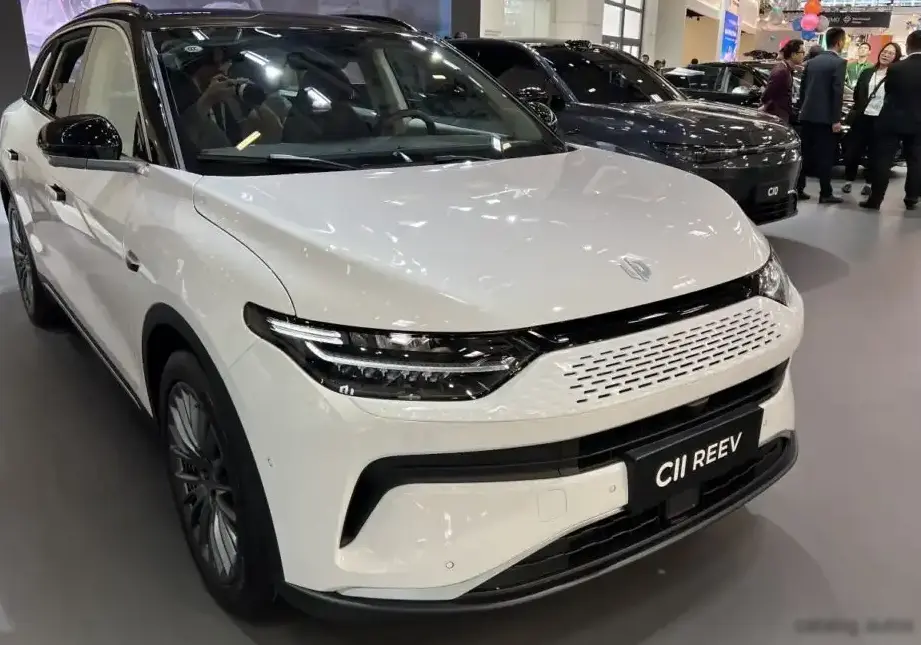
The Leapmotor C11, specifically the 69.2 kWh variant producing 272 horsepower, represents a significant entry into the burgeoning electric SUV market. Introduced in December 2020 and produced through July 2025, the C11 aimed to provide a compelling blend of range, performance, and technology at a competitive price point, primarily targeting the Chinese domestic market. This model served as a key vehicle in establishing Leapmotor as a serious contender in the new energy vehicle (NEV) sector. The C11 is built on a dedicated electric vehicle platform, showcasing Leapmotor’s commitment to a fully electric future.
Technical Specifications
| Brand | Leapmotor |
| Model | C11 |
| Generation | C11 |
| Type (Engine) | 69.2 kWh (272 Hp) BEV |
| Start of production | December, 2020 |
| End of production | July, 2025 |
| Powertrain Architecture | BEV (Electric Vehicle) |
| Body type | SUV |
| Seats | 5 |
| Doors | 5 |
| Fuel Type | Electricity |
| Acceleration 0 – 100 km/h | 7.9 sec |
| Acceleration 0 – 62 mph | 7.9 sec |
| Acceleration 0 – 60 mph | 7.5 sec |
| Maximum speed | 170 km/h (105.63 mph) |
| Gross battery capacity | 69.2 kWh |
| Battery technology | Lithium iron phosphate (LiFePO4) |
| Battery location | Below the floor |
| All-electric range (CLTC) | 502 km (311.93 mi) |
| Electric motor power | 272 Hp |
| Electric motor Torque | 360 Nm (265.52 lb.-ft.) |
| Electric motor location | Rear axle, Transverse |
| Electric motor type | Synchronous |
| System power | 272 Hp |
| System torque | 360 Nm (265.52 lb.-ft.) |
| Trunk (boot) space – minimum | 375 l (13.24 cu. ft.) |
| Trunk (boot) space – maximum | 840 l (29.66 cu. ft.) |
| Length | 4750 mm (187.01 in.) |
| Width | 1905 mm (75 in.) |
| Height | 1675 mm (65.94 in.) |
| Wheelbase | 2930 mm (115.35 in.) |
| Ride height (ground clearance) | 180 mm (7.09 in.) |
| Drivetrain Architecture | One electric motor drives the rear wheels. |
| Drive wheel | Rear wheel drive |
| Number of gears and type of gearbox | 1 gears, automatic transmission |
| Front suspension | Double wishbone |
| Rear suspension | Independent multi-link suspension |
| Front brakes | Ventilated discs |
| Rear brakes | Ventilated discs |
| Assisting systems | ABS (Anti-lock braking system) |
| Steering type | Steering rack and pinion |
| Power steering | Electric Steering |
| Tires size | 235/60 R18 |
| Wheel rims size | 18 |
Powertrain & Engine Architecture
The Leapmotor C11 69.2 kWh is powered by a single, rear-mounted synchronous electric motor. This motor delivers a peak output of 272 horsepower and 360 Nm (265.52 lb.-ft.) of torque. The energy is supplied by a 69.2 kWh Lithium Iron Phosphate (LiFePO4) battery pack, strategically positioned under the vehicle floor to optimize weight distribution and lower the center of gravity. LiFePO4 chemistry is favored for its inherent thermal stability and longer cycle life, though it typically offers slightly lower energy density compared to Nickel Manganese Cobalt (NMC) batteries. The vehicle utilizes a single-speed automatic transmission, common in most electric vehicles, providing seamless acceleration. The electronic control unit (ECU) manages power delivery and regenerative braking, maximizing efficiency.
Driving Characteristics
The C11 69.2 kWh offers brisk acceleration, achieving 0-60 mph in approximately 7.5 seconds. While not a performance-oriented EV, the instant torque delivery characteristic of electric motors provides a responsive driving experience. The rear-wheel-drive configuration contributes to a balanced feel, although it may require some adjustment for drivers accustomed to front-wheel-drive vehicles, particularly in low-traction conditions. The single-speed transmission ensures smooth, linear acceleration without noticeable gear changes. Compared to potential future, higher-capacity battery variants of the C11, this version prioritizes affordability over maximum range, making it suitable for urban and suburban commuting.
Equipment & Trim Levels
The C11 69.2 kWh typically came equipped with a comprehensive suite of standard features, reflecting the growing expectations for modern EVs. These included a large touchscreen infotainment system, digital instrument cluster, automatic climate control, and a range of advanced driver-assistance systems (ADAS) such as adaptive cruise control, lane keeping assist, and automatic emergency braking. Interior upholstery generally consisted of synthetic leather, with options for different color schemes. Higher trim levels offered upgrades such as heated and ventilated front seats, a panoramic sunroof, and premium audio systems. The overall interior design aimed for a minimalist and modern aesthetic.
Chassis & Braking
The C11 utilizes a double wishbone suspension setup at the front and an independent multi-link suspension at the rear, providing a comfortable and controlled ride. Ventilated disc brakes are employed on all four wheels, ensuring adequate stopping power. The electric power steering system offers precise and responsive handling. The vehicle’s relatively low center of gravity, thanks to the underfloor battery pack, contributes to its stability and cornering ability. The standard tire size is 235/60 R18, balancing ride comfort and handling performance.
Market Reception & Comparison
The Leapmotor C11 was generally well-received in the Chinese market, praised for its competitive pricing, spacious interior, and advanced technology. Critics noted its strong value proposition compared to established EV brands. The 69.2 kWh variant offered a good balance between range and affordability, making it an attractive option for budget-conscious buyers. Compared to other EVs in its class, such as the BYD Tang or NIO ES6, the C11 often undercut them in price while offering comparable features. Fuel economy, naturally, is measured in kilowatt-hours per 100 kilometers, with the C11 achieving competitive figures within its segment. Reliability data is still emerging, but early reports suggest a generally positive ownership experience.
Legacy
The Leapmotor C11 played a crucial role in establishing Leapmotor as a viable EV manufacturer. The 69.2 kWh variant, in particular, served as a gateway model, attracting a wider customer base and demonstrating the brand’s ability to deliver a compelling electric vehicle experience. While long-term reliability data is still being collected, the use of LiFePO4 battery chemistry suggests a potentially long lifespan for the battery pack. As the EV market continues to evolve, the C11 represents an important step in the democratization of electric mobility, offering a practical and affordable option for consumers seeking to transition to a zero-emission vehicle.