
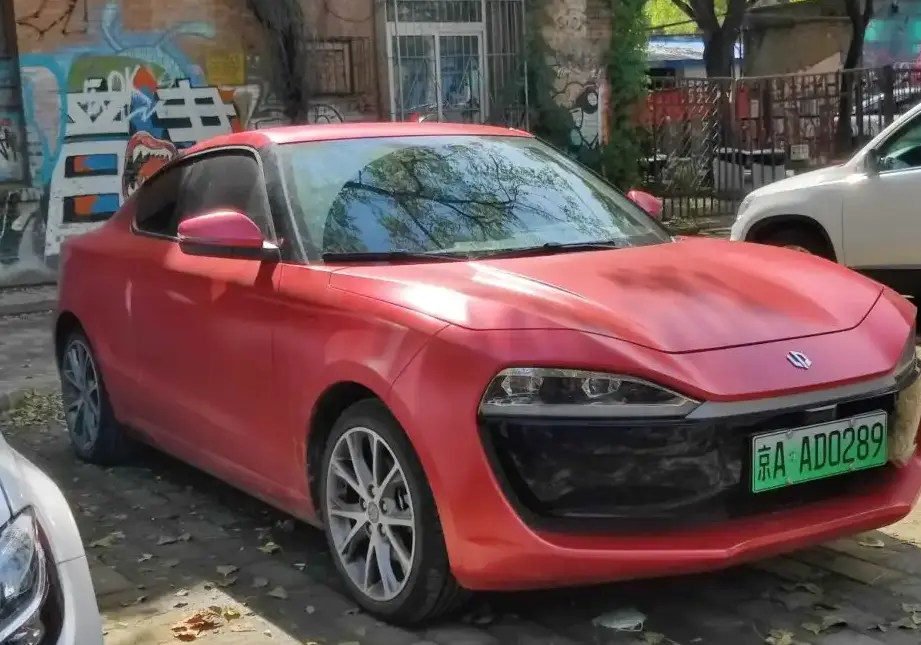
The Leapmotor S01, specifically the 48 kWh variant producing 170 horsepower, represents an early foray into the burgeoning Chinese electric vehicle market. Introduced in 2019 and remaining in production through 2021, the S01 was Leapmotor’s initial offering, designed to provide an affordable and technologically advanced electric hatchback. Positioned as an entry-level EV, it aimed to attract younger buyers and those new to electric mobility. The S01 utilized a dedicated electric vehicle platform, showcasing Leapmotor’s commitment to a fully electric future. It’s a three-door hatchback, offering seating for four passengers, and was primarily sold within the Chinese domestic market.
Technical Specifications
| Brand | Leapmotor |
| Model | S01 |
| Generation | S01 |
| Type (Engine) | 48 kWh (170 Hp) BEV |
| Start of production | 2019 |
| End of production | 2021 |
| Powertrain Architecture | BEV (Electric Vehicle) |
| Body type | Hatchback |
| Seats | 4 |
| Doors | 3 |
| Fuel Type | Electricity |
| Acceleration 0 – 100 km/h | 6.9 sec |
| Acceleration 0 – 62 mph | 6.9 sec |
| Acceleration 0 – 60 mph | 6.6 sec |
| Maximum speed | 135 km/h (83.89 mph) |
| Gross battery capacity | 48 kWh |
| Battery technology | Lithium-ion (Li-Ion) |
| Battery location | Below the floor |
| All-electric range (NEDC) | 451 km (280.24 mi) |
| Electric motor power | 170 Hp |
| Electric motor Torque | 250 Nm (184.39 lb.-ft.) |
| Electric motor location | Front axle, Transverse |
| Electric motor type | Synchronous |
| System power | 170 Hp |
| System torque | 250 Nm (184.39 lb.-ft.) |
| Trunk (boot) space – minimum | 237 l (8.37 cu. ft.) |
| Trunk (boot) space – maximum | 690 l (24.37 cu. ft.) |
| Length | 4075 mm (160.43 in.) |
| Width | 1760 mm (69.29 in.) |
| Height | 1380 mm (54.33 in.) |
| Wheelbase | 2500 mm (98.43 in.) |
| Front track | 1500 mm (59.06 in.) |
| Rear (Back) track | 1500 mm (59.06 in.) |
| Ride height (ground clearance) | 120 mm (4.72 in.) |
| Drivetrain Architecture | One electric motor drives the front wheels. |
| Drive wheel | Front wheel drive |
| Number of gears and type of gearbox | 1 gears, automatic transmission |
| Front suspension | Independent type McPherson |
| Rear suspension | Torsion |
| Front brakes | Ventilated discs |
| Rear brakes | Disc |
| Assisting systems | ABS (Anti-lock braking system) |
| Steering type | Steering rack and pinion |
| Power steering | Electric Steering |
| Tires size | 205/45 R17 |
| Wheel rims size | 17 |
Powertrain & Engine Architecture
The Leapmotor S01 48 kWh is powered by a single synchronous electric motor mounted transversely on the front axle. This motor delivers a peak output of 170 horsepower and 250 Nm (184.39 lb.-ft.) of torque. The energy is supplied by a 48 kWh lithium-ion battery pack located under the vehicle floor, contributing to a lower center of gravity and improved handling. The vehicle utilizes a single-speed automatic transmission, typical for electric vehicles, providing seamless acceleration. The battery supports standard charging protocols available in China at the time of its release, though specific charging times varied depending on the charging infrastructure used. The motor controller manages power delivery and regenerative braking, enhancing efficiency.
Driving Characteristics
The S01 48 kWh offers brisk acceleration for its class, achieving 0-60 mph in approximately 6.6 seconds. While not a performance-oriented EV, the instant torque delivery characteristic of electric motors provides a responsive driving experience. The single-speed transmission ensures smooth and linear acceleration. Compared to potential future, higher-performance variants of the S01, this version prioritizes efficiency and affordability over outright speed. The front-wheel-drive configuration provides adequate traction in most conditions, but can exhibit some torque steer under hard acceleration. The relatively low curb weight of the vehicle contributes to its agility.
Equipment & Trim Levels
The S01 48 kWh came reasonably well-equipped for its price point. Standard features included air conditioning, power windows, a basic infotainment system with a touchscreen display, and ABS. Interior upholstery was typically cloth, with a functional and minimalist dashboard design. Optional extras included a rearview camera, upgraded audio system, and various cosmetic enhancements. The trim level was relatively basic, focusing on essential features to keep the cost down. The three-door configuration limited rear passenger access compared to five-door hatchbacks.
Chassis & Braking
The S01 utilizes an independent McPherson strut suspension setup at the front, providing a comfortable ride and decent handling. The rear suspension employs a torsion beam axle, a cost-effective solution that offers adequate stability. The braking system consists of ventilated discs at the front and solid discs at the rear, coupled with an ABS system for enhanced safety. The steering is electrically assisted, providing light and precise control. The vehicle rides on 17-inch alloy wheels with 205/45 R17 tires. The relatively short wheelbase contributes to its maneuverability in urban environments.
Market Reception & Comparison
The Leapmotor S01 was generally well-received in the Chinese market as an affordable and technologically competent EV. Critics praised its range, acceleration, and modern features for its price. However, some noted the limited interior space and the three-door configuration as drawbacks. Compared to other entry-level EVs available in China at the time, the S01 offered a competitive range and performance. Its fuel economy, being an EV, was significantly better than comparable gasoline-powered vehicles. Reliability reports were limited due to the short production run, but early indications suggested a generally reliable powertrain.
Legacy
The Leapmotor S01 served as a crucial stepping stone for the company, establishing its presence in the competitive Chinese EV market. While production ended in 2021, the S01 laid the groundwork for Leapmotor’s subsequent models. On the used car market, the S01 48 kWh remains an affordable option for those seeking an entry-level electric vehicle. The longevity of the battery pack is a key consideration for potential buyers, as battery degradation can impact range over time. The powertrain, being fully electric, is generally considered reliable, with fewer moving parts than a traditional internal combustion engine. The S01 represents an early example of China’s growing electric vehicle industry and its ambition to become a global leader in EV technology.
