
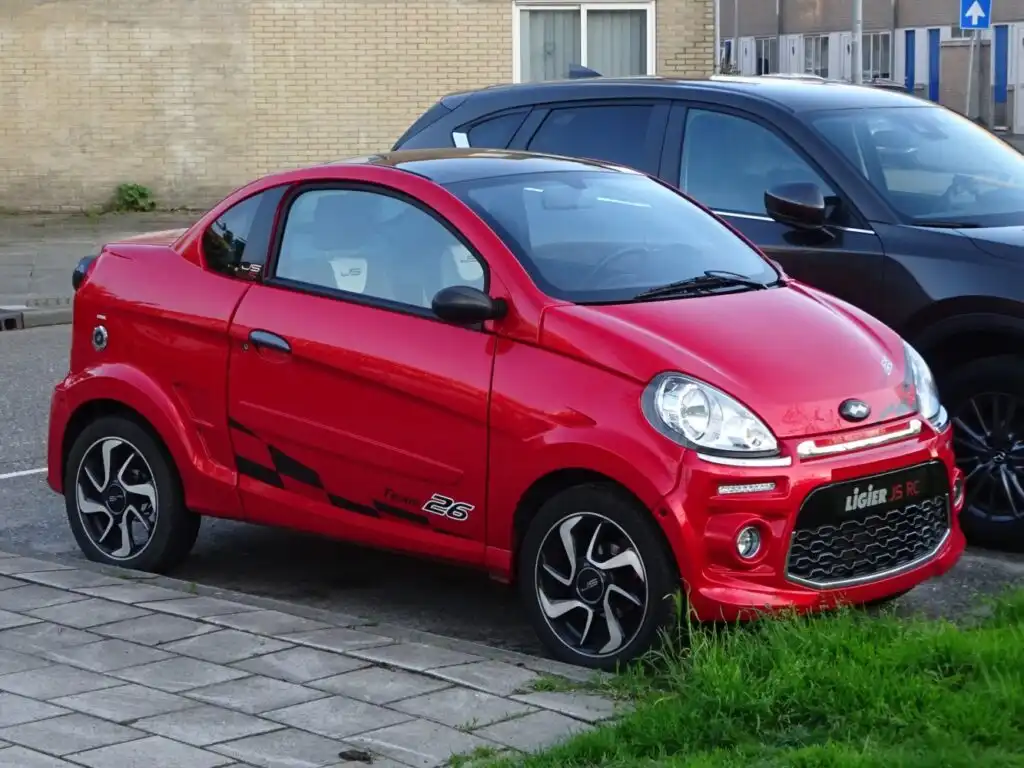
The Ligier JS RC 0.5 DCI, produced between 2012 and 2016, represents a unique segment of the automotive market – the European microcar, or voiturette. Classified as a quadricycle, the JS RC was designed to offer a cost-effective and highly fuel-efficient transportation solution, particularly within urban environments. It catered to a specific niche, offering mobility to those with limited parking options or seeking an alternative to scooters and motorcycles. The 0.5 DCI variant, equipped with a diminutive diesel engine and a continuously variable transmission (CVT), was a key offering within the JS RC lineup, positioned as the base model focused on maximum economy.
Technical Specifications
| Brand | Ligier |
| Model | JS RC |
| Generation | JS RC |
| Type (Engine) | 0.5 DCI (5 Hp) CVT |
| Start of production | 2012 |
| End of production | 2016 |
| Powertrain Architecture | Internal Combustion engine |
| Body type | Coupe, Quadricycle |
| Seats | 2 |
| Doors | 2 |
| Fuel consumption (combined) | 2.5 l/100 km (94.1 US mpg, 113 UK mpg, 40 km/l) |
| CO2 emissions | 65 g/km |
| Fuel Type | Diesel |
| Maximum speed | 45 km/h (27.96 mph) |
| Weight-to-power ratio | 69.8 kg/Hp, 14.3 Hp/tonne |
| Weight-to-torque ratio | 13.4 kg/Nm, 74.5 Nm/tonne |
| Power | 5 Hp @ 3200 rpm |
| Power per litre | 10.4 Hp/l |
| Torque | 26 Nm @ 1400 rpm (19.18 lb.-ft. @ 1400 rpm) |
| Maximum engine speed | 3400 rpm |
| Engine layout | Front, Transverse |
| Engine Model/Code | LDW492DCI |
| Engine displacement | 480 cm3 (29.29 cu. in.) |
| Number of cylinders | 2 |
| Engine configuration | Inline |
| Cylinder Bore | 69 mm (2.72 in.) |
| Piston Stroke | 64 mm (2.52 in.) |
| Number of valves per cylinder | 2 |
| Fuel injection system | Diesel Commonrail |
| Engine aspiration | Naturally aspirated engine |
| Valvetrain | SOHC |
| Engine oil capacity | 2.1 l (2.22 US qt | 1.85 UK qt) |
| Coolant | 3.1 l (3.28 US qt | 2.73 UK qt) |
| Kerb Weight | 349 kg (769.41 lbs.) |
| Max. weight | 675 kg (1488.12 lbs.) |
| Max load | 326 kg (718.71 lbs.) |
| Fuel tank capacity | 17.5 l (4.62 US gal | 3.85 UK gal) |
| Length | 3030 mm (119.29 in.) |
| Width | 1505 mm (59.25 in.) |
| Width including mirrors | 1673 mm (65.87 in.) |
| Height | 1465 mm (57.68 in.) |
| Wheelbase | 2020 mm (79.53 in.) |
| Front track | 1294 mm (50.94 in.) |
| Rear track | 1307 mm (51.46 in.) |
| Minimum turning circle | 9.2 m (30.18 ft.) |
| Drivetrain Architecture | The Internal combustion engine (ICE) drives the front wheels of the vehicle. |
| Drive wheel | Front wheel drive |
| Number of gears and type of gearbox | automatic transmission CVT |
| Front suspension | Independent type McPherson |
| Rear suspension | Independent coil spring |
| Front brakes | Disc, 220 mm |
| Rear brakes | Disc, 180 mm |
| Steering type | Steering rack and pinion |
| Tires size | 155/65 R14; 155/60 R15 |
| Wheel rims size | 14; 15 |
INTRODUCTION
The Ligier JS RC 0.5 DCI is a two-seat, two-door microcar manufactured by Ligier, a French automotive company specializing in these types of vehicles. Introduced in 2012 and continuing through 2016, it falls under the European quadricycle regulations, meaning it has specific limitations in terms of power, weight, and speed. The JS RC, in general, was a successor to earlier Ligier models and aimed to provide a modern, practical, and economical urban mobility solution. The 0.5 DCI variant, with its small diesel engine and CVT, was the entry-level model, prioritizing fuel efficiency and affordability over outright performance.
Powertrain & Engine Architecture
At the heart of the JS RC 0.5 DCI lies the LDW492DCI engine, a 480cc inline two-cylinder diesel engine. This engine, while incredibly small, utilizes a diesel commonrail fuel injection system, a technology that allows for precise fuel delivery and improved combustion efficiency. The engine features a single overhead camshaft (SOHC) valvetrain, operating two valves per cylinder. Despite its modest output of 5 horsepower at 3200 rpm and 26 Nm (19.18 lb-ft) of torque at 1400 rpm, the engine’s torque delivery is relatively flat, making it suitable for urban driving. The engine is transversely mounted at the front of the vehicle.
The engine is paired with a continuously variable transmission (CVT). This type of transmission lacks fixed gear ratios, instead using a belt or chain system to provide a seamless range of ratios. In the JS RC 0.5 DCI, the CVT is tuned for fuel economy, prioritizing smooth acceleration and maintaining the engine within its optimal operating range. The CVT contributes significantly to the vehicle’s fuel efficiency, but it also results in a different driving experience compared to traditional automatic or manual transmissions.
Driving Characteristics
The driving experience in the JS RC 0.5 DCI is dictated by its limited power output. Acceleration is slow, and the vehicle is best suited for city driving at lower speeds. The CVT transmission contributes to a smooth, albeit somewhat uninspiring, driving experience. The lack of distinct gear changes can feel unusual to drivers accustomed to traditional transmissions. The vehicle’s light weight (349 kg / 769.41 lbs) helps to mitigate the low horsepower, providing adequate performance for navigating urban traffic. However, attempting to accelerate quickly or climb steep hills will reveal the engine’s limitations. Compared to potential higher-powered variants (which were not widely available), the 0.5 DCI prioritizes economy over performance.
Equipment & Trim Levels
As the base model, the JS RC 0.5 DCI was typically equipped with basic features. Standard equipment generally included cloth upholstery, basic instrumentation, and a heater. Power steering was often included, but air conditioning and more advanced infotainment systems were typically optional extras. The interior was functional and utilitarian, designed for practicality rather than luxury. Optional extras could include upgraded audio systems, different interior trim colors, and alloy wheels. The overall trim level was deliberately kept simple to maintain affordability.
Chassis & Braking
The JS RC 0.5 DCI utilizes a lightweight chassis and suspension system. The front suspension consists of independent McPherson struts, while the rear suspension employs an independent coil spring setup. This configuration provides a reasonable level of ride comfort, considering the vehicle’s size and weight. The braking system features disc brakes on all four wheels – 220mm at the front and 180mm at the rear. The relatively small brakes are adequate for the vehicle’s limited speed and weight. The steering system is a rack and pinion type, providing responsive steering feel.
Market Reception & Comparison
The Ligier JS RC 0.5 DCI was generally well-received within its target market. Critics praised its exceptional fuel economy and low running costs. However, the limited performance and basic interior were often noted as drawbacks. Compared to other microcars available in Europe, the JS RC 0.5 DCI offered a competitive combination of price, fuel efficiency, and practicality. It was often compared to similar vehicles from Aixam and Microcar. The 0.5 DCI’s diesel engine offered better fuel economy than gasoline-powered alternatives, but it also came with a slightly higher purchase price.
Legacy
The Ligier JS RC 0.5 DCI, and the JS RC model line in general, remains a popular choice in the used microcar market. The LDW492DCI engine, while simple, has proven to be relatively reliable with proper maintenance. The availability of spare parts is generally good, and the vehicle’s straightforward design makes it relatively easy to repair. The JS RC 0.5 DCI continues to appeal to those seeking an affordable, fuel-efficient, and easy-to-park urban transportation solution. Its enduring popularity is a testament to its practicality and the niche it successfully filled in the European automotive landscape.
