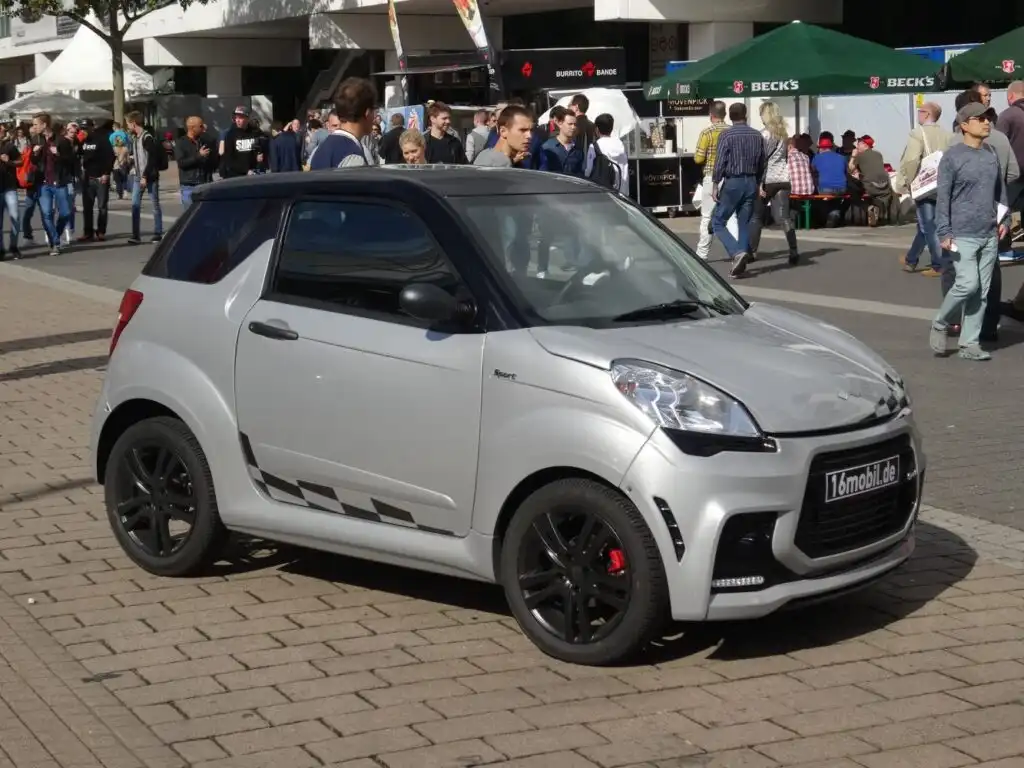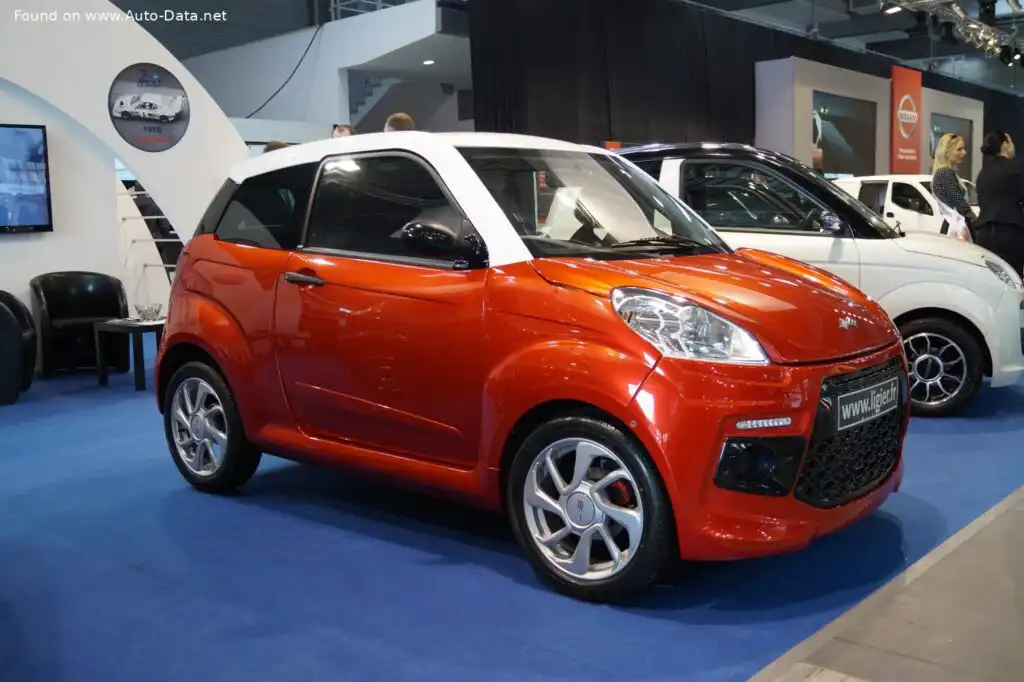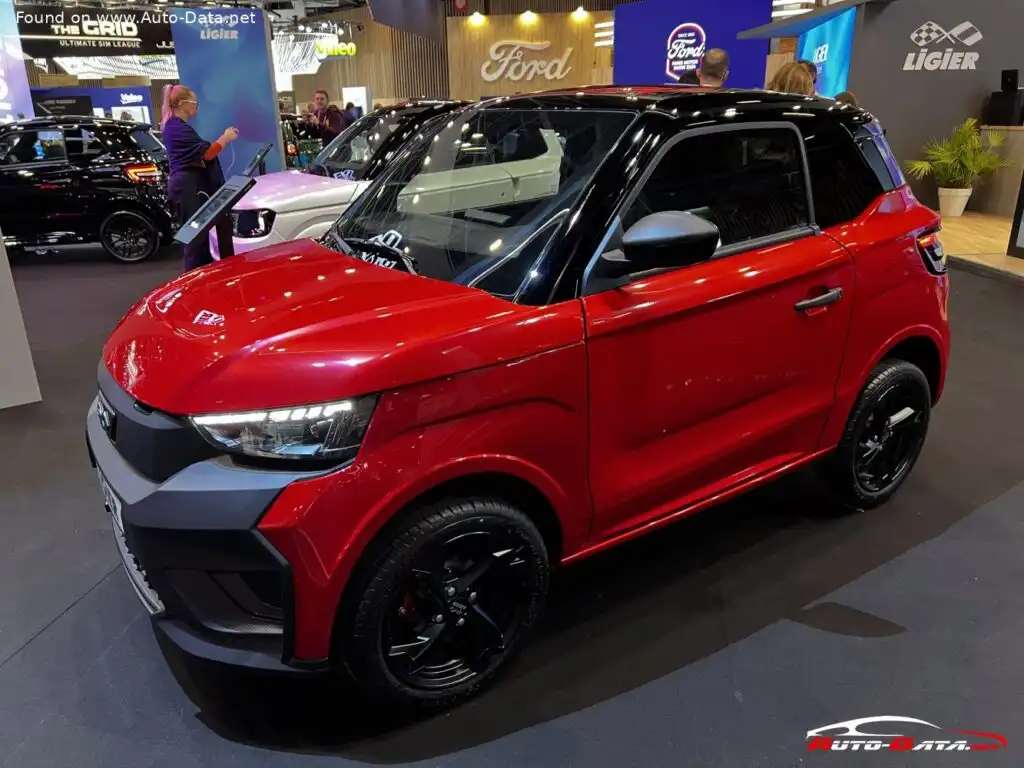
The Ligier JS50 I (facelift 2017) 0.5 DCI (8 hp) CVT represents a unique segment of the automotive market – the European quadricycle. Produced from 2019 to 2024, this vehicle was designed to bridge the gap between motorcycles and traditional automobiles, offering a weather-protected, albeit low-performance, transportation solution primarily for urban environments. The JS50 I facelift built upon the earlier JS50 platform (introduced in 2014), refining the styling and incorporating updated features while maintaining the core concept of an accessible and economical personal vehicle. It falls under the heavy quadricycle category, meaning it adheres to less stringent safety and emissions regulations than full-fledged cars, but offers more protection than a scooter or motorcycle.
Technical Specifications
| Brand | Ligier |
| Model | JS50 |
| Generation | JS50 I (facelift 2017) |
| Type (Engine) | 0.5 DCI (8 hp) CVT |
| Start of production | 2019 |
| End of production | 2024 |
| Powertrain Architecture | Internal Combustion engine |
| Body type | Quadricycle |
| Seats | 2 |
| Doors | 3 |
| Fuel consumption (combined) | 2.5 l/100 km (94.1 US mpg, 113 UK mpg, 40 km/l) |
| CO2 emissions | 65 g/km |
| Fuel Type | Diesel |
| Maximum speed | 45 km/h (27.96 mph) |
| Emission standard | Euro 5 |
| Weight-to-power ratio | 43.1 kg/hp, 23.2 hp/tonne |
| Weight-to-torque ratio | 13.3 kg/Nm, 75.4 Nm/tonne |
| Power | 8 hp @ 3200 rpm |
| Power per litre | 16.7 hp/l |
| Torque | 26 Nm @ 1400 rpm (19.18 lb.-ft. @ 1400 rpm) |
| Maximum engine speed | 3400 rpm |
| Engine layout | Front, Transverse |
| Engine Model/Code | LDW492DCI |
| Engine displacement | 480 cm3 (29.29 cu. in.) |
| Number of cylinders | 2 |
| Engine configuration | Inline |
| Cylinder Bore | 69 mm (2.72 in.) |
| Piston Stroke | 64 mm (2.52 in.) |
| Number of valves per cylinder | 2 |
| Fuel injection system | Diesel Commonrail |
| Engine aspiration | Naturally aspirated |
| Valvetrain | SOHC |
| Engine oil capacity | 2.1 l (2.22 US qt, 1.85 UK qt) |
| Coolant capacity | 3.1 l (3.28 US qt, 2.73 UK qt) |
| Kerb Weight | 345 kg (760.59 lbs.) |
| Fuel tank capacity | 17.5 l (4.62 US gal, 3.85 UK gal) |
| Length | 2850 mm (112.2 in.) |
| Width | 1500 mm (59.06 in.) |
| Height | 1466 mm (57.72 in.) |
| Minimum turning circle | 8.7 m (28.54 ft.) |
| Drivetrain Architecture | Front wheel drive, Internal Combustion Engine |
| Number of gears and type of gearbox | automatic transmission CVT |
| Front suspension | Independent type McPherson |
| Rear suspension | Independent coil spring |
| Front brakes | Disc, 220 mm |
| Rear brakes | Disc, 180 mm |
| Steering type | Steering rack and pinion |
| Tires size | 155/60 R15; 165/50 R16 |
| Wheel rims size | 15; 16 |
Powertrain & Engine Architecture
The heart of the JS50 I 0.5 DCI is the LDW492DCI, a compact 480cc two-cylinder diesel engine. This engine, sourced from a specialized manufacturer, is a naturally aspirated unit employing a diesel commonrail fuel injection system. The single overhead camshaft (SOHC) valvetrain operates two valves per cylinder. Despite its small displacement, the engine utilizes direct injection to maximize efficiency and torque output. The engine’s modest 8 horsepower is delivered at 3200 rpm, with a peak torque of 26 Nm (19.18 lb-ft) available from just 1400 rpm. This low-end torque is crucial for providing adequate acceleration from a standstill, given the vehicle’s weight and intended use. The engine is paired with a continuously variable transmission (CVT), which is designed to keep the engine operating within its optimal power band for improved fuel economy and smooth acceleration. The CVT lacks discrete gear changes, offering a seamless power delivery.
Driving Characteristics
The driving experience in the JS50 I 0.5 DCI is best described as utilitarian. Acceleration is slow, and the top speed is limited to 45 km/h (28 mph) to comply with quadricycle regulations. The CVT transmission contributes to a smooth, if somewhat uninspiring, driving experience. The focus is on ease of use and fuel efficiency rather than performance. Compared to potential higher-powered variants (which were not commonly offered), this 8 hp version prioritizes affordability and accessibility. The low power output means that hill climbs require careful planning, and overtaking maneuvers should be avoided. The CVT’s programming is geared towards maximizing fuel economy, which can sometimes result in a slight delay in response when accelerating.
Equipment & Trim Levels
The JS50 I 0.5 DCI was typically offered with a relatively basic level of equipment, reflecting its position as an entry-level transportation option. Standard features generally included basic instrumentation, manually adjustable seats, and a heating system. Safety equipment typically included seatbelts and a basic braking system. Optional extras could include upgraded audio systems, alloy wheels, and different interior trim options. The interior materials were generally durable and practical, prioritizing functionality over luxury. The 3-door body style provides relatively easy access to the cabin, although space is limited due to the vehicle’s compact dimensions.
Chassis & Braking
The JS50 I utilizes a lightweight chassis construction to minimize weight and maximize efficiency. The front suspension employs an independent McPherson strut setup, while the rear suspension features an independent coil spring arrangement. This suspension configuration aims to provide a reasonable level of ride comfort, considering the vehicle’s limitations. The braking system consists of disc brakes on all four wheels – 220mm at the front and 180mm at the rear. The steering is rack and pinion, providing relatively precise steering feel. The tires are typically sized 155/60 R15 or 165/50 R16, depending on the trim level.
Market Reception & Comparison
The Ligier JS50 I 0.5 DCI was primarily marketed towards young drivers, urban commuters, and individuals seeking an affordable and economical transportation solution. Critics generally praised the vehicle’s fuel efficiency and low running costs, but noted its limited performance and basic equipment levels. Compared to other quadricycles and small city cars, the JS50 I offered a compelling value proposition for those prioritizing practicality and affordability. Its fuel economy of 2.5 l/100 km (94.1 US mpg) was a significant selling point, particularly in regions with high fuel prices. Reliability was generally considered good, although maintenance costs could be higher due to the specialized nature of the diesel engine and CVT transmission.
Legacy
The Ligier JS50 I 0.5 DCI, and the JS50 platform as a whole, has established itself as a popular choice in the European quadricycle market. The 0.5 DCI variant, while not the most powerful option, remains a common sight on city streets. On the used car market, these vehicles are typically offered at affordable prices, making them an attractive option for budget-conscious buyers. The longevity of the LDW492DCI engine, when properly maintained, is generally good. However, potential buyers should be aware of the potential for higher maintenance costs associated with the diesel engine and CVT transmission. The JS50 continues to represent a niche but important segment of the automotive landscape, providing a unique transportation solution for specific needs and preferences.