
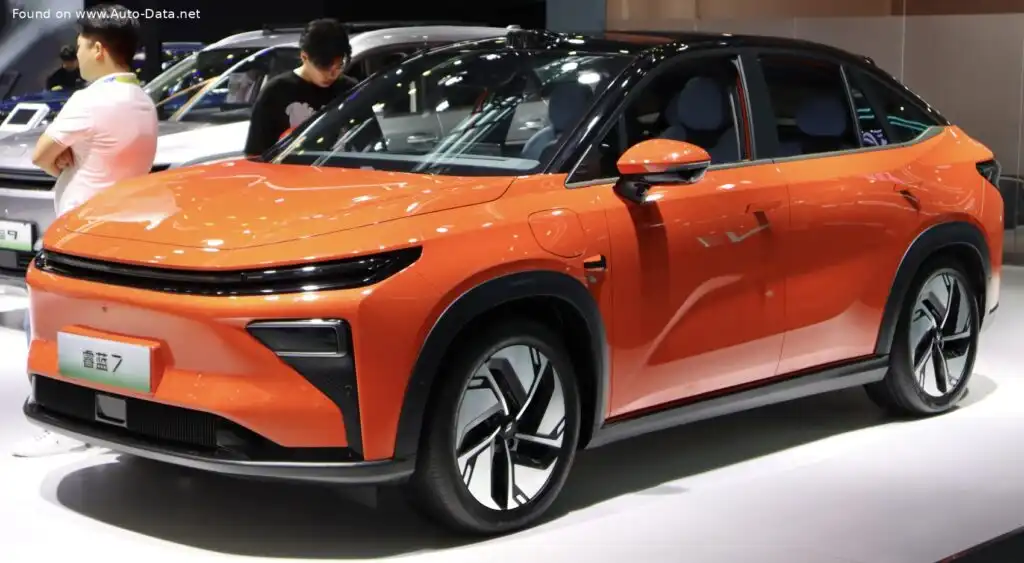
The Livan 7 50.4 kWh (163 Hp) Electric is a battery electric vehicle (BEV) introduced in 2023 by the Chinese automaker Livan. Positioned as a mainstream electric SUV/coupe, it represents Livan’s entry into the rapidly expanding EV market. The vehicle is characterized by its focus on practicality, affordability, and a respectable range for its price point. It’s designed to appeal to urban commuters and families seeking a zero-emission vehicle without compromising on space or usability. The Livan 7 is built upon a dedicated EV platform, allowing for optimized packaging of the battery pack and electric drivetrain.
Technical Specifications
| Brand | Livan |
| Model | 7 |
| Generation | 7 |
| Type (Engine) | 50.4 kWh (163 Hp) Electric |
| Start of production | 2023 |
| Powertrain Architecture | BEV (Electric Vehicle) |
| Body type | Coupe, SUV |
| Seats | 5 |
| Doors | 5 |
| Fuel Type | Electricity |
| Maximum speed | 150 km/h (93.21 mph) |
| Gross battery capacity | 50.4 kWh |
| Battery technology | Lithium iron phosphate (LiFePO4) |
| Battery location | Below the floor |
| All-electric range (CLTC) | 450 km (279.62 mi) |
| Electric motor power | 163 Hp |
| Electric motor Torque | 240 Nm (177.01 lb.-ft.) |
| Electric motor location | Front axle, Transverse |
| Electric motor type | Synchronous |
| System power | 163 Hp |
| System torque | 240 Nm (177.01 lb.-ft.) |
| Trunk (boot) space – minimum | 402 l (14.2 cu. ft.) |
| Length | 4690 mm (184.65 in.) |
| Width | 1892 mm (74.49 in.) |
| Height | 1650 mm (64.96 in.) |
| Wheelbase | 2775 mm (109.25 in.) |
| Drag coefficient (Cd) | 0.238 |
| Minimum turning circle (turning diameter) | 10.8 m (35.43 ft.) |
| Drivetrain Architecture | One electric motor drives the front wheels. |
| Drive wheel | Front wheel drive |
| Number of gears and type of gearbox | 1 gears, automatic transmission |
| Front suspension | Independent type McPherson |
| Rear suspension | Torsion |
| Assisting systems | ABS (Anti-lock braking system) |
| Steering type | Steering rack and pinion |
| Power steering | Electric Steering |
| Tires size | 215/60 R17; 215/55 R18 |
| Wheel rims size | 17; 18 |
Powertrain & Engine Architecture
The Livan 7 utilizes a single synchronous electric motor mounted on the front axle. This motor produces 163 horsepower and 240 Nm (177.01 lb.-ft.) of torque. The powertrain is powered by a 50.4 kWh Lithium Iron Phosphate (LiFePO4) battery pack, positioned under the vehicle floor to optimize space and lower the center of gravity. LiFePO4 batteries are known for their thermal stability and longer lifespan compared to traditional Nickel Manganese Cobalt (NMC) batteries, although they generally offer slightly lower energy density. The vehicle employs a single-speed automatic transmission, typical for electric vehicles, delivering seamless acceleration. The battery supports fast charging capabilities, allowing for a significant range boost in a relatively short period, though specific charging times depend on the charging infrastructure used.
Driving Characteristics
The Livan 7 50.4 kWh offers a smooth and quiet driving experience, characteristic of electric vehicles. With 163 hp, acceleration is adequate for urban and highway driving, though it won’t provide the brisk performance of higher-powered EVs. The single-speed transmission ensures linear power delivery, and the front-wheel-drive configuration provides predictable handling. The relatively low center of gravity, thanks to the underfloor battery pack, contributes to stable cornering. The steering is electrically assisted, offering a light and responsive feel. While not a performance-oriented vehicle, the Livan 7 provides a comfortable and efficient driving experience for everyday use.
Equipment & Trim Levels
The Livan 7 is generally offered with a fairly comprehensive set of standard features, focusing on comfort and convenience. These typically include air conditioning, power windows, a touchscreen infotainment system with smartphone connectivity (likely Apple CarPlay and Android Auto), and basic safety features like ABS and airbags. Higher trim levels may add features such as a larger touchscreen, upgraded interior materials, a panoramic sunroof, and advanced driver-assistance systems (ADAS) like adaptive cruise control and lane-keeping assist. Interior upholstery is typically cloth in the base models, with leatherette options available on higher trims. The dashboard layout is modern and minimalist, emphasizing the vehicle’s technological focus.
Chassis & Braking
The Livan 7 utilizes a McPherson strut independent suspension system at the front, providing a comfortable ride and responsive handling. The rear suspension employs a torsion beam setup, which is a cost-effective solution for compact SUVs. The braking system consists of disc brakes at the front and drum brakes at the rear, a common configuration for vehicles in this price segment. Electric steering provides a light and precise steering feel. The vehicle is equipped with ABS (Anti-lock Braking System) as standard, enhancing safety during emergency braking situations. Tire sizes vary depending on the trim level, with 17-inch and 18-inch alloy wheels being offered.
Market Reception & Comparison
The Livan 7 has been positioned as a competitive offering in the Chinese EV market, targeting consumers seeking an affordable and practical electric SUV. Reviews have generally praised the vehicle’s spacious interior, comfortable ride, and respectable range for its price point. However, some critics have noted that the interior materials could be of higher quality and that the performance is not as exhilarating as some of its rivals. Compared to other EVs in its class, the Livan 7 offers a good balance of features, range, and affordability. Its LiFePO4 battery pack is seen as a positive attribute, offering enhanced safety and longevity.
Legacy
As a relatively new entrant to the EV market, the long-term reliability of the Livan 7 remains to be fully established. However, the use of a LiFePO4 battery pack suggests a potentially longer lifespan compared to vehicles using NMC batteries. The vehicle’s simple electric powertrain should also contribute to relatively low maintenance costs. In the used car market, the Livan 7 is expected to appeal to budget-conscious buyers seeking a practical and efficient electric vehicle. Its success will depend on factors such as battery health, charging infrastructure availability, and overall consumer acceptance of the Livan brand.
