
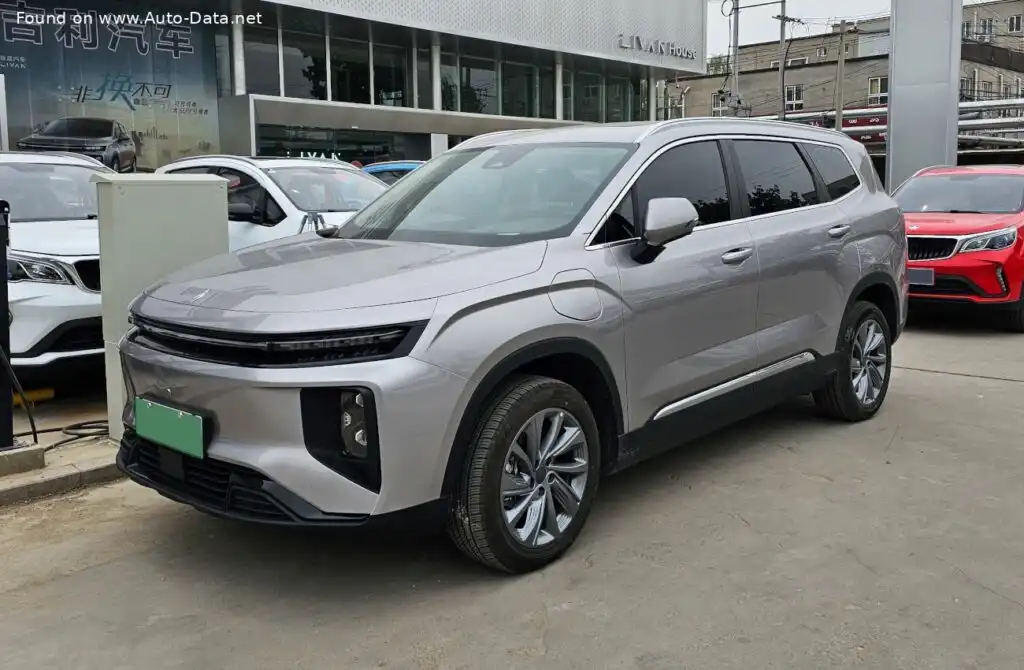
The Livan 9 66.57 kWh is an all-electric crossover SUV produced by the Chinese manufacturer Livan, debuting in December 2022. Positioned as a family-oriented vehicle, the Livan 9 distinguishes itself with its spacious interior, accommodating either six or seven passengers, and its focus on providing a practical and affordable electric vehicle option. It represents Livan’s entry into the burgeoning electric SUV market, targeting consumers seeking a versatile and environmentally conscious transportation solution. The vehicle is built upon a dedicated electric vehicle platform, prioritizing battery integration and maximizing interior space.
Technical Specifications
| Brand | Livan |
| Model | 9 |
| Generation | 9 |
| Type (Engine) | 66.57 kWh (204 Hp) Electric |
| Start of production | December, 2022 |
| Powertrain Architecture | BEV (Electric Vehicle) |
| Body type | SUV, Crossover |
| Seats | 6-7 |
| Doors | 5 |
| Fuel Type | Electricity |
| Weight-to-power ratio | 9.1 kg/Hp, 110.3 Hp/tonne |
| Weight-to-torque ratio | 6 kg/Nm, 167.6 Nm/tonne |
| Gross battery capacity | 66.57 kWh |
| Battery technology | Lithium nickel manganese cobalt oxides (Li-NMC) |
| Battery location | Below the floor |
| All-electric range (CLTC) | 470 km (292.04 mi) |
| Electric motor power | 204 Hp |
| Electric motor Torque | 310 Nm (228.64 lb.-ft.) |
| Electric motor location | Front axle, Transverse |
| Electric motor type | Synchronous |
| System power | 204 Hp |
| System torque | 310 Nm (228.64 lb.-ft.) |
| Kerb Weight | 1850-1870 kg (4078.55 – 4122.64 lbs.) |
| Trunk (boot) space – minimum | 162 l (5.72 cu. ft.) |
| Trunk (boot) space – maximum | 2360 l (83.34 cu. ft.) |
| Length | 4845 mm (190.75 in.) |
| Width | 1890 mm (74.41 in.) |
| Height | 1778 mm (70 in.) |
| Wheelbase | 2825 mm (111.22 in.) |
| Ride height (ground clearance) | 135 mm (5.31 in.) |
| Drivetrain Architecture | One electric motor drives the front wheels. |
| Drive wheel | Front wheel drive |
| Number of gears and type of gearbox | 1 gears, automatic transmission |
| Front suspension | Independent type McPherson |
| Rear suspension | Independent multi-link suspension |
| Front brakes | Ventilated discs |
| Rear brakes | Disc |
| Assisting systems | ABS (Anti-lock braking system) |
| Steering type | Steering rack and pinion |
| Power steering | Electric Steering |
| Tires size | 225/55 R18; 235/50 R18; 235/50 R19 |
| Wheel rims size | 18; 19 |
Powertrain & Engine Architecture
The Livan 9 utilizes a fully Battery Electric Vehicle (BEV) powertrain. Its core component is a 66.57 kWh lithium nickel manganese cobalt oxide (Li-NMC) battery pack, strategically positioned beneath the vehicle floor to optimize weight distribution and maximize cabin space. This battery powers a single synchronous electric motor located on the front axle, delivering 204 horsepower and 310 Nm (228.64 lb.-ft.) of torque. The powertrain employs a single-speed automatic transmission, typical of electric vehicles, providing seamless acceleration and a smooth driving experience. The electric motor’s transverse mounting contributes to efficient packaging within the front-wheel-drive configuration.
Driving Characteristics
The Livan 9’s front-wheel-drive configuration and instant torque delivery characteristic of electric motors provide brisk acceleration, particularly in urban driving conditions. While not designed for high-performance driving, the 204 hp output offers adequate power for highway merging and overtaking. The single-speed transmission ensures a linear power delivery, eliminating the need for gear changes. The vehicle’s weight, ranging from 1850 to 1870 kg, is noticeable, but the low center of gravity afforded by the underfloor battery pack contributes to stable handling. The steering is electrically assisted, providing a light and responsive feel.
Equipment & Trim Levels
The Livan 9 is designed with family comfort and practicality in mind. Standard features typically include air conditioning, a touchscreen infotainment system, and basic safety equipment like ABS. Higher trim levels offer upgrades such as larger touchscreens, enhanced interior materials, and advanced driver-assistance systems (ADAS). The spacious interior is a key selling point, with configurations available for six or seven passengers. The flexible seating arrangements and generous cargo space (162-2360 liters) cater to the needs of active families. Interior upholstery is generally cloth in base models, with leatherette options available on higher trims.
Chassis & Braking
The Livan 9 features an independent McPherson strut suspension at the front and an independent multi-link suspension at the rear, providing a comfortable ride quality and decent handling characteristics. Ventilated disc brakes are used on the front wheels, while solid discs are employed at the rear. The Anti-lock Braking System (ABS) is standard, enhancing braking performance and safety. The electric steering system offers precise control and ease of maneuverability. Tire sizes vary depending on the trim level, ranging from 225/55 R18 to 235/50 R19, mounted on 18 or 19-inch alloy wheels.
Market Reception & Comparison
The Livan 9 has been positioned as a competitively priced electric SUV in the Chinese market. Reviews have generally praised its spacious interior, practical features, and affordable price point. However, some critics have noted that its performance is not as exhilarating as some of its rivals, and its range (470 km CLTC) is moderate compared to other EVs with larger battery packs. Compared to other electric SUVs in its class, the Livan 9 offers a compelling value proposition for families seeking a functional and eco-friendly vehicle. Its focus on interior space and practicality sets it apart from some competitors that prioritize performance or luxury.
Legacy
As a relatively new entrant to the electric vehicle market, the long-term reliability of the Livan 9 remains to be fully established. However, the use of proven Li-NMC battery technology and a relatively simple electric powertrain suggests a reasonable expectation of durability. The vehicle’s popularity in the Chinese market will likely influence its future development and potential expansion into other global markets. The Livan 9 represents a significant step for Livan as a brand, demonstrating its commitment to electric mobility and its ability to deliver a competitive product in a rapidly evolving automotive landscape. Its success will depend on continued innovation, quality control, and responsiveness to consumer demand.
