
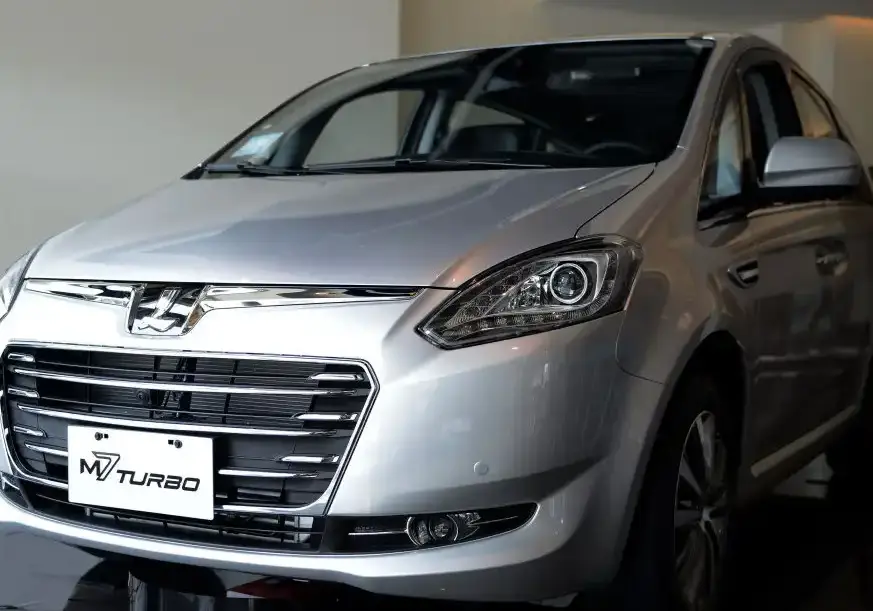
The Luxgen M7 (facelift 2014) 2.2i ECO HYPER represents a significant iteration of Luxgen’s foray into the minivan segment. Introduced in 2014, this variant aimed to balance fuel efficiency with respectable performance within the Taiwanese automaker’s lineup. Positioned as a mid-range offering, it slotted between the base models and potentially higher-trim levels with more luxury features. The M7, overall, was designed to appeal to families seeking a spacious and relatively well-equipped vehicle, primarily targeting the Asian market, particularly Taiwan. This facelift brought styling updates and powertrain refinements to the original M7 platform.
Technical Specifications
| Brand | Luxgen |
| Model | M7 |
| Generation | M7 (facelift 2014) |
| Type (Engine) | 2.2i ECO HYPER (202 Hp) AISIN |
| Start of production | 2014 |
| Powertrain Architecture | Internal Combustion engine |
| Body type | Minivan |
| Seats | 7-8 |
| Doors | 5 |
| Fuel consumption (combined) | 8.5 l/100 km (27.7 US mpg, 33.2 UK mpg, 11.8 km/l) |
| Fuel Type | Petrol (Gasoline) |
| Weight-to-power ratio | 9.4 kg/Hp, 106.6 Hp/tonne |
| Weight-to-torque ratio | 6.4 kg/Nm, 155.7 Nm/tonne |
| Power | 202 Hp @ 5500 rpm |
| Power per litre | 91.9 Hp/l |
| Torque | 295 Nm @ 2500-4000 rpm (217.58 lb.-ft. @ 2500-4000 rpm) |
| Engine layout | Front, Transverse |
| Engine displacement | 2198 cm3 (134.13 cu. in.) |
| Number of cylinders | 4 |
| Engine configuration | Inline |
| Cylinder Bore | 86 mm (3.39 in.) |
| Piston Stroke | 94.6 mm (3.72 in.) |
| Compression ratio | 9.3:1 |
| Number of valves per cylinder | 4 |
| Engine aspiration | Turbocharger, Intercooler |
| Valvetrain | DOHC |
| Kerb Weight | 1895 kg (4177.76 lbs.) |
| Fuel tank capacity | 75 l (19.81 US gal | 16.5 UK gal) |
| Length | 4845 mm (190.75 in.) |
| Width | 1876 mm (73.86 in.) |
| Height | 1768 mm (69.61 in.) |
| Wheelbase | 2910 mm (114.57 in.) |
| Front track | 1605 mm (63.19 in.) |
| Rear track | 1605 mm (63.19 in.) |
| Minimum turning circle | 11.4 m (37.4 ft.) |
| Drivetrain Architecture | Front wheel drive, Internal Combustion engine (ICE) |
| Drive wheel | Front wheel drive |
| Number of gears and type of gearbox | 6 gears, automatic transmission AISIN |
| Front suspension | Independent type McPherson |
| Rear suspension | Torsion |
| Front brakes | Ventilated discs |
| Rear brakes | Disc |
| Assisting systems | ABS (Anti-lock braking system), Electric Power Steering |
| Tires size | 215/55 R17 |
| Wheel rims size | 17 |
Powertrain & Engine Architecture
The heart of the 2.2i ECO HYPER M7 is a 2.2-liter inline-four cylinder engine. This engine, designated with specific internal codes depending on the market, utilizes a turbocharger and intercooler to boost power output to 202 horsepower at 5500 rpm and 295 Nm (217.58 lb-ft) of torque between 2500 and 4000 rpm. The engine features a double overhead camshaft (DOHC) valvetrain and a compression ratio of 9.3:1. Fuel delivery is managed by a modern multi-point fuel injection system. Crucially, this variant is paired with a 6-speed automatic transmission sourced from AISIN, a well-regarded Japanese transmission manufacturer. This transmission was chosen for its smoothness and reliability, contributing to the overall driving experience.
Driving Characteristics
The 202 hp and 295 Nm of torque provide adequate performance for a minivan of this size. While not a sports-oriented vehicle, the turbocharged engine delivers a reasonable amount of acceleration, particularly in the mid-range. The AISIN 6-speed automatic transmission is well-tuned, offering smooth shifts and responsive downshifts. Compared to potential lower-powered versions of the M7, this 2.2i ECO HYPER offers a noticeable improvement in both acceleration and highway cruising ability. However, it doesn’t match the responsiveness of a manual transmission, and the automatic’s programming prioritizes fuel efficiency over outright performance. The front-wheel-drive configuration provides predictable handling, but it’s not designed for aggressive driving.
Equipment & Trim Levels
The 2.2i ECO HYPER trim typically included a good level of standard equipment. This generally encompassed features like air conditioning, power windows and locks, a basic audio system with USB connectivity, and standard safety features such as ABS and airbags. Higher trim levels, if available, would add features like leather upholstery, a more advanced infotainment system with navigation, sunroof, and parking sensors. Interior materials were generally of acceptable quality for the price point, focusing on durability and practicality. The M7 was designed to accommodate up to eight passengers, depending on the seating configuration.
Chassis & Braking
The M7 utilizes a front-engine, front-wheel-drive layout. Suspension consists of an independent McPherson strut setup at the front and a torsion beam arrangement at the rear. This configuration provides a comfortable ride quality, suitable for everyday driving. Braking duties are handled by ventilated discs at the front and solid discs at the rear. The inclusion of ABS (Anti-lock Braking System) is standard, enhancing safety during emergency braking situations. Electric power steering provides light and easy steering feel, making it convenient for maneuvering in urban environments.
Market Reception & Comparison
The Luxgen M7, including the 2.2i ECO HYPER variant, received mixed reviews. Critics generally praised its spacious interior, comfortable ride, and relatively generous equipment list for the price. However, some criticisms were leveled at the brand’s overall reputation for reliability and the somewhat unrefined nature of the engine and transmission compared to established Japanese or Korean competitors. Fuel economy, at 8.5 l/100 km, was considered average for its class. Compared to other trims in the M7 lineup, the 2.2i ECO HYPER offered a compelling balance of performance and efficiency, making it a popular choice for families seeking a versatile and practical minivan.
Legacy
The Luxgen M7, while not a mainstream success in many global markets, represents an interesting attempt by a Taiwanese automaker to compete in the minivan segment. The 2.2i ECO HYPER powertrain, with its AISIN transmission, has proven to be relatively reliable in the long term, although sourcing parts and finding qualified mechanics can be a challenge outside of Taiwan. In the used car market, the M7 offers a relatively affordable option for those seeking a spacious and well-equipped minivan, but potential buyers should be aware of the brand’s limited service network and potential long-term maintenance costs.
