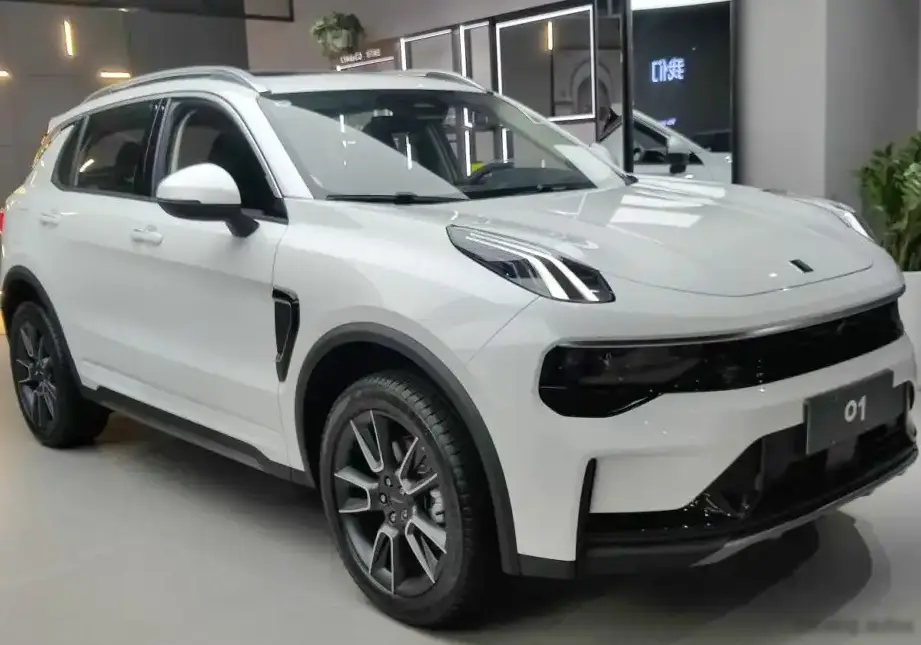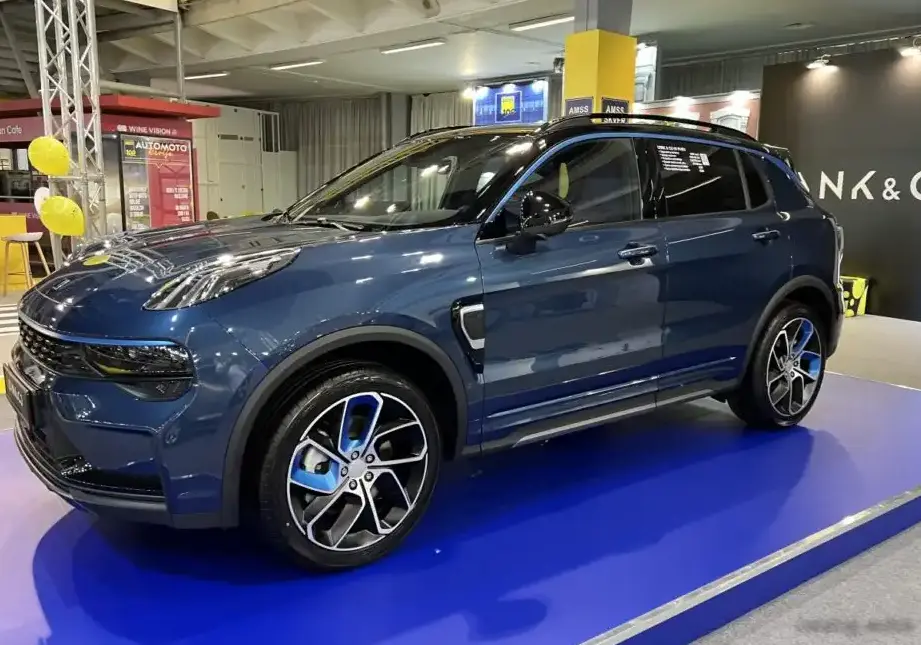
The Lynk & Co 01, specifically the facelifted 2020 model year equipped with the 1.5TD (261 Hp) Plug-in Hybrid powertrain and a 7-speed Dual Clutch Transmission (DCT), represents a significant offering in the burgeoning compact SUV segment. Introduced in December 2020, this variant builds upon the foundation of the initial 01 model, which itself was based on the Volvo XC40 and Polestar 2’s Compact Modular Architecture (CMA). Positioned as a premium offering within the Lynk & Co lineup, the 1.5TD Plug-in Hybrid aimed to deliver a blend of performance, efficiency, and connectivity, targeting a tech-savvy and environmentally conscious consumer base, primarily in European and Asian markets. The 01 was designed to be more than just a vehicle; it was conceived as a mobility solution with a focus on shared ownership and digital integration.
Technical Specifications
| Brand | Lynk & Co |
| Model | 01 |
| Generation | 01 (facelift 2020) |
| Type (Engine) | 1.5TD (261 Hp) Plug-in Hybrid DCTH |
| Start of production | December, 2020 |
| Powertrain Architecture | PHEV (Plug-in Hybrid Electric Vehicle) |
| Body type | SUV |
| Seats | 5 |
| Doors | 5 |
| Combined fuel consumption (WLTP) | 1-1.2 l/100 km (235.2 – 196 US mpg, 282.5 – 235.4 UK mpg, 100 – 83.3 km/l) |
| CO2 emissions (WLTP) | 24-27 g/km |
| Fuel Type | Petrol / electricity |
| Acceleration 0 – 100 km/h | 8 sec |
| Acceleration 0 – 62 mph | 8 sec |
| Acceleration 0 – 60 mph | 7.6 sec |
| Maximum speed | 210 km/h (130.49 mph) |
| Emission standard | Euro 6d-ISC-FCM |
| Weight-to-power ratio | 7.2 kg/Hp, 138.9 Hp/tonne |
| Weight-to-torque ratio | 7.1 kg/Nm, 141 Nm/tonne |
| Gross battery capacity | 17.7 kWh |
| Net (usable) battery capacity | 14.1 kWh |
| Battery voltage | 347.5 V |
| Battery technology | Lithium nickel manganese cobalt oxides (Li-NMC) |
| Battery location | In the central tunnel |
| All-electric range (WLTP) | 69-75 km (42.87 – 46.6 mi) |
| All-electric range (NEDC) | 88 km (54.68 mi) |
| Average Energy consumption (WLTP) | 18.5-20.1 kWh/100 km (29.77 – 32.35 kWh/100 mi, 113 – 104 MPGe, 5.4 – 5 km/kWh, 3.4 – 3.1 mi/kWh) |
| Max speed (electric) | 130 km/h (80.78 mph) |
| Electric motor power | 82 Hp |
| Electric motor Torque | 160 Nm (118.01 lb.-ft.) |
| Electric motor location | Integrated into the transmission |
| Electric motor type | Synchronous |
| System power | 261 Hp |
| Power | 180 Hp @ 5500 rpm |
| Torque | 265 Nm @ 1500-4000 rpm (195.45 lb.-ft. @ 1500-4000 rpm) |
| Engine layout | Front, Transverse |
| Engine Model/Code | JLH-3G15TD |
| Engine displacement | 1477 cm3 (90.13 cu. in.) |
| Number of cylinders | 3 |
| Engine configuration | Inline |
| Cylinder Bore | 82 mm (3.23 in.) |
| Piston Stroke | 93.2 mm (3.67 in.) |
| Compression ratio | 11.5:1 |
| Number of valves per cylinder | 4 |
| Fuel injection system | Direct injection |
| Engine aspiration | Turbocharger, Intercooler |
| Valvetrain | DOHC |
| Engine oil capacity | 5.6 l (5.92 US qt | 4.93 UK qt) |
| Kerb Weight | 1879 kg (4142.49 lbs.) |
| Max. weight | 2350 kg (5180.86 lbs.) |
| Max load | 471 kg (1038.38 lbs.) |
| Trunk (boot) space – minimum | 466 l (16.46 cu. ft.) |
| Trunk (boot) space – maximum | 1213 l (42.84 cu. ft.) |
| Fuel tank capacity | 42 l (11.1 US gal | 9.24 UK gal) |
| Permitted trailer load with brakes (12%) | 1800 kg (3968.32 lbs.) |
| Permitted trailer load without brakes | 750 kg (1653.47 lbs.) |
| Length | 4541 mm (178.78 in.) |
| Width | 1857 mm (73.11 in.) |
| Width with mirrors folded | 1952 mm (76.85 in.) |
| Width including mirrors | 2141 mm (84.29 in.) |
| Height | 1694 mm (66.69 in.) |
| Wheelbase | 2734 mm (107.64 in.) |
| Ride height (ground clearance) | 213 mm (8.39 in.) |
| Minimum turning circle (turning diameter) | 11.8 m (38.71 ft.) |
| Front suspension | Independent, type McPherson with coil spring and anti-roll bar |
| Rear suspension | Independent multi-link spring suspension with stabilizer |
| Front brakes | Ventilated discs |
| Rear brakes | Disc |
| Drive wheel | Front wheel drive |
| Number of gears and type of gearbox | 7 gears, automatic transmission DCTH |
| Tires size | 235/50 R19; 235/45 R20 |
| Wheel rims size | 19; 20 |
Powertrain & Engine Architecture
At the heart of the Lynk & Co 01 1.5TD Plug-in Hybrid lies the JLH-3G15TD, a 1.5-liter turbocharged three-cylinder gasoline engine. This engine, developed in collaboration with Volvo, utilizes direct fuel injection and a sophisticated turbocharging system to produce 180 horsepower at 5500 rpm and 265 Nm (195.45 lb.-ft.) of torque between 1500 and 4000 rpm. The engine’s compact size and aluminum construction contribute to overall weight reduction. The electric motor, a synchronous unit, delivers an additional 82 horsepower and 160 Nm (118.01 lb.-ft.) of torque. Combined, the system generates a total output of 261 horsepower. The 17.7 kWh (usable 14.1 kWh) lithium-ion battery pack, positioned within the central tunnel, provides an all-electric range of 69-75 km (42.87 – 46.6 mi) under WLTP testing. The 7-speed Dual Clutch Transmission (DCT) provides quick and seamless gear changes, optimizing both performance and fuel efficiency. The DCT was specifically tuned to work in harmony with both the internal combustion engine and the electric motor.
Driving Characteristics
The 01 1.5TD Plug-in Hybrid offers a refined and responsive driving experience. In electric mode, the vehicle provides near-silent acceleration and ample torque for urban driving. Switching to hybrid mode seamlessly blends the power of the gasoline engine and electric motor, delivering brisk acceleration – 0-60 mph in approximately 7.6 seconds. The DCT transmission contributes to smooth gear changes, although some drivers may notice a slight hesitation at lower speeds. Compared to the standard gasoline-powered 01 variants, the plug-in hybrid offers significantly improved fuel economy and reduced emissions. The added weight of the battery pack is noticeable, particularly during spirited driving, but the instant torque from the electric motor helps to mitigate this effect. The steering is light and precise, making the 01 easy to maneuver in city traffic.
Equipment & Trim Levels
The 2020 Lynk & Co 01 1.5TD Plug-in Hybrid typically came well-equipped as standard. Features included a 12.3-inch digital instrument cluster, a centrally mounted 10.1-inch touchscreen infotainment system with Apple CarPlay and Android Auto compatibility, and a comprehensive suite of safety features, including automatic emergency braking, lane keeping assist, and adaptive cruise control. Interior upholstery was typically a combination of leatherette and fabric, with options for full leather upgrades. Available optional extras included a panoramic sunroof, premium audio system, and heated/ventilated front seats. The overall interior design emphasized Scandinavian minimalism, with a focus on clean lines and high-quality materials.
Chassis & Braking
The 01 utilizes an independent suspension setup, with McPherson struts at the front and a multi-link system at the rear. This configuration provides a comfortable ride quality while maintaining good handling characteristics. Stabilizer bars are fitted to both axles to reduce body roll during cornering. The braking system consists of ventilated discs at the front and solid discs at the rear, providing adequate stopping power. ABS (Anti-lock Braking System) and electronic brake-force distribution are standard features.
Market Reception & Comparison
The Lynk & Co 01 1.5TD Plug-in Hybrid was generally well-received by automotive critics. Praise was given for its fuel efficiency, comfortable ride, and advanced technology. However, some reviewers noted the relatively high price point compared to other compact SUVs. Compared to the standard gasoline-powered 01 variants, the plug-in hybrid offered a significant improvement in fuel economy and reduced emissions, but at a higher initial cost. Against competitors like the Volvo XC40 Recharge and other plug-in hybrid SUVs, the 01 offered a compelling combination of features and value.
Legacy
The Lynk & Co 01 1.5TD Plug-in Hybrid powertrain has proven to be relatively reliable in the years since its introduction. The three-cylinder engine, while complex, has demonstrated good durability. The DCT transmission, however, has been known to experience occasional issues, particularly with software glitches. On the used car market, the 01 1.5TD Plug-in Hybrid holds its value reasonably well, reflecting its desirable fuel efficiency and advanced technology. As consumer demand for plug-in hybrid vehicles continues to grow, the 01 remains a relevant and competitive option.