
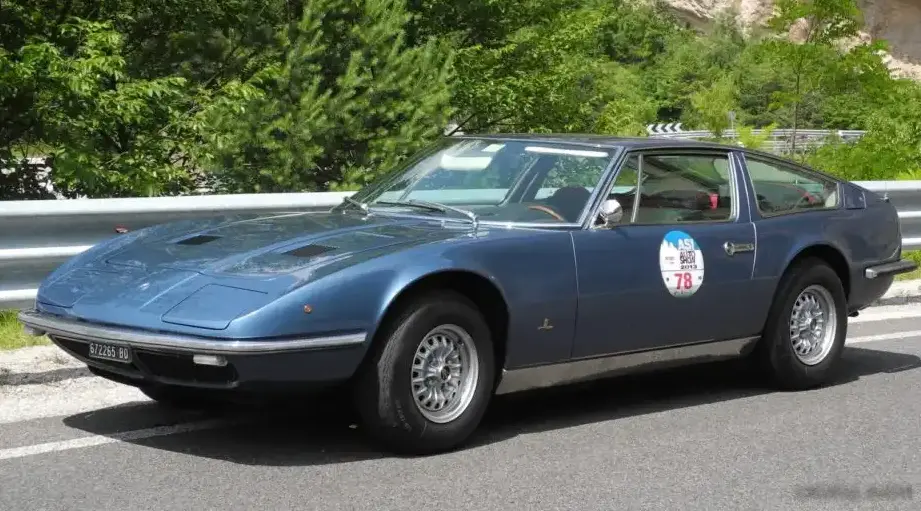
The Maserati Indy 4.7, produced between 1972 and 1974, represents the pinnacle of the first-generation Indy model line. Named after Maserati’s racing successes at the Indianapolis 500, the Indy was designed as a more accessible, yet still luxurious, grand touring coupe compared to the Ghibli. The 4.7-liter variant, distinguished by its larger engine displacement, offered a significant performance upgrade over the earlier 4.1-liter versions, solidifying the Indy’s position as a genuine high-performance machine capable of competing with contemporary offerings from Ferrari and Porsche. It was a relatively short-lived iteration, bridging the gap between the initial Indy launch and subsequent refinements.
Technical Specifications
| Brand | Maserati |
| Model | Indy |
| Generation | Indy (First Generation) |
| Type (Engine) | 4.7 (290 Hp) |
| Start of Production | 1972 |
| End of Production | 1974 |
| Powertrain Architecture | Internal Combustion Engine |
| Body Type | Coupe |
| Fuel Type | Petrol (Gasoline) |
| Power | 290 Hp |
| Engine Model/Code | AM116/47 |
| Engine Aspiration | Naturally Aspirated |
| Engine Oil Capacity | 10 l (10.57 US qt | 8.8 UK qt) |
| Coolant Capacity | 13 l (13.74 US qt | 11.44 UK qt) |
Powertrain & Engine Architecture
The heart of the Indy 4.7 is the AM116/47 engine, a 4.7-liter (4,719 cc) naturally aspirated V8. This engine is a further development of the earlier 4.1-liter V8, featuring a larger bore and stroke to increase displacement. It retained the aluminum alloy block and cylinder heads, contributing to a relatively lightweight construction for its size. The engine employed a single overhead camshaft per bank, operating two valves per cylinder. Fuel delivery was managed by a Weber 38 DCOE carburetor system, a setup known for its responsiveness but also requiring periodic tuning. The engine produced 290 horsepower at 5,800 rpm and 325 lb-ft of torque at 4,000 rpm. The Indy 4.7 was exclusively offered with a ZF 5-speed manual transmission, a robust unit capable of handling the engine’s output. Unlike some contemporary Maseratis, automatic transmission options were not available for this high-performance variant.
Driving Characteristics
The Indy 4.7 offered a distinctly grand touring experience, prioritizing comfortable high-speed cruising with readily available performance when needed. The larger engine provided a noticeable improvement in acceleration compared to the 4.1-liter models. Independent tests of the period indicated a 0-60 mph time of around 6.5 seconds and a top speed exceeding 155 mph. The ZF 5-speed manual transmission allowed for precise control over the engine’s power band. The gear ratios were well-chosen for both spirited driving and relaxed highway cruising. The car felt substantial and planted on the road, thanks to its relatively long wheelbase and well-tuned suspension. While not as nimble as some smaller sports cars, the Indy 4.7 offered a confident and stable driving experience, even at high speeds. The steering was relatively heavy, providing good feedback to the driver.
Equipment & Trim Levels
The Indy 4.7 was positioned as the premium offering within the Indy range. Standard equipment included leather upholstery, power windows, power steering, and air conditioning. The interior was lavishly appointed, reflecting Maserati’s commitment to luxury. Wood veneer trim was used extensively on the dashboard and door panels, adding to the car’s sophisticated ambiance. Optional extras included a sunroof, Connolly leather upholstery in a wider range of colors, and a premium sound system. The instrument panel featured a comprehensive array of gauges, including a speedometer, tachometer, oil pressure gauge, water temperature gauge, and fuel level gauge. The seats were comfortable and supportive, designed for long-distance driving.
Chassis & Braking
The Indy 4.7 utilized a steel monocoque chassis, providing a strong and rigid platform. The suspension consisted of independent double wishbones at the front and a De Dion axle with a Watts linkage at the rear. This setup offered a good balance between ride comfort and handling. The braking system featured disc brakes on all four wheels, providing ample stopping power. The front brakes were vented to improve heat dissipation. Power assistance was standard. The steering was a recirculating ball system, offering a good level of precision and feedback. The car rode on 15-inch wheels fitted with Pirelli Cinturato tires, which were considered to be among the best available at the time.
Market Reception & Comparison
The Indy 4.7 was generally well-received by automotive critics. It was praised for its powerful engine, luxurious interior, and comfortable ride. However, some critics noted that the car was relatively expensive compared to its competitors. Compared to the earlier 4.1-liter Indy, the 4.7 offered a significant performance improvement, making it a more appealing option for enthusiasts. Compared to the Ferrari Daytona, the Indy 4.7 offered a more comfortable and practical grand touring experience, albeit with slightly less outright performance. The Porsche 911, while more focused on handling, offered a similar price point and a comparable level of performance. Fuel economy was unsurprisingly poor, typical for a large-displacement V8 of the era, averaging around 12-15 mpg.
Legacy
The Maserati Indy 4.7 remains a highly sought-after classic car today. Its combination of performance, luxury, and Italian styling has made it a favorite among collectors. The AM116/47 engine is considered to be a robust and reliable unit, although regular maintenance is essential to keep it in good condition. Parts availability can be a challenge, but a dedicated network of specialists exists to support Indy owners. The car’s relatively low production numbers have contributed to its increasing value in the used car market. A well-maintained Indy 4.7 represents a significant investment, but it offers a unique and rewarding driving experience that is difficult to replicate with modern cars. The Indy, particularly the 4.7 variant, cemented Maserati’s reputation as a builder of sophisticated and high-performance grand touring automobiles.
