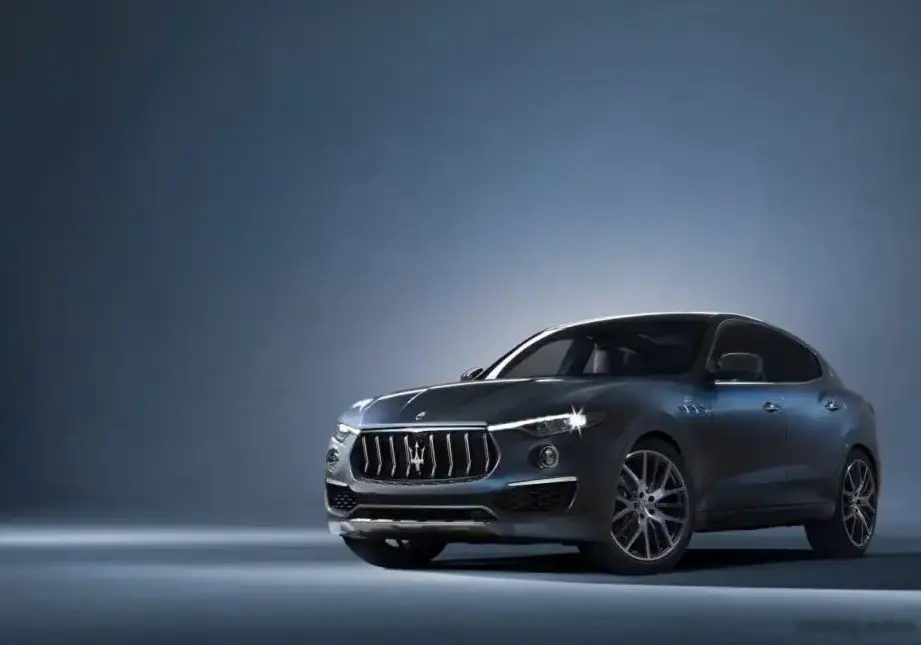
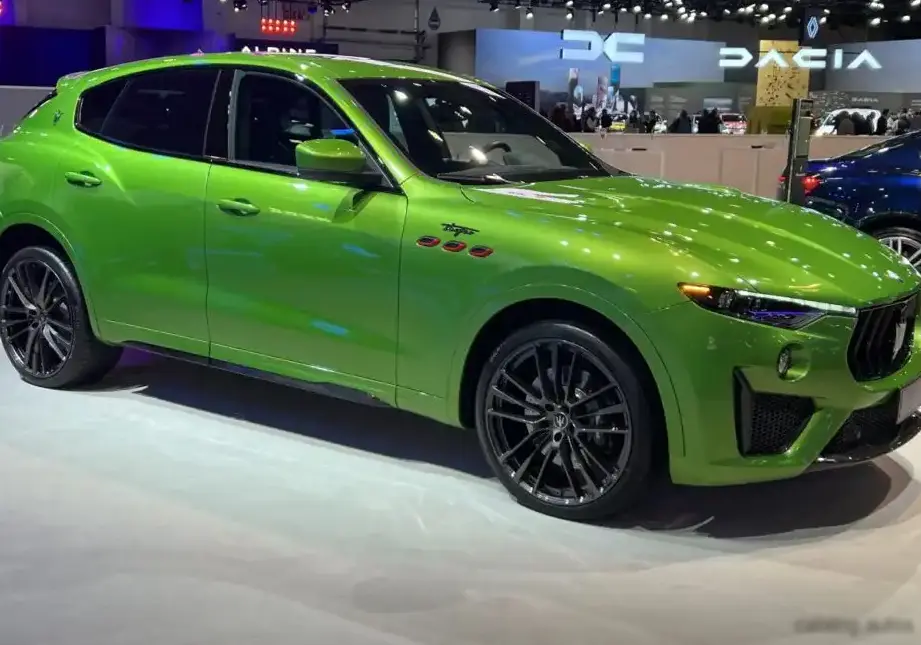
The Maserati Levante S 3.0 V6 GDI, launched in 2016, represents Maserati’s entry into the mid-size luxury SUV segment. This variant, equipped with a 3.0-liter twin-turbocharged V6 engine producing 430 horsepower and an eight-speed automatic transmission coupled with all-wheel drive, quickly became a flagship model for the Levante range. It aimed to blend Italian luxury and performance with the practicality of an SUV, competing with established German rivals like the Porsche Macan and BMW X5. The Levante S was positioned as the performance-oriented trim, sitting above the base Levante and offering a more engaging driving experience.
Technical Specifications
| Brand | Maserati |
| Model | Levante |
| Type (Engine) | S 3.0 V6 GDI (430 Hp) AWD Automatic |
| Start of production | 2016 |
| Powertrain Architecture | Internal Combustion engine |
| Body type | SUV |
| Seats | 5 |
| Doors | 5 |
| Fuel consumption (urban) | 15 l/100 km (15.7 US mpg, 18.8 UK mpg, 6.7 km/l) |
| Fuel consumption (extra urban) | 8.5 l/100 km (27.7 US mpg, 33.2 UK mpg, 11.8 km/l) |
| Fuel consumption (combined) | 10.9 l/100 km (21.6 US mpg, 25.9 UK mpg, 9.2 km/l) |
| CO2 emissions | 253 g/km |
| Fuel Type | Petrol (Gasoline) |
| Acceleration 0 – 100 km/h | 5.2 sec |
| Acceleration 0 – 62 mph | 5.2 sec |
| Acceleration 0 – 60 mph | 4.9 sec |
| Maximum speed | 264 km/h (164.04 mph) |
| Power | 430 Hp @ 5750 rpm |
| Torque | 580 Nm @ 4500-5000 rpm (427.79 lb.-ft. @ 4500-5000 rpm) |
| Engine layout | Front, Longitudinal |
| Engine Model/Code | M156E |
| Engine displacement | 2979 cm3 (181.79 cu. in.) |
| Number of cylinders | 6 |
| Engine configuration | V-engine |
| Cylinder Bore | 86.5 mm (3.41 in.) |
| Piston Stroke | 84.5 mm (3.33 in.) |
| Compression ratio | 9.7:1 |
| Number of valves per cylinder | 4 |
| Fuel injection system | Direct injection |
| Engine aspiration | Twin-Turbo, Intercooler |
| Engine oil capacity | 8.3 l (8.77 US qt | 7.3 UK qt) |
| Coolant | 9.2 l (9.72 US qt | 8.09 UK qt) |
| Kerb Weight | 2109 kg (4649.55 lbs.) |
| Trunk (boot) space – minimum | 580 l (20.48 cu. ft.) |
| Fuel tank capacity | 80 l (21.13 US gal | 17.6 UK gal) |
| Length | 5003 mm (196.97 in.) |
| Width | 1968 mm (77.48 in.) |
| Width with mirrors folded | 2158 mm (84.96 in.) |
| Height | 1679 mm (66.1 in.) |
| Wheelbase | 3004 mm (118.27 in.) |
| Front track | 1624 mm (63.94 in.) |
| Rear (Back) track | 1676 mm (65.98 in.) |
| Front overhang | 966 mm (38.03 in.) |
| Rear overhang | 1033 mm (40.67 in.) |
| Drag coefficient (Cd) | 0.31 |
| Minimum turning circle | 11.7 m (38.39 ft.) |
| Drive wheel | All wheel drive (4×4) |
| Number of gears | 8 |
| Gearbox type | Automatic transmission |
| Front suspension | Double wishbone |
| Rear suspension | Independent multi-link suspension |
| Front brakes | Ventilated discs |
| Rear brakes | Ventilated discs |
| Assisting systems | ABS (Anti-lock braking system) |
| Steering type | Steering rack and pinion |
| Power steering | Electric Steering |
| Tires size | 265/50 ZR19; 295/45 ZR19 |
| Wheel rims size | 19 |
Powertrain & Engine Architecture
The heart of the Levante S is Maserati’s M156E 3.0-liter V6 engine. This engine utilizes direct fuel injection and is equipped with twin turbochargers, delivering a substantial power output. The engine’s architecture is a 60-degree V configuration, contributing to a relatively compact engine bay layout. The twin-turbo setup employs a single-scroll design, enhancing responsiveness and minimizing turbo lag. The engine’s control unit manages fuel delivery, ignition timing, and boost pressure to optimize performance and efficiency. The eight-speed automatic transmission, sourced from ZF, is a crucial component of the powertrain. It features a torque converter and provides smooth, quick shifts. The transmission is programmed with a focus on both performance and comfort, adapting its shift points based on driving conditions and driver input. The all-wheel-drive system is primarily rear-biased, enhancing the sporty driving dynamics, and can dynamically distribute torque between the front and rear axles as needed for optimal traction.
Driving Characteristics
The Levante S 3.0 V6 Automatic delivers a compelling driving experience. The 430 horsepower and 580 Nm of torque provide brisk acceleration, with a 0-60 mph time of around 4.9 seconds. The eight-speed automatic transmission contributes to this performance, offering quick and seamless gear changes. While not as overtly sporty as some of its German competitors, the Levante S offers a unique blend of performance and comfort. The rear-biased all-wheel-drive system enhances handling and provides a more engaging driving experience. The suspension is tuned to provide a comfortable ride, while still maintaining good body control. Compared to the base Levante with its lower-powered engine, the S model offers a significant performance upgrade. It also feels more responsive and engaging to drive. The automatic transmission, while smooth, may not offer the same level of driver control as a manual transmission, but it suits the Levante S’s overall character as a luxurious and capable SUV.
Equipment & Trim Levels
The Levante S came standard with a generous array of features, reflecting its position as a premium model. Standard equipment included leather upholstery, heated front seats, a premium sound system, a touchscreen infotainment system, and a suite of advanced driver-assistance systems, such as adaptive cruise control and lane-keeping assist. Optional extras included upgraded leather options, a panoramic sunroof, ventilated front seats, and a more powerful Harman Kardon sound system. The interior design emphasized luxury and craftsmanship, with high-quality materials and attention to detail. The dashboard layout was relatively clean and intuitive, with a focus on ease of use. The Levante S also offered a range of customization options, allowing buyers to personalize their vehicle to their preferences.
Chassis & Braking
The Levante S utilizes a double-wishbone front suspension and an independent multi-link rear suspension, providing a comfortable ride and good handling characteristics. The suspension is tuned to balance performance and comfort, offering a compliant ride over various road surfaces. The braking system consists of ventilated discs on all four wheels, providing ample stopping power. The Levante S also features an anti-lock braking system (ABS) and electronic stability control (ESC) as standard equipment. The steering is electrically assisted, providing a precise and responsive feel. The chassis is designed to be rigid and strong, contributing to the vehicle’s overall stability and handling. The standard tire size is 265/50 ZR19 for the front and 295/45 ZR19 for the rear, providing good grip and traction.
Market Reception & Comparison
The Maserati Levante S was generally well-received by automotive critics. It was praised for its stylish design, luxurious interior, and strong performance. However, some critics noted that its fuel economy was not as competitive as some of its rivals. Compared to the Porsche Macan, the Levante S offered a more comfortable ride but lacked the same level of sporty handling. Compared to the BMW X5, the Levante S offered a more distinctive design and a more luxurious interior, but the X5 offered a wider range of engine options and a more advanced technology suite. The Levante S’s fuel economy of around 21.6 US mpg combined was respectable but not class-leading. Reliability reports have been mixed, with some owners reporting minor issues with the infotainment system and electrical components.
Legacy
The Maserati Levante S 3.0 V6 GDI has established itself as a desirable SUV in the used car market. Its combination of Italian style, performance, and luxury continues to appeal to buyers. The 3.0-liter twin-turbo V6 engine has proven to be relatively reliable, although regular maintenance is essential. The eight-speed automatic transmission has also proven to be durable. As with any luxury vehicle, maintenance costs can be higher than those of more mainstream brands. However, the Levante S offers a unique driving experience and a distinctive style that sets it apart from its competitors. Its long-term value is expected to remain relatively stable, particularly for well-maintained examples.