
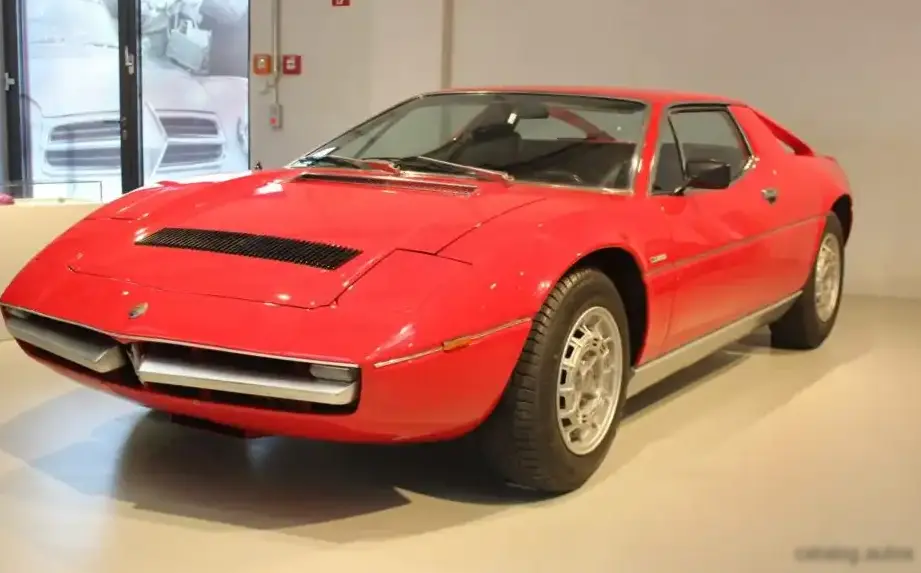
The Maserati Merak 2.0, produced between 1976 and 1983, represented an attempt by the Italian manufacturer to offer a more accessible entry point into the mid-engine sports car market. Positioned below the Bora, the Merak shared much of its mechanical underpinnings and striking Giorgetto Giugiaro-designed styling, but with a smaller, less expensive engine. The 2.0-liter variant, producing 170 horsepower, was primarily aimed at European markets where taxation favored smaller displacement engines. While not as potent as its larger-engined siblings, the 2.0 Merak offered a unique blend of Italian flair, performance, and relative affordability within the Maserati lineup.
Technical Specifications
| Brand | Maserati |
| Model | Merak |
| Generation | Merak |
| Type (Engine) | 2.0 (170 Hp) |
| Start of production | 1976 |
| End of production | 1983 |
| Powertrain Architecture | Internal Combustion engine |
| Body type | Coupe |
| Seats | 4 |
| Doors | 2 |
| Fuel Type | Petrol (Gasoline) |
| Power | 170 Hp |
| Engine Model/Code | AM 114.62.20 |
| Engine aspiration | Naturally aspirated engine |
| Engine oil capacity | 9 l (9.51 US qt | 7.92 UK qt) |
| Fuel tank capacity | 85 l (22.45 US gal | 18.7 UK gal) |
| Length | 4335 mm (170.67 in.) |
| Width including mirrors | 1768 mm (69.61 in.) |
| Height | 1134 mm (44.65 in.) |
| Wheelbase | 2600 mm (102.36 in.) |
Powertrain & Engine Architecture
The heart of the Merak 2.0 was the AM 114.62.20 engine, a 1995cc, 90-degree V6. This engine was a scaled-down version of the 3.0-liter V6 used in the Bora and later, larger Merak models. It featured a cast iron block and aluminum cylinder heads, employing a single overhead camshaft per bank operating two valves per cylinder. Fuel delivery was handled by a Weber 32 DCNF carburetor system, a relatively simple setup compared to the fuel injection found on some contemporary sports cars. The engine produced 170 horsepower at 6500 rpm and 137 lb-ft of torque at 4500 rpm. The engine was transversely mounted mid-ship, contributing to the car’s balanced handling. The transmission was a five-speed manual, as no automatic option was offered for this variant. The engine’s layout and relatively compact size allowed for the inclusion of a small rear seat, although it was best suited for children or occasional use.
Driving Characteristics
The Merak 2.0, while possessing the visual drama of its more powerful siblings, offered a distinctly different driving experience. The 170 horsepower engine, while adequate, required the driver to work the five-speed gearbox to maintain momentum. Acceleration was respectable, with a 0-60 mph time of around 8.5 seconds, but it lacked the outright punch of the 3.0-liter models. The car’s relatively light weight (around 2,700 lbs) helped to offset the engine’s modest power output, providing nimble handling and a responsive feel. The mid-engine layout contributed to excellent balance, making the Merak 2.0 a rewarding car to drive on winding roads. However, the carburetor setup could sometimes lead to slight hesitation during acceleration, and the engine lacked the refinement of more modern fuel-injected units. The gear ratios were fairly closely spaced, encouraging frequent shifting to keep the engine in its power band.
Equipment & Trim Levels
The Merak 2.0 was generally equipped with a fairly basic level of trim, reflecting its position as the entry-level model. Standard features included leather upholstery, power windows, and a wood-rimmed steering wheel. Air conditioning was often an optional extra, as were features like a radio and upgraded sound system. The interior design was typical of early 1970s Italian sports cars, with a focus on functionality and a sporty aesthetic. The dashboard featured a comprehensive array of gauges, including a speedometer, tachometer, oil pressure gauge, water temperature gauge, and fuel level indicator. The seats were supportive and comfortable, although they offered limited adjustability. The overall interior ambiance was one of understated elegance, emphasizing the car’s sporting character.
Chassis & Braking
The Merak 2.0 utilized a steel monocoque chassis, providing a rigid and lightweight platform. Suspension was independent all around, with double wishbones and coil springs at the front and rear. This setup provided a comfortable ride while maintaining good handling characteristics. The braking system consisted of disc brakes on all four wheels, although the rear discs were smaller in diameter than those at the front. Power assistance was provided, offering adequate stopping power for the car’s weight and performance. Steering was unassisted, providing a direct and communicative feel, but requiring some effort at low speeds. The car’s wheelbase of 2600 mm (102.36 in.) contributed to its stability and predictable handling.
Market Reception & Comparison
The Merak 2.0 received mixed reviews from automotive critics. While praised for its striking styling and balanced handling, it was often criticized for its relatively modest performance and the somewhat agricultural nature of its carburetor-fed engine. Compared to the 3.0-liter Merak, the 2.0-liter model felt noticeably slower and less refined. However, the 2.0-liter version was significantly more affordable, making it an attractive option for buyers who wanted the Maserati experience without the high price tag. Fuel economy was reasonable for a sports car of its era, averaging around 18-22 mpg. Reliability was generally good, although the carburetor system required periodic maintenance and adjustment. The 2.0-liter Merak appealed to a different clientele than its more powerful siblings, attracting buyers who prioritized style and handling over outright speed.
Legacy
Today, the Maserati Merak 2.0 is a relatively rare and sought-after classic car. Its lower production numbers and unique position within the Merak lineup have made it a favorite among collectors. The AM 114.62.20 engine, while not the most powerful Maserati V6, is known for its durability and relative simplicity. Maintenance costs can be moderate, although sourcing parts can sometimes be challenging. The Merak 2.0 represents a fascinating chapter in Maserati’s history, showcasing the company’s commitment to design and performance in a more accessible package. Its enduring appeal lies in its combination of Italian flair, mid-engine dynamics, and relative affordability, making it a compelling alternative to more mainstream sports cars of the 1970s.
