
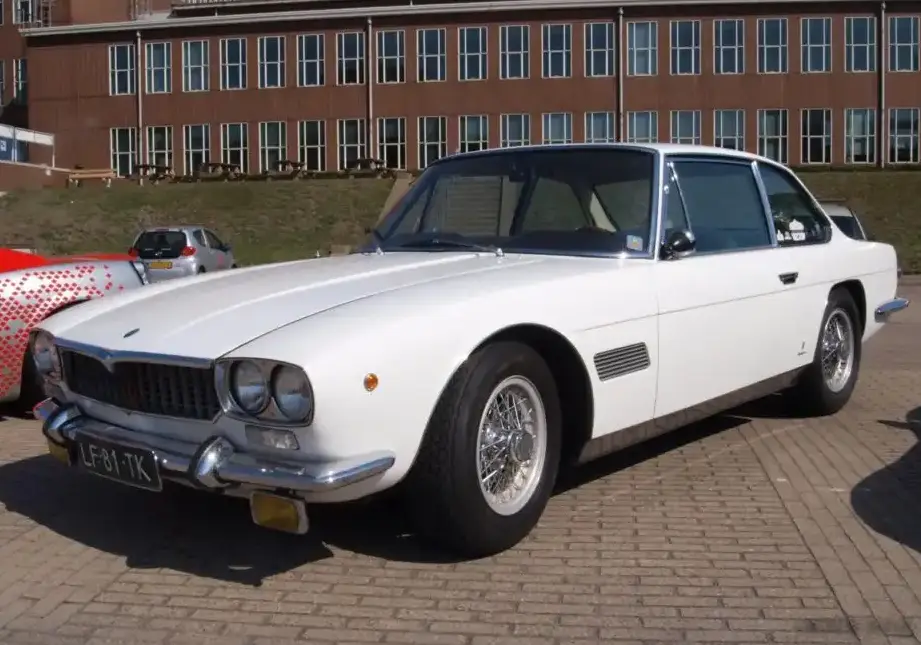
The Maserati Mexico 4.2 V8, produced between March 1969 and March 1973, represents a pivotal moment in Maserati’s history, bridging the gap between the earlier, coachbuilt grand tourers and the more mass-produced models that would follow. Positioned as a luxurious and high-performance coupe, the Mexico was intended to appeal to a discerning clientele seeking Italian style and engineering. It was built on a shortened version of the Quattroporte I platform, designated the AM112, and offered a blend of comfort, performance, and exclusivity. The 4.2-liter V8 variant, producing 260 horsepower, was the top-of-the-line offering during much of its production run, representing the pinnacle of Mexico performance.
Technical Specifications
| Brand | Maserati |
| Model | Mexico |
| Generation | Mexico |
| Type (Engine) | 4.2 V8 (260 Hp) |
| Start of production | March, 1969 |
| End of production | March, 1973 |
| Powertrain Architecture | Internal Combustion engine |
| Body type | Coupe |
| Seats | 4 |
| Doors | 2 |
| Fuel consumption (combined) | 19 l/100 km (12.4 US mpg, 14.9 UK mpg, 5.3 km/l) |
| Fuel Type | Petrol (Gasoline) |
| Acceleration 0 – 100 km/h | 7.5 sec |
| Acceleration 0 – 62 mph | 7.5 sec |
| Acceleration 0 – 60 mph | 7.1 sec |
| Maximum speed | 240 km/h (149.13 mph) |
| Weight-to-power ratio | 6.3 kg/Hp, 157.6 Hp/tonne |
| Weight-to-torque ratio | 4.4 kg/Nm, 226.1 Nm/tonne |
| Power | 260 Hp @ 5000 rpm |
| Power per litre | 62.9 Hp/l |
| Torque | 373 Nm @ 3800 rpm (275.11 lb.-ft. @ 3800 rpm) |
| Engine layout | Front, Longitudinal |
| Engine Model/Code | AM 112 |
| Engine displacement | 4136 cm3 (252.39 cu. in.) |
| Number of cylinders | 8 |
| Engine configuration | V-engine |
| Cylinder Bore | 88 mm (3.46 in.) |
| Piston Stroke | 85 mm (3.35 in.) |
| Compression ratio | 8.5:1 |
| Number of valves per cylinder | 2 |
| Fuel injection system | Carburettor |
| Engine aspiration | Naturally aspirated engine |
| Valvetrain | DOHC |
| Engine oil capacity | 9 l (9.51 US qt | 7.92 UK qt) |
| Coolant | 14 l (14.79 US qt | 12.32 UK qt) |
| Kerb Weight | 1650 kg (3637.63 lbs.) |
| Max. weight | 1950 kg (4299.01 lbs.) |
| Max load | 300 kg (661.39 lbs.) |
| Trunk (boot) space – minimum | 680 l (24.01 cu. ft.) |
| Fuel tank capacity | 95 l (25.1 US gal | 20.9 UK gal) |
| Length | 4760 mm (187.4 in.) |
| Width | 1730 mm (68.11 in.) |
| Height | 1350 mm (53.15 in.) |
| Wheelbase | 2640 mm (103.94 in.) |
| Front track | 1390 mm (54.72 in.) |
| Rear (Back) track | 1360 mm (53.54 in.) |
| Front overhang | 860 mm (33.86 in.) |
| Rear overhang | 1260 mm (49.61 in.) |
| Ride height (ground clearance) | 140 mm (5.51 in.) |
| Drivetrain Architecture | Rear wheel drive |
| Number of gears and type of gearbox | 5 gears, manual transmission |
| Front suspension | Independent coil spring, Transverse stabilizer |
| Rear suspension | Transverse stabilizer, Coil spring |
| Front brakes | Disc |
| Rear brakes | Disc |
| Steering type | Steering rack and pinion |
Powertrain & Engine Architecture
The heart of the Mexico 4.2 was the AM112 engine, a 4.2-liter (4136 cc) V8. This engine was a development of the earlier 4.1-liter V8 used in the Quattroporte, featuring a larger bore and stroke. It utilized a single overhead camshaft (SOHC) design per bank, operating two valves per cylinder. Fuel delivery was managed by four Weber 38 DCOE carburetors, a relatively archaic system by the early 1970s, but one that contributed to the engine’s character and responsiveness. The engine produced 260 horsepower at 5000 rpm and 373 Nm (275 lb-ft) of torque at 3800 rpm. The engine was mounted longitudinally in the front of the car, driving the rear wheels. The standard transmission was a five-speed manual gearbox, providing precise control over the engine’s power. The engine’s robust construction and relatively simple design contributed to its longevity, although maintenance could be demanding.
Driving Characteristics
The Mexico 4.2 offered a distinctly grand touring experience. The 4.2-liter V8 provided ample power for spirited driving, with a 0-60 mph time of around 7.1 seconds and a top speed of 149 mph. The five-speed manual transmission allowed drivers to fully exploit the engine’s torque curve. The gear ratios were well-chosen, providing strong acceleration in each gear. Compared to the earlier 3.7-liter Mexico, the 4.2 offered a noticeable increase in performance. While not as nimble as some contemporary sports cars, the Mexico 4.2 provided a comfortable and refined ride, making it well-suited for long-distance journeys. The steering was precise, and the brakes, while effective, lacked the sophistication of modern systems.
Equipment & Trim Levels
The Mexico 4.2 was a luxury car, and as such, came equipped with a number of standard features. These included leather upholstery, power windows, and a wood-trimmed dashboard. Air conditioning was often fitted, as were optional extras such as a sunroof and a high-quality stereo system. The interior was spacious and well-appointed, offering comfortable seating for four adults. The dashboard layout was classic Italian, with a focus on elegance and functionality. Trim levels were relatively limited, with most customization occurring through optional extras. The overall ambiance was one of understated luxury and refinement.
Chassis & Braking
The Mexico 4.2 utilized a robust chassis based on the Quattroporte I platform. The suspension consisted of independent coil springs at the front and a coil-sprung live axle at the rear, with a transverse stabilizer bar at both ends to reduce body roll. The braking system featured disc brakes on all four wheels, providing adequate stopping power for the car’s weight and performance. However, the braking system lacked power assistance, requiring a firm pedal effort. The steering was a rack-and-pinion system, offering precise and responsive handling. The car’s weight distribution was relatively balanced, contributing to its stability and handling characteristics.
Market Reception & Comparison
The Maserati Mexico 4.2 was generally well-received by automotive critics. It was praised for its stylish design, luxurious interior, and strong performance. However, some critics noted the car’s relatively high price and the complexity of its maintenance. Compared to other grand tourers of the era, such as the Ferrari Daytona and the Lamborghini Espada, the Mexico 4.2 offered a more refined and comfortable driving experience, albeit with slightly less outright performance. The 4.2-liter engine offered a significant improvement in performance over the earlier 3.7-liter version, making it the preferred choice for enthusiasts. Fuel economy, unsurprisingly, was poor, averaging around 12.4 US mpg.
Legacy
The Maserati Mexico 4.2 remains a highly sought-after classic car today. Its elegant design, strong performance, and relative rarity have made it a favorite among collectors. The AM112 V8 engine is known for its durability and distinctive sound. While maintenance can be expensive, the Mexico 4.2 offers a rewarding ownership experience for those willing to invest the time and effort. The car represents a high point in Maserati’s history, showcasing the company’s commitment to building luxurious and high-performance grand tourers. Well-maintained examples command significant prices in the used car market, reflecting their enduring appeal and historical significance.
